www.thegospelcoalition.org
Consider the World That Books Have Made
My technology addiction began at an early age. I’d become so focused while staring at the object in my hands that I could block out the raucous chatter on the school bus every day. I carried my favorite technology with me everywhere I went, so I could read a few pages after I finished my classwork.
I was a bookworm, and I’ve never recovered.
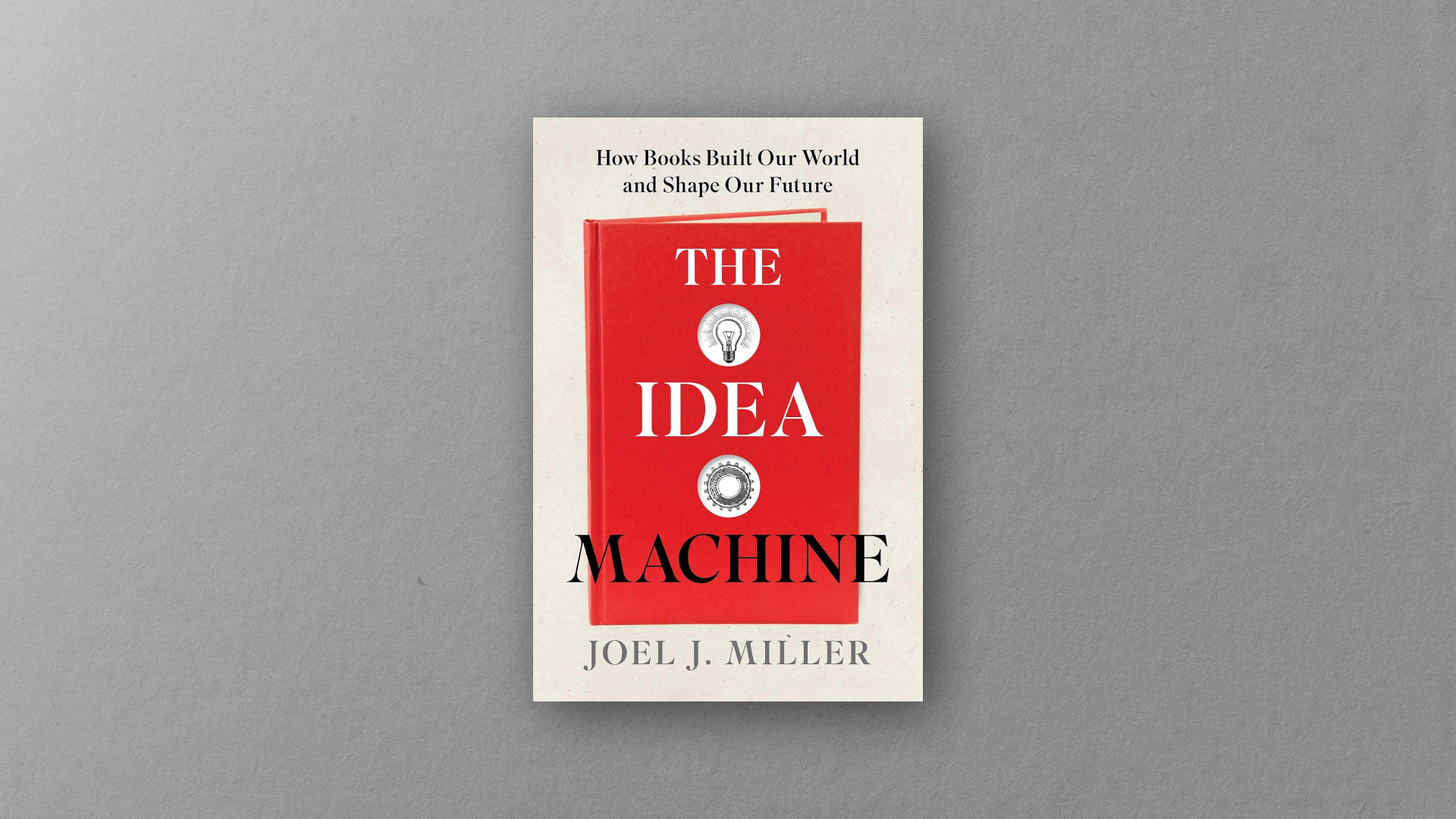
When we think of technology, most of us think of smartphones, robots, and spaceships. Books are technology too. In The Idea Machine: How Books Built Our World and Shape Our Future, Joel Miller, former editor at Thomas Nelson and proprietor of Miller’s Book Review, argues that “the book . . . is one of the most important but overlooked factors in the making of the modern world” (1). Miller doubles down on this assertion, even in an age of AI, space travel, and medical marvels.
As any parent of a kid with a hammer knows, technologies change not just what we can do but how we see the world. Books have done that for all of humanity. They “enable us to stack up ideas and see whether they can bear the weight of new associations and connections” (9). Even AI’s seemingly impenetrable neural networks are built on the epistemological foundations laid by books.
Books as World Makers
The Idea Machine isn’t just a love letter to books that many bibliophiles will enjoy. It fits within the genre of “big history,” where writers show how one invention, idea, or moment reshaped the world. Sometimes those accounts are whimsical, like William Alexander’s Ten Tomatoes That Changed the World. Others, such as Andrew Wilson’s Remaking the World, offer meaningful lessons about our culture’s development.
Tracing the macrohistory of the written word requires a definition of “book” that goes beyond the codex—the collection of paper leaves bound together that serves as the Platonic ideal when we moderns use the term. Miller broadly defines the book as “a portable collection of written ideas, designed to elevate the human mind beyond its natural limits of experience, memory, distance, and time” (7). This definition includes my ragged paperback edition of Louis L’Amour’s The Haunted Mesa; it also covers clay tablets, parchment scrolls, and ebook readers.
Books allow an author to communicate across the boundaries of time and space.
According to Miller, the form books take matters less than their function. As a finished product, books allow an author to communicate across the boundaries of time and space. However, as every author knows, writing itself “encourages the generation of increasingly complex ideas.” Thus, the book enables both the dissemination and creation of “arguments that require separate lines of inquiry, contingent details, proofs and examples [that] can be layered and rearranged to strengthen the claims” (40). Miller is correct as he argues that much of our philosophy, natural science, and theology would be impossible without the book.
Christians and Books
For Christians, books have never been mere objects; they’ve always been instruments of faith and imagination. We are, as David Lyle Jeffrey persuasively argued, people of the book. Since so much of Western culture rests on Christian foundations, the Bible has played an outsize role in world history—both through its use and abuse. But book culture as we know it has its roots in the soil of Christianity.
Literacy has always been a primary concern of Christians. From Jesus reading a scroll in the synagogue (Luke 4:16–21) to Luther’s theses multiplying on the printing press, the written word has shaped Christian imagination. Early Christians even wore miniature codices as religious symbols and so they could read the precious contents wherever they were. Pachomius, founder of the first cenobitic monastery, required literacy for full membership into the community. Miller revisits many of these familiar moments with fresh detail, in many cases unearthing anecdotes that will be unfamiliar to many seasoned readers.
Though The Idea Machine goes well beyond the Christian literary culture, that history is an important part of the book’s story. After all, the adoption of the codex may be the best example of Christian’s leading technological change rather than responding to it. It illustrates Miller’s belief that “how we develop and access ideas matters as much as the ideas themselves,” which is a substantial theme within the book (292).
Danger of Books
In Plato’s dialogue Phaedrus, Socrates makes a case that writing is dangerous. The irony of this argument is that we only have access to it through books. However, Socrates was right about a major danger of the written word. Miller aptly summarizes Socrates’s warning: “Books convey knowledge but don’t always confer it, so it’s easy for readers to assume they understand ideas better than they do—or pretend as much” (24).
For Christians, books have never been mere objects; they’ve always been instruments of faith and imagination.
We see this with the way much online research happens. Rather than read entire documents, students (and many internet commentators) often use Ctrl+F to find language that supports their arguments. But now, AI is replacing the need for even those searches. It can generate arguments without requiring researchers to open any books—let alone study them carefully.
Miller is more bullish on the future of the book (defined broadly) than I dare to be right now. He rightly notes the power of AI “to do what even entire armies of humans couldn’t” (282). Furthermore, he describes large language models (LLMs) as standing “in a line running from the libraries of Suppiluliuma and Ashurbanipal to Aristotle’s collection and the archivists and catalogers at Alexandria” (293–94). While Miller’s vision is pleasantly hopeful, I’m not as optimistic; Neil Postman’s warnings about the differences between print and screens seem increasingly relevant. AI threatens to create the world Ray Bradbury depicted in Fahrenheit 451, but without the need for firemen.
Yet Miller hits the bulls-eye as he shows the power of books to change the world by disrupting the status quo. Books are like adventures; they can make us late for dinner. But they’re also liberating. Books like Sufferings in Africa, the 19th-century account of a ship’s captain enslaved by Arabs, fueled the abolition movement in the United States. Whatever form books take in the future, they’ll always have disruptive potential for good or ill.
Screens clamor for our attention. Books merely wait. Yet quiet technologies are often the most effective at changing the world. The Idea Machine is a timely reminder that the oldest tools, wielded well, may be the sharpest.








 New Posts (Home)
 ChatBox
 Popular Posts
  Game Zone
 Top PodCasts