www.theblaze.com
Socialism didn’t win New York. Marketing did.
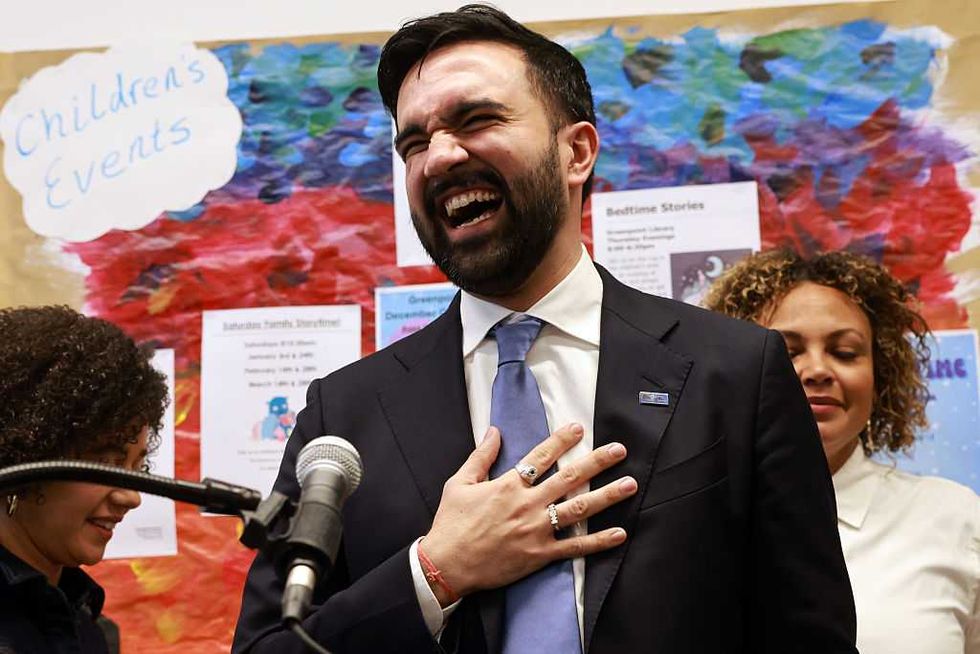
I oppose Zohran Mamdani’s Democratic Socialist agenda. But if Republicans are serious about winning elections next year and in 2028, they need to take a hard, unsentimental look at how he just won one of the most consequential mayoral races in the country.This was not an ideological earthquake. New York did not suddenly “discover” socialism. What happened was a marketing and mobilization breakthrough. Mamdani’s campaign understood attention, simplicity, participation, and distribution better than anyone else in the race.Republicans often confuse seriousness with stiffness. Mamdani showed that message discipline does not require lifelessness.Joe Perello, the city of New York’s first chief marketing officer, noted in PRWeek after Mamdani’s victory that the campaign did more than communicate a message. It built an engine that converted online engagement into real-world turnout.“For marketers and strategists alike, the implications are clear,” Perello wrote. “Growth hacking, iterative testing, and data-driven amplification can convert digital sentiment into real-world behavior. In Mamdani’s case, that meant converting hearts, clicks, and hashtags into ballots.”Here is the part many on the right do not want to hear: Mamdani did not spend his time lecturing working-class voters about the virtues of socialism or defending failed economic theory. He focused on immediate, kitchen-table concerns and paired them with simple, slogan-ready answers.Is halal food expensive? Make it cheaper. Struggling to get to work? Free buses. Grocery bills too high? Government-run grocery stores.He took Bernie Sanders’ 2016-era talking points and filtered them through a polished, Obama-style optimism that voting-age New Yorkers were willing to engage with.Most voters do not have the time — or patience — to think through how these promises would actually work. They just want to hear that someone intends to make their lives easier.As Citizens Alliance CEO Cliff Maloney observed during Mamdani’s surge in the polls, the public’s lack of understanding about how government operates — and how socialism consistently fails — created the political environment Mamdani exploited. He did not create that environment. He mastered it.Republicans’ digital blind spotFor years, Republican campaigns have treated digital media as messaging rather than infrastructure. Social platforms are used as megaphones for press releases, fundraising tools, or dumping grounds for cable-news clips. The underlying assumption is that persuasion happens elsewhere — on TV, at rallies, through mailers — and that digital simply amplifies those efforts.Mamdani reversed that logic. Social media was not an accessory to his campaign. It was the campaign.His approach drew praise even from outlets like the Guardian, where journalist Adam Gabbatt noted that Mamdani “has won social media with clips that are always fun — and resolutely on-message.”His team treated TikTok and Instagram like serious growth channels. Short videos were not vanity content; they were experiments. Different neighborhoods, different faces, different tones, different pacing. What held attention? What sparked comments? What traveled across boroughs? Each post generated data, and each data point informed the next iteration.This was politics run as a full-funnel acquisition strategy. Awareness led to engagement. Engagement led to identification. Identification led to turnout. Republicans can mock the aesthetics, but the mechanics work.Energy is a signalOne of the most underrated elements of Mamdani’s campaign was how it looked. He was constantly in motion — walking Manhattan, running a marathon, bouncing between boroughs. Rarely behind a lectern. Rarely static. Always visible.That energy communicated youth, optimism, and confidence in the same way John F. Kennedy outperformed Richard Nixon on television in 1960. A similar contrast appeared in 2024, when Donald Trump’s unscripted, high-visibility media strategy stood in sharp contrast to Joe Biden’s and Kamala Harris’ tightly controlled appearances.The predictable response on the right is dismissal. ‘That’s just TikTok nonsense.’ ‘Our voters aren’t like that.’ Those excuses are comforting — and dangerously wrong.In an age of low trust and low information, energy reads as competence. Movement suggests effort. Visibility substitutes for familiarity. Mamdani’s omnipresence created the impression — fair or not — that he was accessible and engaged with everyday life.Republicans often confuse seriousness with stiffness. Mamdani showed that message discipline does not require lifelessness.RELATED: When Bernie Sanders and I agree on AI, America had better pay attention Photo by ANGELA WEISS/AFP via Getty ImagesFrom supporters to fansThe most uncomfortable lesson for traditional campaigns is that Mamdani did not just mobilize voters. He activated fandom.Much of the campaign content that flooded social media did not come from official accounts. It came from supporters remixing clips, creating fan art, cutting moments to music, and sharing them within their own networks. The campaign made Mamdani easy to clip, easy to celebrate, and then got out of the way.Wired magazine described it as a rare case of participatory political culture usually reserved for celebrities.This matters because peer-to-peer persuasion scales faster and carries more credibility than anything a campaign can manufacture. Fan-made content travels further, feels more authentic, and costs nothing. Republicans, by contrast, tend to over-police their messaging, choking off organic enthusiasm in the name of control.Younger voters understand fandom instinctively. They grew up online. Mamdani did not lecture them about politics; he gave them something to belong to.The wrong reactionThe predictable response on the right is dismissal. “That only works for Democrats.” “That’s just TikTok nonsense.” “Our voters aren’t like that.”Those excuses are comforting — and dangerously wrong.Trump understood this dynamic in 2024 when his campaign was largely shut out of legacy media. Figures like Charlie Kirk reached millions of Gen Z voters by blending serious political content with the humor and energy of youth activism.Algorithms do not have ideologies. Participation is not a left-wing monopoly. Visibility, simplicity, and community are not progressive inventions. In a low-information, high-attention environment, the side that understands distribution wins.The real danger is not Mamdani’s policies alone. It is a Republican Party that keeps confusing being correct with being effective.RELATED: How anti-fascism became the West’s civil religion Blaze Media IllustrationWhat Republicans should learn — nowFirst, treat digital as organizing, not advertising. Stop thinking in posts and start thinking in systems. How does attention become action?Second, simplicity wins. Republicans often pride themselves on being right — and then lose because they are incomprehensible. Clarity scales. Long explanations do not.Third, loosen control. Let supporters remix, clip, and share. Reach matters more than perfect phrasing.Finally, build communities, not just campaigns. Email lists decay. Ad budgets run out. Communities endure.The bottom lineI do not agree with Zohran Mamdani’s politics, and I do not want his policies implemented anywhere. But ignoring how he won would be malpractice.He demonstrated how power is built today — not through party machinery or television dominance, but through attention, participation, and relentless simplicity. Republicans can learn from that reality, or they can keep losing to it.Disagree with his ideology. But study his marketing. Ignore the lesson at your own risk.








 New Posts (Home)
 ChatBox
 Popular Posts
  Game Zone
 Top PodCasts