www.dogingtonpost.com
How to Find Miniature Schnauzer Puppy Adoption Options
Finding the right Miniature Schnauzer puppy adoption option can feel overwhelming with so many paths to explore. At DogingtonPost, we’ve put together this guide to help you navigate reputable breeders, rescue organizations, and adoption websites with confidence.
Before bringing a puppy home, you’ll want to know what health screenings and temperament signs matter most. We’ll also walk you through the practical steps of preparing your home and finding the right veterinarian.
Finding Your Source for a Miniature Schnauzer Puppy
Start with the AKC Marketplace
The AKC Marketplace stands out as your most reliable starting point for locating AKC-registered Miniature Schnauzer puppies from breeders who meet health and welfare standards. Ask breeders to share photos of both parents so you can assess expected size, temperament, and coat characteristics before committing. Responsible breeders will have health-tested the parents for genetic diseases common to Miniature Schnauzers and should provide verifiable results through OFA (Orthopedic Foundation for Animals) and CHIC (Canine Health Information Center).
Evaluate Breeder Credentials and Commitment
Look for breeders involved in breed clubs or dog sports, as this signals genuine commitment to breed standards rather than profit-driven breeding. A strong breeder will ask you questions too, wanting confirmation that their puppies go to suitable homes. The breeder should provide a health guarantee and contract outlining what happens if genetic issues emerge later, plus remain available as a resource after you bring your puppy home. Expect to take the puppy home between eight and twelve weeks of age to allow proper maturation and socialization with littermates.
Consider Rescue Organizations
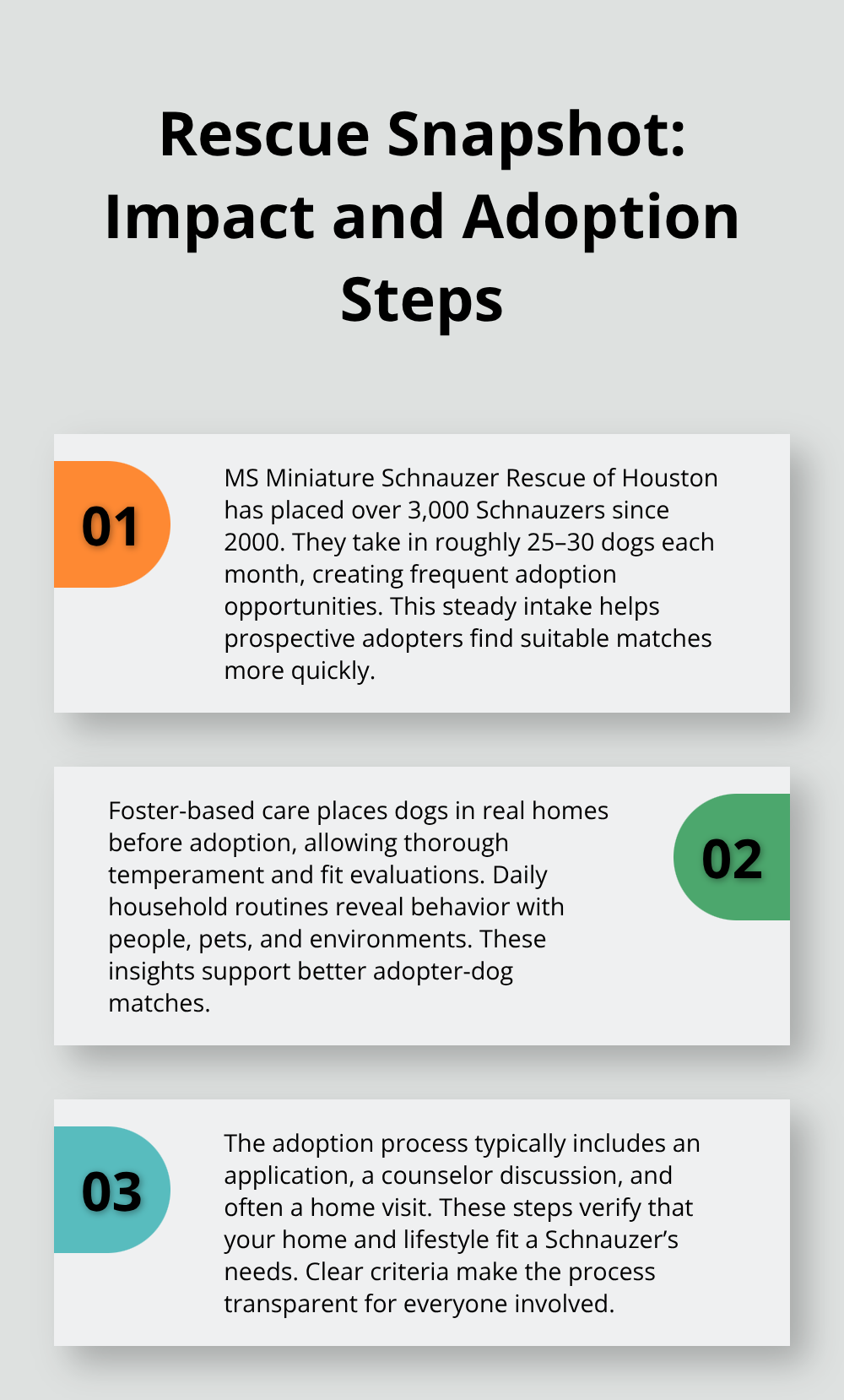
Rescue organizations offer a compelling alternative that deserves serious consideration. MS Miniature Schnauzer Rescue of Houston has placed over 3,000 Schnauzers since 2000 and takes in approximately 25 to 30 dogs monthly, creating genuine adoption opportunities. Their foster-based model means dogs live in homes before adoption, allowing staff to evaluate temperament and fit accurately. The adoption process includes an application, counselor discussion, and often a home visit to confirm your environment suits a Schnauzer’s needs.
Compare Costs and Benefits
Adoption fees typically cover spay or neuter, vaccines, and microchipping, making rescue significantly cheaper than purchasing from breeders. Online platforms like Petfinder let you filter Miniature Schnauzer listings by location, connecting you with both rescues and shelters near you. Some rescue dogs may require medical care such as heartworm treatment, so budget accordingly. The advantage here is transparency about a dog’s background and personality before adoption, plus the knowledge that you’re giving a home to a dog in need.
With your source identified and initial vetting complete, the next step involves understanding what specific health markers and behavioral traits signal a well-adjusted puppy ready for your home.
What to Look for When Choosing a Miniature Schnauzer Puppy
Health Testing Separates Responsible Breeders from the Rest
Health testing separates responsible breeders from backyard operations. When you evaluate a breeder or rescue dog, request documented OFA and CHIC results for both parents. OFA screens for orthopedic issues like hip dysplasia, while CHIC centralizes verifiable health data across multiple genetic concerns specific to Miniature Schnauzers. Don’t accept verbal assurances or vague promises-ask the breeder which health testing are standard for the breed and why they chose those specific screenings. A breeder who hesitates to share results or claims their line has no health issues raises immediate concerns. For rescue dogs, inquire about any medical history available from previous owners or veterinary records. Some rescues provide detailed health summaries, while others may have limited information on strays or mill rescues. Budget for potential medical expenses upfront, particularly if you adopt an adult dog that may need heartworm treatment or dental work.
Assess Temperament Through Direct Observation
Temperament matters as much as physical health. Ask the breeder or foster family how the puppy or dog responds to handling, loud noises, and new people. Puppies should show curiosity rather than fear when introduced to unfamiliar situations.
Responsible breeders implement Early Neurological Stimulation programs during the first few weeks of life, which help puppies explore more, become more social toward humans, and develop greater confidence in social situations with other dogs. For rescue dogs, foster families living with the dog day-to-day can describe how it behaves around children, other pets, and in typical home scenarios.
Prioritize Socialization History
Socialization history matters significantly, especially for puppies between three and sixteen weeks old. A well-socialized puppy has met varied people and experienced different environments, making the transition to your home smoother. You’ll want to ask specific questions about the environments the puppy encountered and the types of people it met during this critical window.
Verify Contracts and Health Guarantees
Insist on a written contract and health guarantee before you commit. The contract should specify what happens if genetic disease appears within a set timeframe, whether the breeder will take the dog back, and what recourse you have. This document protects both you and the breeder by establishing clear expectations and responsibility. With health markers confirmed and temperament traits understood, you can now focus on the practical side of bringing your new Miniature Schnauzer home.
Preparation and First Steps After Adoption
Setting Up Your Home for a Miniature Schnauzer
Your home needs to be schnauzer-ready before your puppy arrives, and this means thinking like a small dog owner rather than applying generic puppy advice. Miniature Schnauzers stand 12 to 14 inches tall and weigh 12 to 20 pounds, so they navigate standard homes easily, but they are escape artists who need secure fencing and careful management of open doors. Dog-proof your home by securing electrical cords, removing toxic plants, and blocking access to small objects before your puppy arrives. Set up a designated puppy area with a crate sized appropriately for their adult weight around 15 pounds-not oversized crates that encourage accidents.
Stock grooming supplies immediately since their wiry coat requires brushing twice weekly to prevent matting, and neglect creates serious coat problems within weeks. Invest in nail clippers, a slicker brush, and a metal comb designed for double coats before day one. Food and water bowls should sit elevated slightly to reduce neck strain, and you need puppy food from the breeder’s current supply to avoid digestive upset when transitioning to your chosen diet. Their alert, vocal nature means they bark at visitors and unusual sounds, so plan for this behavior rather than expecting silence.
Selecting a Veterinarian and Scheduling Care
Your veterinarian selection matters more than most new owners realize and directly impacts your dog’s long-term health outcomes. Call clinics before your puppy arrives and ask specific questions about their Schnauzer experience and preventive care protocols. Schedule your first appointment within 48 hours of bringing your puppy home so the vet can establish a baseline health record and review the breeder’s vaccination documentation.
Ask whether the clinic offers puppy packages that bundle initial vaccines, microchipping, and spay or neuter procedures at a discounted rate (typically between 300 and 600 dollars depending on location). Your vet should discuss the vaccination schedule beyond the initial series, recommend heartworm prevention appropriate for your region, and outline a dental care plan since dental disease affects small breeds heavily. Miniature Schnauzers live 12–15 years with proper care, so establishing a relationship with a vet who understands preventive medicine early pays dividends across that entire lifespan.
Training and Socialization During Critical Weeks
Training and socialization begin immediately and cannot wait for your puppy to settle in. Expose your puppy to at least 10 different people, multiple environments, and various sounds during weeks three through sixteen, which is the critical socialization window. Enroll in a reward-based puppy class by week eight, where your Schnauzer learns basic commands and meets other vaccinated puppies in a controlled setting.
These dogs are highly intelligent and quick learners, so short training sessions of five to ten minutes work better than lengthy drills that bore them. Establish a rock-solid recall immediately since Miniature Schnauzers have prey drive and will chase small animals if they escape your yard. Start crate training the first night, using the crate as a safe space rather than punishment, and most puppies housetrain within 12 to 16 weeks with consistent routines.
Final Thoughts
Finding the right Miniature Schnauzer puppy adoption option requires honest self-assessment about your lifestyle and commitment level. Whether you select a breeder from the AKC Marketplace or adopt through a rescue organization like MS Miniature Schnauzer Rescue of Houston, success depends on asking the right questions upfront and verifying health testing through OFA and CHIC results. These steps take time, but they eliminate costly surprises and mismatches down the road.
Owning a Miniature Schnauzer means committing to 12 to 15 years of consistent training, regular grooming twice weekly, and over an hour of daily exercise. Your veterinarian becomes a partner in preventive care, your groomer maintains coat health, and your trainer supports behavioral development during critical windows. Budget for ongoing expenses including quality food, grooming supplies, preventive medications, and routine vet visits, as the initial adoption or purchase cost represents just the beginning of your investment.
We at DogingtonPost believe responsible ownership starts with informed decisions before you bring your puppy home. Prepare your space, establish veterinary care, and commit to training and socialization from day one-then visit DogingtonPost for expert advice and practical resources tailored to responsible dog ownership.








 New Posts (Home)
 ChatBox
 Popular Posts
  Game Zone
 Top PodCasts