rockintown.com
Rush Top 10
Bassist/vocalist Geddy Lee, guitarist Alex Lifeson and drummer John Rutsey formed Rush in ’69 as a Hard Rock covers band (Cream, Hendrix, Led Zep, etc.). Four years later they recorded their first album and shopped it around. No one was interested so they started their own label, Moon Records.
A copy of the album was sent to legendary Cleveland Rock station WMMS. Donna Halper, a staff DJ, brought the group to the attention of Mercury Records, who re-released the “Rush” album. Along the way, Rutsey left for health reasons and was replaced by Neil Peart.
Each entry is numbered, followed by the song title, album and year released.
10. Roll The Bones – “Roll The Bones” (1991)
“We couldn’t make up our minds really if we wanted to be influenced by Rap or satirize it, so I think that song kind of falls between the cracks and in the end I think it came out to be neither, it came out to be something that is very much us,” explained bassist Geddy Lee.
Roll The Bones
9. Red Barchetta – “Moving Pictures” (1981)
Drummer Neil Peart’s lyrics were inspired by Richard Foster’s futuristic short story “A Nice Morning Drive” published in Road & Track magazine in 1973.
In the automotive industry, “Barchetta’ is a term used for a two-seat car without any kind of roof. Peart’s favorite car was the 1948 Ferrari 166MM Barchetta.
Red Barchetta
8. Freewill – “Permanent Waves” (1980)
The music was composed by Lee and Lifeson with lyrics by Peart – which was most often the band’s creative process.
Along with “Spirit Of Radio,” “Freewill” was ‘tested’ in-concert before it was recorded.
Though never released as a single, the song has been included in several of the band’s compilation albums.
Freewill
7. Closer To The Heart – “A Farewell To Kings (1997)
“It’s always resonated with people for some reason, and it was a hit as far as we’ve ever had a hit. It got us on the radio, the kinds of radio that would never normally associate with us, so it was as close as we ever came to a pop song, especially at that point,” noted Lee.
Closer To The Heart
6. New World Man – “Signals” (1982)
The song was the last composed for the album stemming from then-Rush producer Terry Brown’s suggestion to even out the lengths of the two sides for the cassette version.
It became Rush’s highest charting song on the Billboard Top 40 peaking at #21 and also went to #1 on the Billboard Top Tracks chart (the first Rush single to do so).
New World Man
5. Subdivisions – “Signals” (1982)
As the title implies, the song is a commentary on the social pressures of a mundane suburban life.
“Hugely autobiographical of course,” Peart noted. “It was an important step for us, the first song written that was keyboard-based. The upside of that: people don’t realize is that it made Alex and I the rhythm section. So the first time he and I tuned in to each other’s parts was when Geddy was playing keyboards. It was a great new way for us to relate.”
Subdivisions
4. Limelight – “Moving Pictures (1981)
“‘Limelight’ was probably more of Neil’s song than a lot of the songs on that album in the sense that his feelings about being in the limelight and his difficulty with coming to grips with fame and autograph seekers and a sudden lack of privacy and sudden demands on his time (that) he was having a very difficult time dealing with,” offered Lee. “I mean we all were, but I think he was having the most difficulty of the three of us adjusting.”
Limelight
3. Fly By Night – “Fly by Night” (1975)
Based on Peart’s experience of moving from Canada to London as a young musician before joining Rush, it was the band’s first single released outside the U.S. or Canada (issued in the Netherlands and Australia).
Fly By Night
2. Spirit Of Radio – Permanent Waves (1980)
Inspired by Ontario radio station CFNY’s decision not abandoned free-form programming as so many FM radio stations had. Free-form FM stations were switching to commercial formats during the late 1970s.
CFNY-FM, “Canada’s First New Youth,” played free-form Rock in the mid-70s. During this period, the station began using “The Spirit of Radio” as a promotional catchphrase.
Early in their career, Rush songs were played on CFNY when they were unable to obtain airplay on other radio stations.
Today, CFNY is a Modern Rock station.
Spirit Of Radio
1. Tom Sawyer – “Moving Pictures” (1981)
“‘Tom Sawyer’ was a collaboration between myself and Pye Dubois, an excellent lyricist,” explained Peart. His original lyrics were kind of a portrait of a modern-day rebel. I added the themes of reconciling the boy and man in myself, and the difference between what people are and what others perceive them to be.”
Tom Sawyer
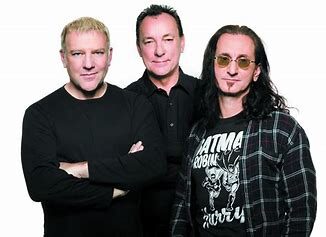
Rush
Geddy Lee Lead Vocals/Bass/Keyboards
Alex Lifeson Guitars/Backing Vocals
Neil Peart Drum/Percussion
Former Members:
John Rutsey – Drums/Percussion/Backing Vocals (‘68 – ‘74)
Jeff Jones – Bass/Lead Vocals (‘68)
###
The post Rush Top 10 appeared first on RockinTown.








 New Posts (Home)
 ChatBox
 Popular Posts
  Game Zone
 Top PodCasts