www.demilked.com
40 Animals Being Their Most Charming And Adorable Selves on Camera
Animals have a special way of lifting our mood without even trying. In this heartwarming collection, the “Loving Animals” Instagram page brings together some wholesome moments that radiate pure good vibes.
From gentle friendships and playful antics to quiet displays of trust and affection, these photos capture the simple joys that make animals so easy to love. Scroll on for a dose of warmth, smiles, and the kind of positivity that only animals can deliver.
#1
Image source: lovinganimals.dg
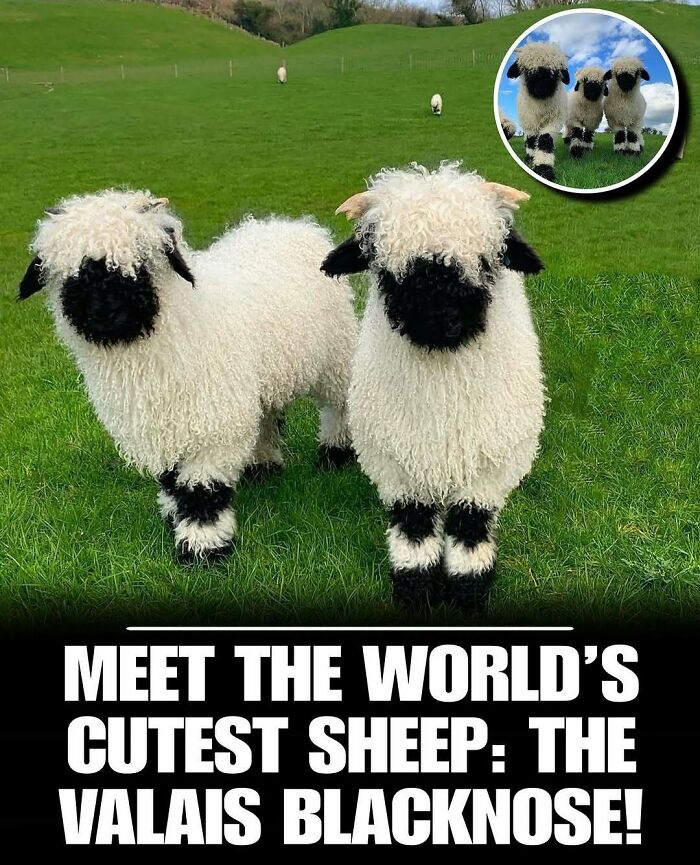
Meet the Valais Blacknose Sheep, often called the cutest sheep in the world! ?? Native to the Swiss Alps, their fluffy white coats and deep black faces make them look almost unreal like storybook characters brought to life! But these sheep aren’t just adorable! Their thick wool is famous for its quality, used to make some of the softest textiles in Europe. ? And despite their mountain roots, they’re incredibly friendly and love human contact some even enjoy cuddles just like dogs!
? Credit @bopeep_valaisblacknose
#2
Image source: lovinganimals.dg
Camouflaged cameras placed in the wild let us witness animals as they truly are without human presence disturbing them.
Triggered by motion, these hidden tools reveal how wildlife behaves, hunts, travels, and interacts in its natural environment.
They help scientists study elusive species, understand their challenges, and develop better conservation plans.
And beyond the science, these cameras often capture rare, beautiful, or even hilarious moments reminding us why protecting wildlife matters!
#3
Image source: lovinganimals.dg
I guess shopping ain’t easy when you’re a single mom of a dozen
#4
Image source: lovinganimals.dg
Image credits: anthonydimitri
#5
Image source: lovinganimals.dg
Via @king_rose_queen_daisy
#6
Image source: lovinganimals.dg
This is Tira, a very unusual zebra seen in the Maasai Mara. ? Unlike most zebras with black and white stripes, Tira was born with a rare genetic condition called melanism, which changes the color of the coat. Instead of stripes, Tira has a dark brown body with white spots a pattern that’s almost never seen in the wild. This is the first time a zebra like this has been recorded in the area! ? Credit: Frank Liu
#7
Image source: lovinganimals.dg
Meet the harvest mouse, one of the smallest rodents in Europe, weighing less than a 2€ coin! ? These agile little climbers use their prehensile tails to balance on flowers and tall grasses, making them true acrobats of the wild. Their favorite spots? Hidden among petals and stems, where they find shelter and safety from predators. Looking at them nestled inside these tulips, it’s hard not to fall in love with their tiny, curious faces.
? Credit: @captivelight
#8
Image source: lovinganimals.dg
Before they can fly, young owls rely on their legs. At this stage, their wings are still developing, so running becomes their main way of moving around ? Owlets leave the nest early and spend time on the ground or nearby branches, exploring their surroundings and following their parents for food. Running allows them to escape danger, change position, and build strength before their first real flights It’s a short but important phase in their development a moment when instinct adapts to what the body isn’t ready to do yet! They are not flying yet but they are learning how to get there! ? ? Credit Photo 1/2 Hannie Heere
#9
Image source: lovinganimals.dg
#10
Image source: lovinganimals.dg
This is the Japanese Bird, named “Shima Enaga’
Photo: zucky956a
#11
Image source: lovinganimals.dg
Doodlebug’s story will melt your heart. ? After losing his mother too soon, this tiny eastern grey kangaroo was taken in by wildlife carer Gillian Abbott in New South Wales, Australia. Alone and distressed, he needed something to help him feel safe in this big, unfamiliar world. ?❤️ That’s when a simple teddy bear became his greatest comfort. For Doodlebug, hugging it wasn’t just play, it was his way of finding security and calm. Even as he grew older and began hopping around on his own, he never stopped coming back to embrace his beloved bear. ? ? Photo by Tim Abbott
#12
Image source: lovinganimals.dg
The pudu is the tiniest deer on Earth and one of the most adorable too! ?? Native to South America, pudus come in two types: the Northern and Southern pudu. Both are shy, solitary animals that live in dense forests, perfectly adapted to sneak through the undergrowth. ? Measuring only 30 to 44 cm tall (about the height of a house cat!), pudus are peaceful herbivores who love munching on leaves, fruit, and seeds. ?? Sadly, this miniature marvel is now a vulnerable species threatened by habitat loss and poaching. Protecting these tiny deer means protecting one of nature’s most precious secrets.
#13
Image source: lovinganimals.dg
After being rescued from a fire, this fawn and kitten were found curled up together for comfort. ?? Both had been scared and disoriented, but rescuers quickly took them to safety, where they could rest and recover. Their calmness around each other shows how animals can sometimes find peace, even after chaos. ❤️ ? Credit: Animal Rescue Team, California (2009)
#14
Image source: lovinganimals.dg
Dragon was born at Deer Tracks Junction in Cedar Springs, Michigan, with an exceptionally rare piebald genetic trait. His coat is marked with large white patches, a completely white face, and a soft pink nose a look found in less than 1% of whitetail deer. Shortly after birth, his mother rejected him. In the wild, a fawn with unusual coloring can be seen as a danger to the herd, attracting predators and reducing its chances of survival. Without human help, Dragon’s odds would have been minimal. Farm owner Hilary Powell stepped in, bottle-feeding him and keeping him safe until he was strong enough to roam in a protected pasture. Named Dragon by Hilary’s son, this little survivor has grown healthy and active, proving that with love and care, even the most fragile lives can thrive. ?✨ ? Credit: Deer Tracks Junction
#15
Image source: lovinganimals.dg
How I feel when I get home from work. Can you relate? ? Via Otterwatch
#16
Image source: lovinganimals.dg
That’s so delicious ?? Via @cholemayirvine
#17
Image source: lovinganimals.dg
This tiny sunbird is using the heart of a banana flower as a natural bath, where rainwater gently collects inside the petals. A simple moment, yet incredibly rare to witness, where instinct meets perfect design! ? Banana flowers don’t just produce fruit they also become temporary shelters, water sources, and feeding spots for many small birds and insects in tropical ecosystems. Everything serves a purpose, often in silence. ? Scenes like this show how wildlife adapts using what nature offers, without waste, without excess. Just life flowing exactly as it was meant to! ? ? Credit: @rahulsinghclicks
#18
Image source: lovinganimals.dg
An unbelievable moment captured in the wild! ? This stunning photo shows a green woodpecker carrying a weasel on its back a rare and dramatic scene that seems straight out of a fantasy movie! But what’s really happening here? This isn’t a playful ride, the weasel was actually attempting to prey on the bird. Luckily for the woodpecker, it managed to escape once it landed safely on the ground. Nature never ceases to amaze us. ? ? Via Martin Le May
#19
Image source: lovinganimals.dg
The spotted quoll is one of Australia’s most striking little carnivores. Its white dots aren’t just pretty, they help it disappear into the forest shadows while it explores its world! ? Like all marsupials, a quoll begins life tiny and fragile inside its mother’s pouch. As it grows, it climbs onto her back, learning the forest’s scents, sounds, and hiding places step by step. ? Don’t let their size fool you. These youngsters quickly develop sharp instincts and surprising agility, becoming remarkable hunters as they mature. Spotting one at this age is a rare and unforgettable moment!
#20
Image source: lovinganimals.dg
With their round cheeks and bright smiles, quokkas have earned the title of the “happiest animals in the world.” These little marsupials are found only in a few places in Western Australia, most famously on Rottnest Island. ? Quokkas are herbivores, feeding mostly on leaves and grasses. They play an important role in their ecosystem by helping plants spread their seeds. Even though they look joyful, quokkas are a vulnerable species, facing threats from habitat loss and predators. ? Seeing a quokka up close is a rare and heart-warming experience, a small creature with a big charm that continues to fascinate people around the world! ? @cruzysuzy
#21
Image source: lovinganimals.dg
The Siberian flying squirrel is one of the forest’s tiniest wonders. ?️ With its big black eyes and silvery fur, it looks like it just leapt out of a fairy tale. This little glider moves from tree to tree using a thin membrane called a patagium, allowing it to soar up to 30 meters in a single jump. ? At night, it quietly explores the branches in search of buds, bark, and nuts, blending perfectly into the calm of the twilight! Delicate and shy, it’s also a symbol of the northern wilderness!
? Credit: @thutrang.bhdn
#22
Image source: lovinganimals.dg
Helping innocent animals! ❤️ Photographer (@cawildlife) says: Remember this little guy from a couple of years ago? This fledgling Northern Mockingbird arrived with knuckling feet. After being treated with “snowshoes,” his feet were able to work normally and he was released to the wild soon after. Via @cawildlife SW
#23
Image source: lovinganimals.dg
Rangers from Virunga National Park ? Selfies like this may seem fun at first glance and they are but they also carry a powerful message. These mountain gorillas are under constant protection, thanks to rangers who dedicate their lives, day and night, to keeping them safe from poachers and threats. This photo is more than just viral content, it’s a symbol of courage, resilience, and the extraordinary bond between humans and endangered wildlife ?❤️ ? Credit: @virunganationalpark
#24
Image source: lovinganimals.dg
In Nicaragua’s Thomas Belt Zoo, something truly magical happened: the birth of Itzae, a rare albino puma whose name means “Gift from God” in Maya. ? Among her three siblings, she is the only one born with this exceptional genetic trait making her one of just a handful of albino pumas ever seen on Earth. ? Her snow-white fur and crystal-blue eyes are the result of a genetic mutation that blocks melanin production. Because of this, she’s more sensitive to sunlight and needs extra care from her keepers to stay strong and healthy. ☀️ Despite these challenges, Itzae is thriving. Playful, alert, and full of life, she reminds us how beautifully unpredictable nature can be a living symbol of rarity and resilience. ? ? Credit: Oswald Rivas
#25
Image source: lovinganimals.dg
At @wildlifelearningcenter lives Zeus, a blind Western Screech Owl whose eyes shimmer like tiny constellations. ? Even though he cannot see, his gaze reflects a universe of light and mystery. Zeus was rescued after an injury left him unable to survive in the wild. Today, he lives safely at the center, where his cosmic-looking eyes never fail to fascinate those who meet him. ?✨ More than his appearance, Zeus is a living reminder that nature often hides its most astonishing wonders in the most unexpected places. ❤️ ? Credits: @zeustheblindowl & @wildlifelearningcenter
#26
Image source: lovinganimals.dg
This miniature antelope, barely 30 cm tall, lives in the bushlands of eastern and southern Africa. With its huge eyes, delicate features, and shy nature, it almost looks like it stepped out of a cartoon. But don’t be fooled, despite their size, dik-diks are fast, alert, and incredibly adapted to surviving in the wild! ? They live in monogamous pairs and are fiercely territorial proof that small doesn’t mean weak. Nature never runs out of surprises… and this one fits in the palm of your hand. ?✨ ? Credit Photo 1-2 @mogenstrolle Photo 3 Jack Dobli Photo 4 Jean Wimmerlin
#27
Image source: lovinganimals.dg
This little lynx is already showing the instinct, balance, and focus of a true wild predator. Every step, every jump is part of learning how to survive in a world where nothing is easy, even from the very beginning! ? The Iberian lynx is one of the rarest wild cats on Earth, found only in small regions of Spain and Portugal. Thanks to years of protection and conservation, their population is slowly growing again, giving hope to a species that was once very close to disappearing! ? Watching a baby like this move freely is a powerful moment! ? ? Credit: Marcello Galleano
#28
Image source: lovinganimals.dg
The takahē is a rare, flightless bird native to New Zealand, instantly recognizable by its vibrant blue-green feathers and striking red beak. ?? Long thought to be extinct after disappearing in the late 1800s, it was dramatically rediscovered in 1948, deep in the mountains of the South Island. ⛰️ Thanks to decades of dedicated conservation work, its population has slowly recovered now exceeding 500 individuals, with steady growth year after year. ? Several takahē have even been reintroduced into their native alpine habitats, a milestone for both science and biodiversity. More than just a species, the takahē holds deep cultural meaning for the Māori people, who consider it a taonga a treasured being. Its story is proof that extinction isn’t always final — and that determined efforts can bring a species back from the edge.
#29
Image source: lovinganimals.dg
Via @cutest.hedgehogs
#30
Image source: lovinganimals.dg
If you touch my babies gonna peck you
#31
Image source: lovinganimals.dg
My new toy ? Via @thehedgedog_
#32
Image source: lovinganimals.dg
After a heavy rain in Massachusetts, a tiny two-month-old raccoon was found alone, drenched, and shivering on a doorstep. He stood there quietly, hoping someone would see him. Thankfully, a caring homeowner noticed and called for help. A local wildlife officer arrived, gently wrapped him in a towel, and brought him to Leyden Wildlife Rehabilitation. Now safe and cared for, this little orphan will stay until he’s healthy and strong enough to return to the wild. A beautiful reminder to look out for the most vulnerable animals around us. ?? ? Credits Belchertown Animal Control / Leyden Center for Wildlife Rehabilitation
#33
Image source: lovinganimals.dg
Meet Teddy ? Via @teddytheshetland
#34
Image source: lovinganimals.dg
#35
Image source: lovinganimals.dg
The cheetah (Acinonyx jubatus) is the fastest land mammal on Earth, reaching around 100–110 km/h over very short distances. This speed comes from a unique body built for acceleration: flexible spine, long legs, semi-retractable claws for grip, and large airways for efficient breathing. ⚡ Unlike lions or leopards, cheetahs do not hunt with brute strength. They rely on speed and precision, targeting mostly small antelopes like gazelles, tripping them with a front paw before suffocating their prey. After a sprint, they are extremely exhausted and vulnerable for several minutes! ? Toward humans, cheetahs pose almost no threat. They are naturally shy, avoid confrontation, and prefer to flee rather than attack. The few recorded incidents are extremely rare and usually linked to captivity or extreme provocation. Today, cheetahs are a threatened species, with fewer than 7,000 left in the wild. Habitat loss, decline of prey, human-wildlife conflict, and illegal wildlife trade are the main reasons behind their rapid decline.
#36
Image source: lovinganimals.dg
Leopards are big fans of tree naps, it’s their way of staying safe, getting a good view of their territory, and finding the most peaceful place to rest. Thanks to their powerful limbs and amazing agility, they climb effortlessly and pick the comfiest branches to sprawl out and unwind. True experts in the art of tree lounging, they can make even the most awkward limb look like a luxury bed! ??? ? Credit: Photo 2 shujath.mohammed Photo 3 JJ Zapp Designs Photo 4 Thomas Dehne
#37
Image source: lovinganimals.dg
A 140-year-old African spurred tortoise… with her 5-day-old baby softly perched on her head. This heartwarming moment, captured by Attila Balazs at Hungary’s Nyíregyháza Animal Park in 2011, instantly went viral. It’s a rare, genuine glimpse into maternal care no filters, no staging. Just a mother and her tiny baby sharing an unspoken bond!
#38
Image source: lovinganimals.dg
Rehabilitation Fuzzy Fawn Wildlife does rehabilitation for full-grown Deer and fawns in New York State that have been injured in any way, shape, or form. This photo is from one of their recent projects in the region bringing them back to the wild. ❤️ Via @fuzzyfawnwildlife
#39
Image source: lovinganimals.dg
A photo of a lion with visible receding hair has gone viral, sparking laughter, sympathy, and a wave of memes. While most male lions display thick and majestic manes, this feline seems to have entered his “wise uncle era” a little earlier than expected ? Just like in humans, thinning of the mane in lions can be related to age, stress, health problems, or low testosterone levels. Studies from the University of Minnesota show that the mane can also shorten or thin due to poor nutrition or high temperatures.
#40
Image source: lovinganimals.dg
Did you know? These adorable mice are called “curly mice” or “rex mice”! ?? They carry a special gene that gives them naturally curly fur like tiny teddy bears with whiskers! ? Their soft coats and sweet little curls make them truly one of a kind. Curly mice are bred ethically by enthusiasts and are known for their gentle nature and unique look. They also help teach us more about genetics and how amazing nature can be!
? Credit via @mysigonek
The post 40 Animals Being Their Most Charming And Adorable Selves on Camera appeared first on DeMilked.








 New Posts (Home)
 ChatBox
 Popular Posts
  Game Zone
 Top PodCasts