www.wearethemighty.com
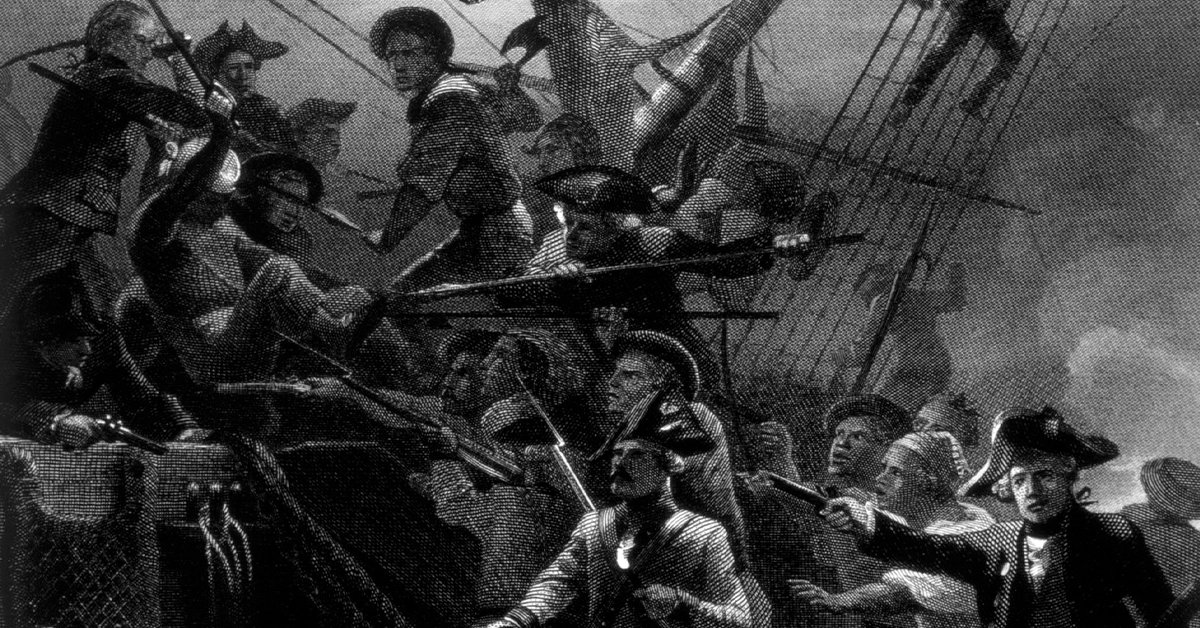
The original US Navy was an armada of American rebels and privateers
As the United States prepares to celebrate its 250th anniversary, the story of American independence invites more than commemoration. It demands reflection. Too often, the birth of the nation is reduced to a single summer day in Philadelphia, yet independence was not declared in isolation or calm. It emerged from months of escalating conflict, deliberate choices, and irreversible actions. Among the most consequential of those actions was the moment the American Revolution expanded beyond land and into the contested waters of the Atlantic. In April 1776, the war came to the sea, and with it came a decisive shift from resistance to nationhood.Related: How a plain-language pamphlet created America’s revolutionary mindsetThe final months before July 4, 1776, were defined by acceleration. Political debate hardened into resolve. Colonial assemblies claimed authority once reserved for kings. Armed conflict spread in scale and scope. When the Continental Congress authorized American privateers to attack British shipping, it crossed a threshold that could not be reversed. The colonies were no longer merely defending themselves. They were asserting sovereignty. To understand the significance of independence, especially as the nation marks its 250th year, one must understand why April 1776 mattered and how control of the sea became essential to the survival of the American cause.
The Maritime World of the 18th Century
Those are some rough seas. (Wikimedia Commons)
In the 18th century, the sea was not a frontier. It was the bloodstream of empire. British power rested heavily on maritime supremacy, commercial shipping, and naval dominance. The American colonies existed within this system. Their economies depended on Atlantic trade, with exports of raw materials and imports of manufactured goods. British control of shipping lanes allowed the Crown to regulate commerce, enforce taxes, and project military power across vast distances.
When resistance began, it initially focused on land-based grievances and local control. Yet as conflict intensified, colonial leaders understood a fundamental truth. Without access to the sea, independence was impossible. Armies needed supplies. Trade sustained economies. Foreign alliances required maritime communication. Control of coastal waters would determine whether the colonies could survive a prolonged war.
By early 1776, British naval power posed a direct threat. Blockades restricted commerce. British ships raided coastal towns. Loyalist vessels transported troops and supplies. If the colonies hoped to endure, they needed to challenge British dominance at sea, even without a formal navy.
Congress Confronts the Reality of War
The Continental Congress had plenty to discuss in 1776. (Wikimedia Commons)
The Continental Congress entered 1776 still hesitant to declare independence outright. Many delegates hoped unity could be preserved long enough to force concessions. However, events quickly narrowed available options. British actions made clear that reconciliation was no longer the Crown’s priority. Control was.
On April 3, 1776, Congress took a decisive step. It authorized colonial privateers to attack British shipping. This action did not carry the language of a declaration of war, but its implications were unmistakable. By granting legal authority to seize enemy vessels, Congress sanctioned offensive warfare on the high seas.
Privateering was a time-honored practice. Governments issued commissions to private shipowners, allowing them to attack enemy commerce in exchange for a share of the captured goods. For the colonies, privateering offered a practical solution. They lacked the resources to build a traditional navy, but they possessed experienced sailors, fast ships, and knowledge of coastal waters.
By authorizing privateers, Congress transformed civilian vessels into instruments of war. It legitimized violence, regulated prize courts, and directed international commerce. These were not the actions of a protest movement. They were the actions of a government.
Acting Like a Nation Before Becoming One
No ship was safe during the American Revolution. (Wikimedia Commons)
The April 3 authorization marked a turning point in congressional behavior. Congress was no longer simply coordinating resistance among colonies. It was exercising powers traditionally reserved for sovereign states. It raised forces, issued commissions, sanctioned armed conflict, and managed economic warfare.
This shift carried enormous significance. By authorizing privateering, Congress acknowledged that the colonies were already engaged in a war that could not be fought solely on the defensive. British shipping was the lifeline of imperial power. Disrupting it weakened Britain economically and militarily while strengthening the American cause.
Captured ships provided desperately needed supplies, including weapons, ammunition, clothing, and food. They also generated income through the sale of prizes. Privateering became both a military strategy and an economic necessity.
Just as important was the psychological effect. Each captured British vessel reinforced the idea that Americans could challenge imperial power beyond their own shores. The war was no longer confined to towns and fields. It was global in scope.
Escalation at Sea
British officials recognized the threat immediately. American privateers struck merchant ships throughout the Atlantic, the Caribbean, and along European trade routes. Insurance rates soared. Merchants complained. Resources were diverted to convoy protection.
British naval superiority remained overwhelming, but the effectiveness of privateers forced Britain to defend vast stretches of ocean. This diffusion of power benefited the American cause. It bought time and strained British logistics. It also underscored the difficulty of maintaining control over distant colonies by force alone.
The expansion of conflict at sea also intensified British resolve. Blockades tightened. Coastal raids increased. Neutral ships faced greater scrutiny. The war became increasingly international, drawing the attention of European powers watching for opportunities to weaken Britain.
The Question of Legitimacy
Privateering was a way of life in 18th-century America. (U.S. Coast Guard)
The authorization of privateering raised fundamental questions about legitimacy. Who had the right to wage war, and who could regulate commerce? Who could issue commissions recognized under international law?
By acting decisively, Congress answered those questions through action rather than declaration. It claimed authority not because Britain granted it, but because necessity demanded it and the people supported it.
This moment illustrates why the months before July 4 matter so deeply. Independence was not proclaimed in a vacuum. It was practiced first. Congress governed before it declared itself a government. The sea became one of the earliest arenas where American sovereignty was asserted.
The Halifax Resolves
Before there was the Declaration of Independence, there were the Halifax Resolves. (U.S. Capitol)
Just days after Congress authorized privateering, another milestone accelerated the march toward independence. On April 12, 1776, the North Carolina Provincial Congress adopted the Halifax Resolves. This action authorized North Carolina’s delegates to the Continental Congress to vote for independence.
The Halifax Resolves were unprecedented. For the first time, a colony explicitly instructed its representatives to support separation from Britain. The language was unambiguous. The decision was deliberate. It reflected a colony shaped by recent conflict, particularly the Patriot victory at Moores Creek Bridge earlier that year.
North Carolina’s experience had demonstrated the fragility of British authority and the risks of hesitation. Loyalist uprisings had failed. Royal officials had fled. The colony was already governing itself in practice.
By issuing the Halifax Resolves, North Carolina transformed independence from an abstract debate into a political directive. It placed pressure on other colonies to clarify their positions. Momentum shifted from discussion to decision.
The Interconnection of Sea and Statehood
The proximity of these events was no coincidence. Maritime warfare and political independence advanced together. Challenging British power at sea reinforced the argument that the colonies were already acting as independent states. The Halifax Resolves confirmed that at least one colony was ready to acknowledge that reality openly.
Together, these actions illustrate how independence unfolded as a process rather than a moment. The war at sea required unity, coordination, and authority. Political independence provided legitimacy, clarity, and purpose.
The colonies could not effectively wage maritime war while claiming loyalty to the Crown. Nor could they credibly seek foreign alliances without demonstrating commitment to sovereignty. April 1776 forced these issues into the open.
Economic Warfare and Survival
Privateering also revealed the economic dimensions of the revolution. War disrupted traditional trade patterns. British blockades restricted imports. Inflation rose. Supplies grew scarce.
Privateering offered relief. Captured goods supplemented shortages. Prize money incentivized participation. Entire coastal communities became invested in the success of maritime warfare.
This economic involvement broadened support for the revolution. Sailors, shipbuilders, merchants, and dockworkers found livelihoods tied to independence. The war touched everyday life in tangible ways.
By turning the sea into a battlefield, Congress ensured that independence was not only a political ideal but a shared economic stake.
A Turning Tide in April 1776
By the end of April, the trajectory of the revolution had shifted decisively. British control was challenged on land and sea. Colonial governments asserted authority openly. Independence, once cautiously avoided, now appeared inevitable.
The war at sea demonstrated that the colonies were prepared to confront Britain as an equal adversary, not merely a disobedient possession. The Halifax Resolves showed that colonial unity was strengthening around the idea of separation.
Together, these developments narrowed the path forward. There was no returning to the status quo. The colonies were governing, fighting, and thinking like a nation.
Why This History Matters at 250
Fireworks light up the night sky over Fort Knox’s U.S. Army Cadet Command headquarters on July 4, 2025. (U.S. Army)
As America approaches its 250th anniversary, these moments invite reflection on the nature of independence itself. The United States was not born fully formed on July 4, 1776. It emerged through months of contested authority, strategic risk, and collective resolve.
April 1776 reminds us that freedom requires more than words. It requires action, responsibility, and the willingness to confront uncertainty. Congress did not wait for permission to act as a sovereign power. It assumed that role because survival demanded it.
Understanding this history deepens appreciation for the courage and complexity of the founding generation. They did not know the outcome. They acted anyway.
When the Ocean Became American
U.S. Naval Sea Cadets carry the 1776 ‘Betsy Ross flag’ during the Navy and Marine Corps 250th anniversary celebration parade in Philadelphia, October 13, 2025. (U.S. Navy/Ryan Williams)
The American Revolution reached a new phase when the war came to the sea. By authorizing privateers and embracing maritime conflict, the colonies challenged the foundation of British imperial power. By adopting the Halifax Resolves, North Carolina made independence explicit rather than implied.
These actions transformed rebellion into revolution. They marked the moment when the colonies began living as a nation before declaring themselves one. As the United States commemorates 250 years of independence, remembering April 1776 reminds us that liberty was not granted. It was claimed, defended, and earned across land and sea.
The ocean did not merely surround the American colonies. In 1776, it became one of the first places where American sovereignty was tested and proven.
Don’t Miss the Best of We Are The Mighty
• Nathanael Greene: The Revolutionary War’s most underrated leader• This daring ruse turned the tide of the American Revolution• Maryland’s ‘Immortal 400’ saved the entire American Revolution
America250
Revolutionary War
The original US Navy was an armada of American rebels and privateers
By Daniel Tobias Flint
Revolutionary War
How Henry Knox became the artillery genius of the Revolutionary War
By Daniel Tobias Flint
History
Flintlock to firepower: The grunt’s 250-year quest for a weapon that actually works
By Adam Gramegna
Revolutionary War
The Revolutionary War battle that forced Americans to choose sides
By Daniel Tobias Flint
History
Nathanael Greene: The Revolutionary War’s most underrated leader
By Daniel Tobias Flint
The post The original US Navy was an armada of American rebels and privateers appeared first on We Are The Mighty.








 New Posts (Home)
 ChatBox
 Popular Posts
  Game Zone
 Top PodCasts