www.wearethemighty.com
The mathematician who saved hundreds of flight crews during World War II
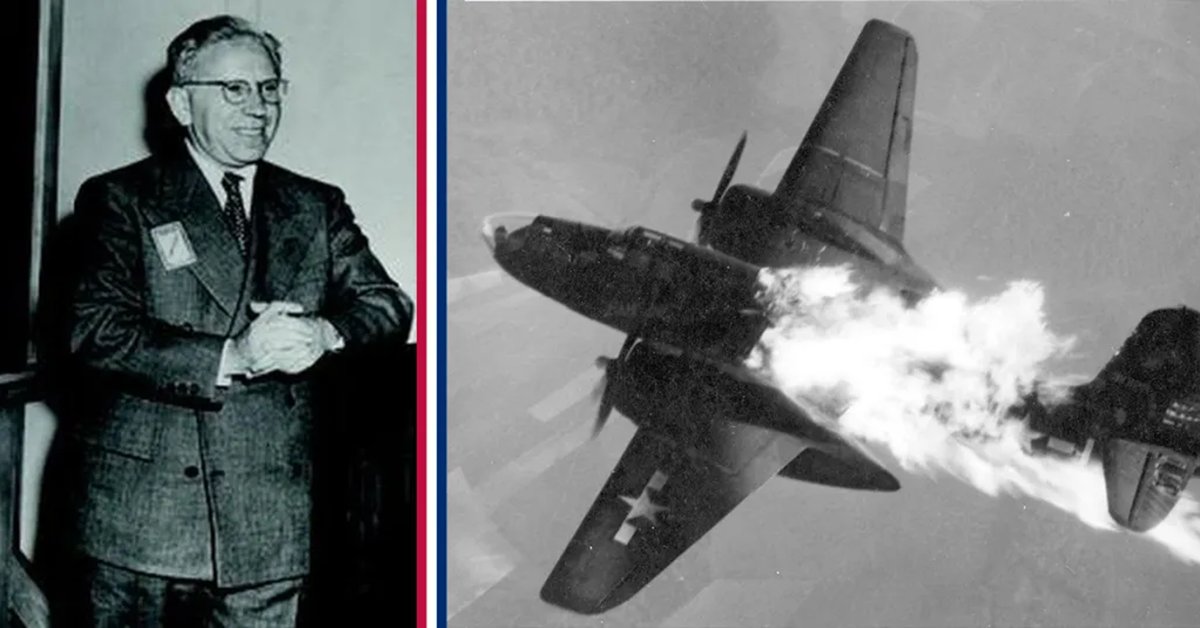
The Nazis drove Abraham Wald, a Jewish mathematician, out of Romania and Europe. He emigrated to the United States, where he would serve in the Statistical Research Group. The SRG was a bunch of eggheads that used math to make the military better at everything from firing rockets to shooting down enemy fighters. Wald convinced the Navy that it was about to armor the completely wrong parts of its planes, saving hundreds of flight crews in the process.Related: The new Jimmy Stewart biopic depicts his World War II serviceTo understand how Wald, sitting in New York for most of World War II, saved so many lives, it’s important to grasp what role academics and subject matter experts had in the war. The great wartime powers, especially the U.S. and Britain, put some stock in academicians to solve tricky problems and make warfighters safer, more efficient, or more lethal.
Some of this was having physicists and engineers create better weapons, like how the Applied Physics Laboratory developed proximity fuses that made artillery and anti-aircraft weapons more effective. Some of this was having mathematicians figure out the best mix of rounds to load into machine guns of different types for the gunners to kill their targets more quickly. The physicists and other scientists who worked on atom bombs is a great example.But Wald was a statistician, and his job was to look at wartime processes and figure out how they could be improved. Wald was still, technically, an enemy immigrant, so he had an odd setup at the Statistical Research Group.
Lacking Clearance
As author Jordan Ellenberg wrote in “How Not to Be Wrong: The Power of Mathemathical Thinking,” there was a running joke in the Statistical Research Group involving Wald. His secretaries had to rip notepaper out of his hands as soon as he finished writing on it, because he didn’t have the clearance to read his own work.But Wald was an amazing mathematician, and it’s not like he was the type of Hungarian who might harbor sympathies for Adolf Hitler. Remember, he had fled Austria because Hitler would have had him killed, same as Albert Einstein and plenty of others. So Wald used math to try to help the Allies kill the Axis, and he was in the SRG when the Navy approached them with a seemingly straightforward problem.The Navy and the Army Air Corps lost a lot of planes and crews to enemy fire. So the Navy modeled where its planes showed the most bullet holes per square foot. Its officers reasoned that adding armor to these places would stop more bullets with the limited amount of armor they could add to each plane. They wanted the SRG to figure out the best balance of armor in each often-hit location.
(Adding armor adds weight, and planes can only take off with a certain amount of weight that needs to be balanced between plane and crew, ammo, fuel, and armor. Add too much armor, and you have a super safe bomber that can’t carry any bombs.)
What Is ‘Survivor Bias’?
While doomed planes sometimes landed safely, they were usually lost at sea or in enemy territory. (U.S. Navy)
But Wald picked out a flaw, known as “survivor bias,” in their dataset that had eluded most others. The Navy (and really anyone else in the war) could typically only study the aircraft, vehicles, and men who survived a battle. After all, a plane that is shot down over the target lands on or near enemy territory. If it goes down while headed back to a carrier or island base, it will be lost at sea.So the Navy only looked at planes that had landed back at ship or base. These weren’t examples of where planes were most commonly hit; they were examples of where planes could be hit and keep flying, because the crew and vital components had survived the bullet strikes.Now, a lot of popular history says that Wald told the Navy to armor the opposite areas (or told the Army Air Corps to armor the opposite areas, depending on which legend you see). But he didn’t, actually. He figured out a highly technical way to estimate where downed planes had been hit, and then he used that data to determine how likely a hit to any given area was to down a plane.He found that the Navy wanted to armor the least vulnerable parts of the plane. Basically, the Navy wasn’t seeing many hits to the engine and fuel supply, so the Navy officers decided those areas didn’t need as much protection. But Wald’s work found that those were the most vulnerable areas.And that makes sense. After all, you likely won’t make it home if you start leaking gas while still far from home. Have an engine destroyed even a few miles from home, and you likely won’t make it home.
Planes Survived More Hits
The military took Wald’s work and applied armor to the areas he had defined as most vulnerable, primarily the engines, instead of putting armor on the areas with the most observed hits. And guess what? Planes started surviving more hits.
Now, it didn’t win the war on its own, of course. Just like giving the Navy proximity fuses to make gunners more effective against enemy planes didn’t stop every Japanese dive bomber or kamikaze attack, the armor didn’t save every plane and crew.But winning a war isn’t about winning every engagement. It’s about paying less than you are willing to pay for victory and suffering less than you’re willing to suffer for each defeat. If you can do that, you’ll eventually win.And Wald had driven down the price of success and the likelihood of failure for airplanes. Ironically, he died five years after the war in a plane crash. Although his death deprived us of his expertise in Korea and Vietnam, his papers continued to influence military decisions for decades.
Don’t Miss the Best of We Are The Mighty
• No, kids are not getting dumber. Here’s the truth about the Gen Z intelligence study.• How an irate pizza guy created modern body armor• 5 types of extra armor added to tanks during WWII
The post The mathematician who saved hundreds of flight crews during World War II appeared first on We Are The Mighty.








 New Posts (Home)
 ChatBox
 Popular Posts
  Game Zone
 Top PodCasts