www.wearethemighty.com
The undisputed guide to proper treatment of an ROTC cadet
When joining the military, you either become an enlisted service member or a commissioned officer. There are also Warrant Officers, but you rarely see them, so they might as well not exist. While enlisted service members do the majority of the work, it is the officers who receive the most credit. Sure, Private First Class Smith may have been the one to drop the mortar, but 2nd Lt. Johnson gets a bronze star because he was the one who called for fire. Also, Johnson wrote the citation for himself, and Pfc. Smith only learned to read last week. It’s unfair, really. Also Read: The National Guard’s ‘one weekend a month, two weeks a year’ slogan is outdated
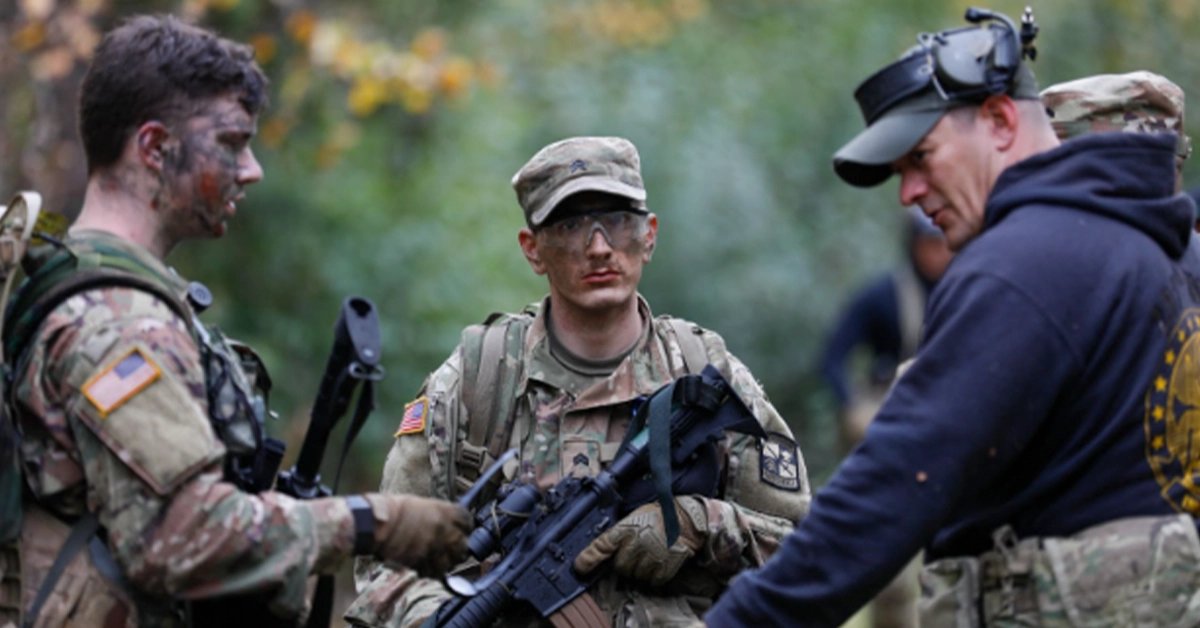
But should one decide to put their silver spoon down and take the officer route into the Army, there are a number of options on the table. There’s the Officer Candidate School, the U.S. Military Academy at West Point, and the Reserve Officers’ Training Corps. In the Army National Guard, ROTC is ubiquitous with commissioned officers. You would be hard-pressed to find an officer who did not go through ROTC. On the other hand, many of these officers come from the enlisted side, and I’m going to give credit where credit’s due: it does provide a pathway to both earn a college education and commission. Commissioning through ROTC means years of hard work between school and training, all for some lieutenant to get lost on their first drill weekend as opposed to the 18-month traditional Guard OCS or two-month fast track option. Part of this process involves embedding that young ROTC cadet with a prospective unit. In doing so, there seem to be plenty of questions on how a cadet ought to be treated. The majority seems to think they deserve officer treatment, and units are forced to treat them nicely. But the non-commissioned officers know the truth: You have to break them in like anyone else new to the unit.
Customs and Courtesies
(U.S. Army National Guard/Sgt. Michael Schwenk)
Cadets aren’t officers. Not only are you not required to address them as sir or ma’am, you are also not required to render a salute. AR-600-25 states: “ … Salutes will be exchanged between officers (commissioned and warrant) and enlisted personnel of the Armed Forces of the United States (Army, Marine Corps, Navy, Air Force, and Coast Guard) … .” Since cadets haven’t commissioned, you don’t owe them a hand salute. You can address them as “cadet,” but NCOs know it’s better not to even acknowledge their existence unless you need a cup of coffee. If your unit is legit, they’ll let NCOs take care of their cadets the way they take care of their brand-new enlisted personnel.
Corrective Training
(U.S. Army National Guard/Sgt. Seth Cohen)
Despite what they might tell you, cadets are human, like the rest of us. They’re bound to make mistakes. Maybe not of the “35% APR” or “stripper marrying” variety, but they may forget to wear their hat outside or say good morning to the Platoon Sergeant. In these cases, we must not forget that it’s important to ensure the cadet receives correction. They are young soldiers, after all. In these cases, we must remember that they’re not commissioned officers. While they may legally outrank an NCO, they don’t hold any position of actual authority. That would be akin to plucking a random person off the street and saying, “Here’s hundreds of thousands of dollars of government property, you’re in charge.” So, we can lean on our corrective training methods used for our other junior enlisted warriors. Spoiler alert: it may involve a lot of sweat.
Extra Fun
Cadets are members of the unit and should be included in extracurricular activities. They require entertainment, and you know the best ways to find that. For example, if you find a nice-looking rock that you would consider gifting to your favorite private, instead give it to your cadet to carry around. They would love that.
Let’s not forget about birthdays. The Army has the best birthday traditions around, and if this cadet truly wants to join the Army, they should be offered a peek behind this curtain. They shouldn’t be excluded from these traditions just because they haven’t commissioned yet.
Other Tips
(U.S. Army National Guard/Alejandro Pena)
At the end of the day, we should remember that cadets are prospective soldiers. They, like you, signed the dotted line to possibly put their life on the line for their country. Whether they’re doing it for college money or more altruistic reasons should come second to the fact that they’re doing it at all. When they commission, they will be responsible for the lives of other soldiers, and it’s important that you mentor them properly so they can be excellent leaders. If the NCOs who oversee their development take it seriously, that cadet’s leadership abilities will benefit them, their careers, and, by extension, their future platoons.
Don’t Miss the Best of We Are The Mighty
• The Complete Hater’s Guide to the Army National Guard• The grunt’s 250-year quest for a weapon that actually works• Here’s the Tom Cruise classic ‘Top Gun’ in under 3 minutes
Military Culture
Military Life
The undisputed guide to proper treatment of an ROTC cadet
By Dave Grove
Military Life
Why the Honor Guard is the best military experience
By Dave Grove
Movies
How ‘Major Payne’ became a Marine Corps comedy classic
By Daniel Tobias Flint
Feature
These are the Navy’s rules for being buried at sea
By Blake Stilwell
History
Your battle buddy was originally supposed to check your feet in the trenches of World War I
By Blake Stilwell
The post The undisputed guide to proper treatment of an ROTC cadet appeared first on We Are The Mighty.








 New Posts (Home)
 ChatBox
 Popular Posts
  Game Zone
 Top PodCasts