pacificlegal.org
Court lets surf school’s First Amendment challenge ride
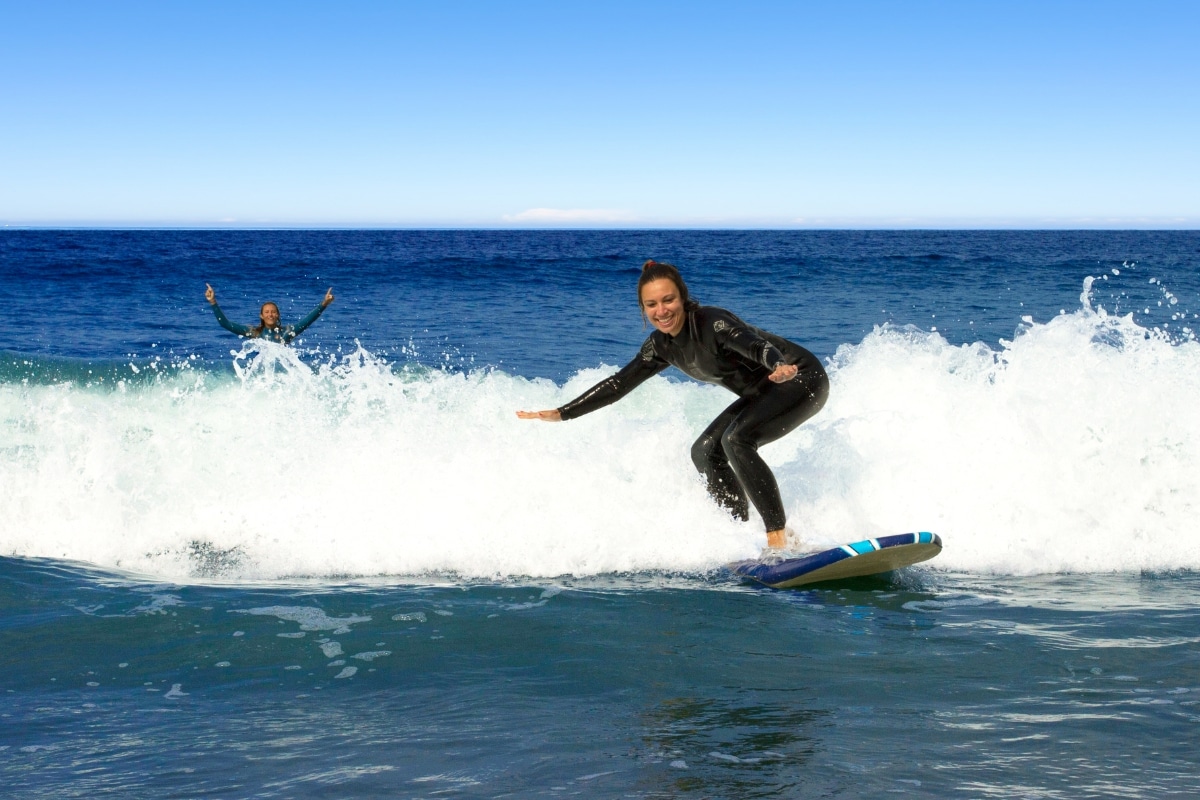
Helina Beck has been trying to teach surf lessons on California’s public beaches for years. On Tuesday, a federal court said her fight can continue, denying California’s motion to dismiss her case and handing her a meaningful early victory in a fight over who gets to teach on shorelines that belong to all Californians.
The ruling, issued February 24 in the United States District Court for the Southern District of California, allows Helina Beck and her company, Wavehuggers LLC, to move forward with their claim that a California Department of Parks and Recreation regulation unconstitutionally restricts their ability to provide paid surf instruction on state beaches.
The story behind Wavehuggers
Helina Beck’s relationship with the ocean began at age 8, when her sister—now a professional surfer—taught her to ride waves near their Palos Verdes, California, home. By high school she was competing on her school’s surf team and teaching lessons over summer breaks. And in 2013, armed with a conviction that surfing could change lives, she founded Wavehuggers LLC.
What started as a small and seasonal business grew into a year-round operation employing 12 instructors offering surf lessons, kids’ camps, surf therapy programs, and beach cleanups across San Diego, Orange, and Los Angeles counties. Over the years, Wavehuggers has taught more than 12,000 people to surf.
“I wanted … to start a surf school that didn’t JUST teach people how to surf, but to also connect people to the ocean as a form of spiritual growth and healing while motivating people to protect it,” Helina says. “At Wavehuggers, our mission is to use surfing as a medium to positively change your life and the planet for the better.”
A bureaucratic wall
The state had different plans for its beaches, and they didn’t involve Helina.
Under California law, no one may provide paid instruction on state beach property without first securing a concession contract from the California Department of Parks and Recreation. The department has complete discretion over who receives those contracts — with no published criteria, no appeals process, and no timeline for decisions.
Since approximately 2008, only two schools have held contracts to teach surf lessons at Carlsbad, South Carlsbad, and Cardiff State Beaches. Today, just one school holds such a contract.
Helina made multiple attempts to obtain a contract; each request was denied. Then, in March 2025, the department sent her a cease-and-desist letter, ordering her to stop teaching paid lessons and to remove all advertising from the internet. The letter’s suggested remedy: contact the same officials who had been turning her away for years.
Represented by Pacific Legal Foundation free of charge, Helina filed a lawsuit in August 2025.
What the court decided
California moved to dismiss the case entirely. The court granted that motion in part but denied it where it matters most.
It found that surf instruction is protected speech under the First Amendment, consistent with recent precedent recognizing that teaching a specialized skill is a form of protected expression. The court also concluded that state beaches are public forums, where the government’s ability to restrict speech is most constrained.
“State parks cannot just close off miles of public beaches and give the keys to a single surf school,” said PLF senior attorney Caleb Trotter. “Monopolizing surf instruction limits the public’s options and prevents small businesses like [Beck’s] from meeting public demand for lessons. And because teaching others how to surf is quintessential speech, state parks has a high burden to justify its anticompetitive regulation.”
The case moves into discovery — where California will face an uphill battle to explain why a regulation that has produced exactly one authorized surf school on miles of public coastline serves the public interest.
The post Court lets surf school’s First Amendment challenge ride appeared first on Pacific Legal Foundation.








 New Posts (Home)
 ChatBox
 Popular Posts
  Game Zone
 Top PodCasts