www.wearethemighty.com
What you should know about the program that trains US military dogs
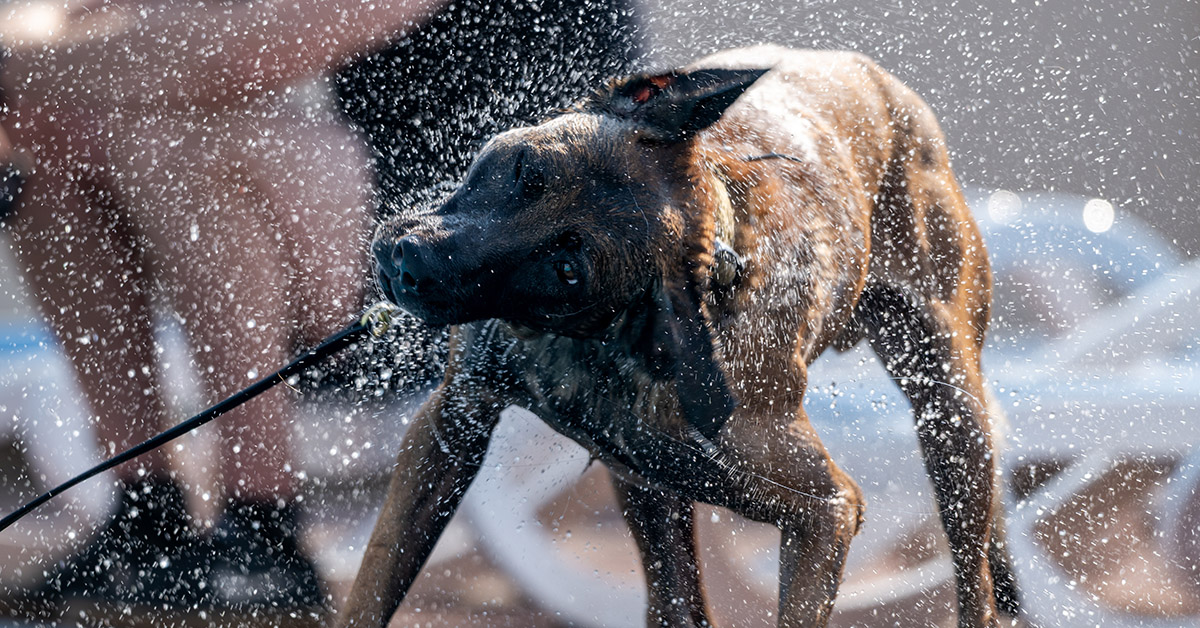
They’ve been around for every major United States military conflict since the Revolutionary War.They’ve put themselves in just as much danger as any service member, sometimes more. These warriors do it all without complaint, too, all in exchange for no pay. All they want is just some good belly scratches, unconditional love, and full food and water bowls.It’s a good bargain for everything these U.S. military dogs do for their country.Related: 10 military dogs who made historyArmy Staff Sgt. Justin Williams calls his most recent military dog, Arina, his sister in arms.“We’ve all shared a bond, whether it’s on deployment, and the TDY missions that we’ve gone through together,” Williams told the Army in a video posted on YouTube. “Any finds that we have is definitely a rewarding feeling.”Arina is just one of the approximately 1,600 working dogs currently on active duty in the U.S. military. With National K-9 Veterans Day on March 13 approaching, here are some things you should know about these amazing animals.
They’ve Been There at Key Moments in American History
The father of our country knew the value of a good military dog. (American Battlefield Trust)
Military working dogs predate the formation of the Continental Army by a long shot.They have been around since roughly 600 BC, when they were deployed against the Cimmerians. It is difficult to write the history of the U.S. military, though, without including our four-legged friends.George Washington, in fact, loved dogs, and some of them accompanied him onto the battlefield. Sallie Ann Jarrett, an American Staffordshire Terrier puppy, became the mascot of the 11th Pennsylvania Volunteer Infantry during the Civil War and saw action at Antietam and Gettysburg. And let’s not forget Sgt. Stubby, the bull terrier mutt that inconceivably fought in 17 major battles during World War I.Then there was Nemo, a German Shepherd who lost an eye and suffered other severe injuries while saving his handler’s life in Vietnam in 1966. And Cairo, who accompanied the Navy SEALs on Operation Neptune Spear, the mission on which they killed Osama bin Laden in Abbottabad, Pakistan, on May 2, 2011.
This Military Program Trains Puppies
We have a serious case of puppy love with these military dogs in training. (Defense Department/Linda Hosek)
While myriad breeds have served through the years, German Shepherds and Belgian Malinois primarily represent the majority of U.S. military service dogs today.Only Belgian Malinois, though, are accepted into the Defense Department’s Military Working Dog Breeding Program. Run out of the Air Force’s 341st Training Squadron at Joint Base San Antonio, 50 to 90 puppies are born into the program annually.Service members begin interacting with these precious puppies from the time they are nursing. These airmen try to discern qualities (such as a natural curiosity, not being afraid of noises, and an inclination to play with objects) common in most military dogs.The puppies then live with foster families for up to eight weeks before they begin intensive training with the squadron. During this phase, the puppies encounter situations they might find on deployments.When they are about 1 year old, the dogs are evaluated for three weeks to determine whether they will graduate to the next stage.
These Are the Things Military Dogs Must Do
Like most handlers and their military working dogs, U.S. Army Sgt. Brianna Plush has a special relationship with Edzsi. (U.S. Army/Sgt. 1st Class Tanisha Karn)
Roughly about one in eight active-duty military dogs graduate from the Military Working Dog Breeding Program. The others come from breeders worldwide.No matter their origin, they all must go through the Military Working Dog Training Program. Also run by the 341st Training Squadron, the program covers 120 days and makes sure, among other tasks, that the dogs can sniff out explosives or drugs while on patrol. They also practice security operations, search and rescue, and how to track down suspected enemies, among other things.It can be a bit much at times, but the dogs never seem to mind. They have an endless appetite to please and an unlimited amount of energy, and as long as they get a few treats every now and then, it’s all good.All military dogs are trained at Joint Base San Antonio, regardless of the service branch to which they will be assigned.
Military Dogs Have Their Own Veterinary Hospital
SStash stands for the first time on his new outfitted leg brace at LTC Daniel E. Holland Memorial Military Working Dog Hospital at Joint Base San Antonio-Lackland, Texas, April 2, 2015. (U.S. Air Force/Staff Sgt. Michael Ellis)
Given the nature of their work, it’s inevitable that some military dogs will be injured. Depending on the severity, some of those that are, are transported to the Lt. Col. Daniel E. Holland Memorial Military Working Dog Hospital in San Antonio.
The hospital provides regular vision, hearing, bone, and blood tests on the dogs already on Joint Base San Antonio. The staff also diagnoses any behavior issues the dogs experience.
The 32,000-square-foot facility is named after Holland, an Army veterinarian who died in 2006 after a roadside bomb blast in Baghdad. The youngest of 10 children, Holland loved making animals feel better.“Where else could a person swim with dolphins, jump out of airplanes, and help people in faraway countries take better care of their animals?” Holland once said of his military service.
However cute they are, military dogs are not there to up the cute factor. They’re performing a crucial job. Since the founding of our nation 250 years ago, they have done it exceedingly well.
Don’t Miss the Best of We Are The Mighty
• A brief history of dogs in the military• 8 of the best dog breeds for veterans with PTS• Brothers in paws: A list of military-utilized dog breeds
Featured
Military Life
What you should know about the program that trains US military dogs
By Stephen Ruiz
Air Force
How Kuwait’s air defenses downed three American F-15 Strike Eagles
By Adam Gramegna
Veterans Benefits
Veteran experts were nominated to determine federal education rulemaking
By Gina Napoletano
Cold War
How Eisenhower’s ‘Atoms for Peace’ program started Iran’s nuclear program
By Stephen Ruiz
History
Former Iranian President Mahmoud Ahmadinejad reportedly killed by an Israeli missile
By Blake Stilwell
The post What you should know about the program that trains US military dogs appeared first on We Are The Mighty.








 New Posts (Home)
 ChatBox
 Popular Posts
  Game Zone
 Top PodCasts