www.theblaze.com
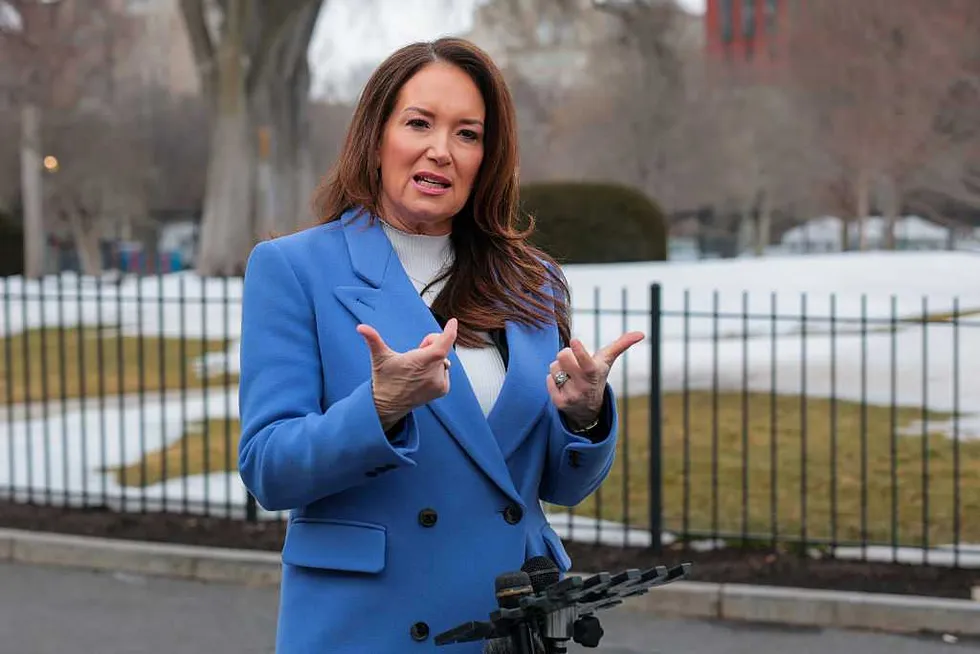
The left's absurd attack on Brooke Rollins
Recently, a simple note from Secretary of Agriculture Brooke Rollins wishing staff a meaningful Easter and reminding them that it was a day to celebrate the “foundations of our faith” has caused those in the secular-state industrial complex to rhetorically crucify the secretary.The right of a U.S. secretary of agriculture — or any public official — to send a pro-Easter message to staff is not only constitutionally permissible, it is deeply consistent with the text, history, and tradition of the First Amendment.There’s a difference between hearing something and being made to say it yourself.The First Amendment safeguards the free exercise of religious practice in public while ensuring that there will be no state-mandated religion. Critics often interpret the Establishment Clause as requiring a strict secular silence from public officials, but that interpretation is historically incomplete.The Constitution does not demand a religion-free public square; rather, it prevents coercion or official establishment of a national church.This kind of message is not new. It echoes in older scenes: a president bowing his head at the end of a proclamation, members of Congress listening to a morning prayer before debate begins, a phrase stamped quietly onto a coin that passes through countless hands.Indeed, the U.S. Supreme Court has repeatedly recognized that government may acknowledge religion as part of the nation’s heritage. From legislative prayers upheld in Marsh v. Chambers to holiday displays permitted in Lynch v. Donnelly, the court affirmed that ceremonial and traditional expressions of faith are compatible with constitutional principles.A secretary of agriculture sending a goodwill Easter message fits squarely within this tradition.Religious references have been woven into American governance since the founding. Presidents from George Washington onward have issued proclamations referring to God and religious observances.Congress employs chaplains. The national motto, “In God We Trust,” appears on currency. These practices demonstrate that the framers did not intend to purge religious expression from public office, but to prevent its abuse.Easter, specifically, has long been recognized both culturally and institutionally in the United States. Federal employees often receive time off for Easter-related observances, and presidents frequently release Easter messages reflecting on themes of renewal and hope.A pro-Easter message that is inclusive in tone — perhaps acknowledging the holiday’s themes or extending goodwill to those who celebrate — does not coerce belief or participation. Employees remain free to disregard the message, just as they are free to observe or not observe the holiday.RELATED: The trial lawyers come for online free speech Skodonnell/Getty ImagesThere’s a difference between hearing something and being made to say it yourself. The First Amendment lives in that space. It protects the employee who quietly appreciates the message and the one who deletes it without a second thought.Suppressing such expressions, on the other hand, risks creating a different constitutional problem: hostility toward religion. The Supreme Court has cautioned against interpretations of the Establishment Clause that demonstrate animus toward faith. Neutrality does not mean erasure; it means equal treatment. Allowing a pro-Easter message does not privilege Christianity so long as the government does not exclude or penalize other beliefs.In a religiously pluralistic society, the goal should not be to eliminate religious references from public life, but to ensure that they are expressed in a way that respects freedom for all.The secretary of agriculture sending an Easter message — grounded in tradition, delivered without coercion, and consistent with historical practice — falls well within those constitutional boundaries.








 New Posts (Home)
 ChatBox
 Popular Posts
  Game Zone
 Top PodCasts