New Posts (Home)
 ChatBox
 Popular Posts
  Game Zone
 Top PodCasts

Whenever a smoke alarm is installed too close to the oven, it eventually stops protecting anyone. After enough false alarms, people end up pulling the batteries while the food is still cooking.
Advertisement
The Doomsday Clock follows that path: what began as a sober warning tool now behaves like a simple noisemaker, sounding louder and more often as credibility thins with each pull.
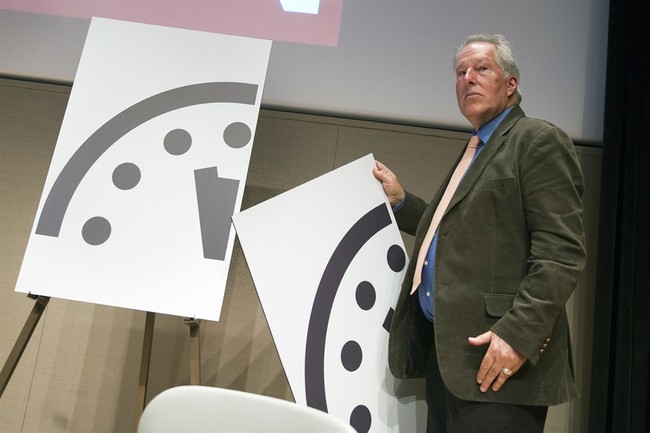
Earlier today, atomic scientists set the 2026 Doomsday Clock to 85 seconds to midnight, the closest the clock has ever been to a hypothetical obliteration.
A Cold War Tool With a Clear Purpose
When it debuted in 1947, the Doomsday Clock was created by scientists connected to the Manhattan Project, which demonstrated how nuclear weapons altered human history.
The clock illustrated a symbolic method of showing how close humanity stood to catastrophe. Midnight meant global destruction, while distance meant restraint.
Since then, movements reflected tangible events: nuclear tests, arms treaties, or escalation or restraint between superpowers. It took quite a bit for the clock to move because it was anchored to observable decisions and capabilities.
Its message was focused on nuclear war, which remained the central concern.
Controlling the Hands Today
Nowadays, the Bulletin of the Atomic Scientists operates the clock, led by its president and CEO, Alexandra Bell.
Atomic scientists on Tuesday set the 2026 “Doomsday Clock” to 85 seconds to midnight, the closest it’s ever been to a theoretical annihilation.
Familiar risks to human existence, such as nuclear weapons and climate change, were cited by the scientists, along with new technologies like artificial intelligence, which they argued is being used to spread disinformation. This is the third time that the clock has been moved closer to midnight in the past five years.
“Every second counts, and we are running out of time. It is a hard truth, but this is our reality,” President and CEO of Bulletin of the Atomic Scientist Alexandra Bell said.
Advertisement
The time is set by a Science and Security Board, and supported by a board of sponsors that includes former government officials and academics with security and policy backgrounds.
Over time, names change, but the framework remains: a small group interprets global risk and announces adjustments during press events that increasingly look like political briefings.
Resting on credentials instead of something tangible, authority doesn't rely on any fixed formula, where judgment drives movement.
Once, that flexibility allowed wisdom; now it invites mission creep.
The Shift From Warning to Advocacy
Movements have recently cited an expanding list of threats, where nuclear conflict shares space with climate change, AI, pandemics, misinformation, and political polarization. These issues that may deserve debate, but none align cleanly with the clock's original premise.
Urgency loses meaning when each concern qualifies as existential, forcing the clock to inch closer to midnight: not because missiles were getting ready to launch, but because narratives, or strongly worded memos, intensified.
It's a situation where political language defines explanations, policy preferences bleed into risk assessment, and alarm becomes activism wrapped in scientific authority.
Advertisement
We've arrived at the time when the clock no longer simply measures danger; it signals alignment.
Why the Clock Keeps Moving
In a world filled with political theater, dramatic movement sustains the clock's relevance, followed by headlines, chattering heads sitting at TV panels, and the arrival of donations, because, like end-of-world preachers, fear keeps attention locked on the Doomsday Clock.
There is, however, a cost associated with constant escalation; when midnight never arrives but always threatens, the public grows bored as real risks fade into the background.
Restraint during the Cold War depended on credibility, as leaders took warnings seriously because they rarely issued them. Today's clock acts more like a metronome set by ideology than by evidence, leaving any sense of urgency without the benefit of discipline as nothing more than performance art.
What Gets Lost Along the Way
Nuclear deterrence, arms control, and strategic clarity all still matter, while bundling every modern anxiety into a single, symbolic gauge cheapens the original mission.
When warning tools turn into lectures, public trust erodes, and even legitimate concerns are met with skepticism.
Any warning system that cries wolf too many times will have people ignore any footsteps in the dark.
Advertisement
Final Thoughts
Smoke alarms save lives when silence prevails, while constant noise turns protection into irritation. The Doomsday Clock once demanded attention through its restraint. Now? It competes for relevance through repetition.
There are three things required to reset credibility: restraint, focus, and humility. Without those qualities, midnight stops are disasters and amount to nothing more than a marketing campaign.
Panic sells. Perspective protects. PJ Media VIP backs writers willing to separate real danger from political theater and explain why clarity still matters. Join the conversation here!