New Posts (Home)
 ChatBox
 Popular Posts
  Game Zone
 Top PodCasts

Russia and China have pledged broad assistance to Cuba as President Donald Trump tightens U.S. sanctions against the communist regime in Havana. Kremlin spokesman Dmitry Peskov criticized American pressure and described the island's fuel crisis as severe.
Advertisement
The ‘suffocating techniques’ being used by the United States on Cuba have caused multiple difficulties to the Latin American country, and Russia is currently negotiating potential ways out with its Cuban friends, Kremlin Spokesman Dmitry Peskov told reporters.
"True, what we call suffocating techniques being used by the United States have inflicted multiple difficulties on the country. We are negotiating with our Cuban friends to find potential solutions to these issues, at least to give what help we can," Peskov explained.
Russian Foreign Minister Sergey Lavrov met with Cuban Foreign Minister Bruno Rodríguez to talk about energy shipments and economic support.
Cuban President Miguel Díaz-Canel thanked Moscow publicly while blaming Washington for shortages and blackouts.
Cuban Foreign Minister Bruno Rodriguez Parrilla strongly condemned the measures, saying they not only could make Cuba face "a total blockade of energy supplies" but also "violate all principles of international trade," creating "extreme life conditions" for the Cuban people.
China quickly followed suit; Foreign Ministry spokesperson Lin Jian confirmed that Beijing "stands ready to provide fuel and other support" amid jet fuel shortages that have been disrupting travel and trade.
Chinese President Xi Jinping has expanded commercial ties with Havana as part of the broader Belt and Road initiatives.
Advertisement
While America sanctions, Beijing and Moscow move in.
A Familiar Pattern With New Stakes
Russia has propped up Diaz-Canel's government by supplying oil, wheat, and technical assistance. Russian Prime Minister Dmitry Chernyshenko has overseen the coordination of shipments and the expansion of cooperation agreements.
Any reports of deeper military and technical coordination, understandably, raise concerns in Washington. The 90-mile distance to Florida further highlights the history between strategic rivals of a regime that's jailed dissidents, silenced journalists, and crushed protests for decades.
When it comes to Cuba, history isn't a silent teacher; in 1962, Soviet missiles nearly stood on Cuban soil, aimed at American cities; the world remembers how that confrontation ended.
Today, conditions are different, yet strategic proximity remains real. That highlights another reality: Moscow and Beijing rarely invest resources without calculating an advantage.
Sanctions With Purpose
President Donald Trump's sanctions target regime leadership and financial channels, not Cuban families. Pressure focuses on state control, security forces, and revenue streams that sustain citizen suppression.
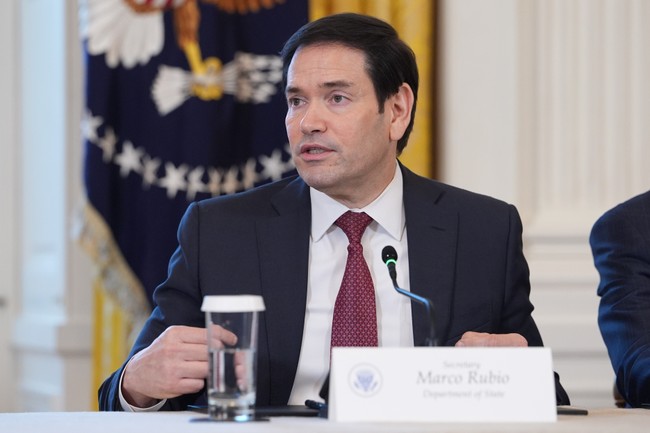
Relief without reform strengthens centralized power and extends suffering. Secretary of State Marco Rubio, whose family fled Cuba, has defended stronger enforcement and warned against romanticizing dictatorship.
Advertisement
Miami Mayor Francis Suarez speaks plainly about prison sentences, property seizures, and exile. Communities throughout South Florida don't treat Havana as a misunderstood victim; they remember lived experience.
Media Sympathy and Selective Memory
One thing U.S. news audiences could always count on was the perpetual love affair between Cuban dictators and U.S. media. Its coverage often leaned hard into empty shelves and fuel lines while softening the regime's role in creating economic paralysis. Headlines frame sanctions as cruelty, yet treat centralized planning failures as mere background noise. Díaz-Canel blames Washington, of course, and stories frequently carry that accusation forward with little media pushback.
It's rare that those same stories talk about political prisoners, forced labor reports, or protester beatings, nor do they report that dissent in Cuba still costs freedom.
Sympathy flows toward a ruling elite that controls information, markets, and movement. Any outrage tends to target American policy, not Cuban repression.
It's an old pattern; when adversaries posture as rescuers and dictators present as victims, coverage often follows the stage lighting, not the script.
Meanwhile, families in Miami who fled the firing squads and secret police rarely find themselves in front of a microphone.
A Strategic Reality Close to Home
Advertisement
Russian and Chinese actions aren't altruistic; they aren't motivated by charity. Both governments compete with the U.S. across military, technological, and economic fronts. Supporting Cuba offers geographic leverage near American shores and diplomatic symbolism in Latin America.
Sanctions exist to apply pressure, with Moscow and Beijing countering that pressure. The chessboard grows more crowded, while pretending the pieces lack consequences doesn't protect American interests.
Final Thoughts
When rival global powers rush to defend a communist regime 90 miles from Florida, applause shouldn't come easily. Strategic competition didn't vanish after the Cold War: it adapted.
President Trump's pressure campaign signals that the United States still recognizes danger near its doorstep.
Moscow and Beijing have chosen their side, while America should remain steady on its own.
National security stories often get wrapped in humanitarian language while strategic maneuvering slips into the background. PJ Media VIP keeps attention on leverage, power, and consequences rather than sentiment. Join VIP to support analysis that refuses to look away when rival powers test American resolve.