www.theamericanconservative.com
U.S. Hawkishness on Russia Makes Deterring China Harder
Foreign Affairs
U.S. Hawkishness on Russia Makes Deterring China Harder
America’s Ukraine policy has led to a potential “nightmare” for our navy in the Pacific.
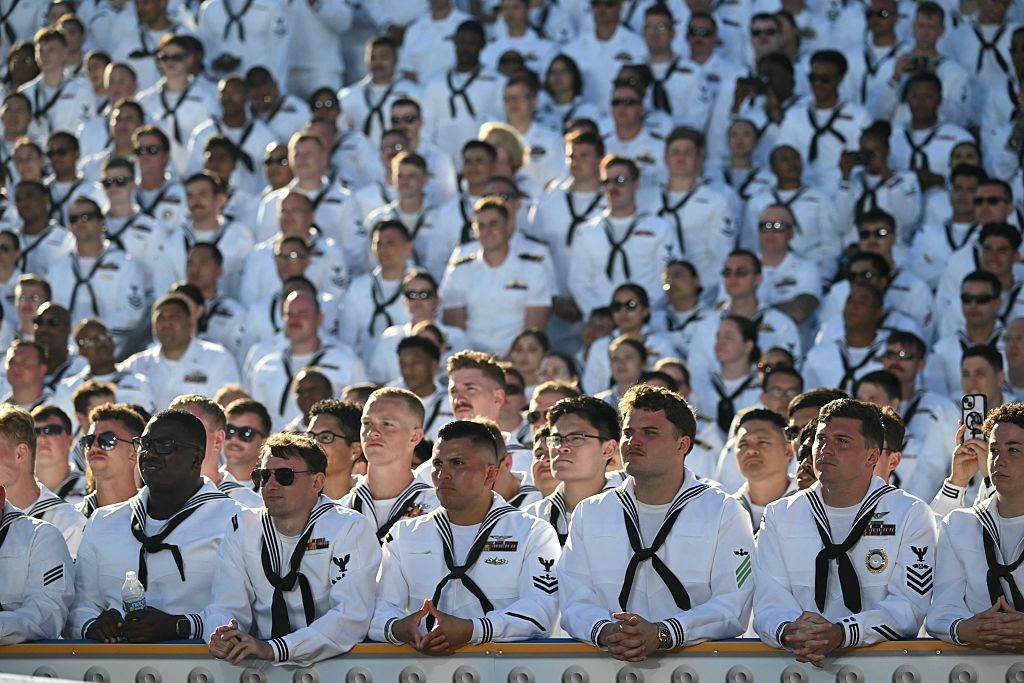
(Photo by SAUL LOEB/AFP via Getty Images)
American hawks often claim that hostile policy towards Russia is in the interests of the United States because it deters China, our main superpower competitor. Their argument is roughly that, if we do not sanction Russia and give money to Ukraine indefinitely, China will feel “emboldened” with the possible result of a kinetic conflict over Taiwan. This policy premise has only strengthened China by forcing the Russians into the hands of the Chinese. Tangibly, American aid to Ukraine and sanctions on Russia have aided the PRC, and particularly its naval forces, in their ongoing nuclear buildup by encouraging Russian technology transfers to China.
Until 2020, China’s nuclear strategy was largely a relic of the Cold War and the Sino–Soviet tensions of the 1970s. Accordingly, China’s nuclear capabilities consisted of a stockpile of nuclear warheads numbering in the low 200s to deter the USSR or Russia and America. Chinese nuclear capabilities were also heavily dependent on land-based systems, largely medium-range. China possessed comparatively few (and noisy) ballistic missile submarines (SSBNs), and lacked air-launched ballistic missile (ALBM) capabilities altogether (and consequently lacked a nuclear triad).
China has recently embarked upon a massive buildup of its nuclear forces. By mid-2024, China had tripled the number of nuclear warheads in its inventory to over 600, and is currently on-track to have around 1,000 warheads by 2030, establishing it as a nuclear peer of the United States and Russia. In 2019, the Chinese announced their first bomber capable of carrying an ALBM; in 2025, during its Victory Day celebrations, China revealed the existence of its first ALBM, completing its nuclear triad.
The most concerning aspect of China’s nuclear development is the buildup of the sea-based component of China’s nuclear capabilities, most notably through the development of the Type 096 submarine. China has historically lagged in SSBN development and production; it currently has six SSBNs in commission, compared to the 14 operated by both Russia and the United States. China’s SSBNs are also considerably smaller than their American or Russian counterparts.
Crucially, Chinese submarines have also been known to be comparatively loud and easy to detect, with the Type 094, the newest SSBN in Chinese service, assessed louder and more detectable than Soviet submarines from the mid-1980s. This is comforting for American officials, as the ability of SSBNs to cruise and to maintain station undetected is arguably their most important capability. This is because the main asset of a submarine-launched nuclear deterrent (compared to land or air-launched) is its unpredictability. A sea-launched missile (nuclear or conventional) from an undetected and submerged submarine is much harder to plan against or to intercept.
SSBNs also play a critical role in nuclear deterrence by providing second-strike capabilities. Even should a nation’s land and air-launched nuclear capabilities be destroyed during the opening salvos of a conflict, SSBNs can launch a second strike on the hostile country. For this reason, even in peacetime, The United States and Russia almost always keep part of their SSBN inventory at sea on “fully-armed nuclear deterrence patrols” to provide a permanent nuclear deterrent.
Being able to detect and track foreign SSBNs, particularly through their noise emissions, is the main way of mitigating this risk, and could enable such a threat to be neutralized if need arise. Accordingly, the recurring struggles of the PLAN to field quiet and advanced SSBNs has been of great benefit to the United States in being able to maintain a qualitative military edge over the PLAN and to deter China.
This gap between the capabilities of the USN and PLAN capabilities looks likely to close with the new Type 096 submarine, which is currently being developed and is set to enter service in the late 2020s or early 2030s. As has been noted by American strategists, this new class will be much quieter than earlier PLAN submarines. “The Type 096s are going to be a nightmare,” Christopher Carlson, a retired American submariner and military analyst, told Reuters. “They are going to be very, very hard to detect.”
While much of China’s nuclear buildup is beyond the control of policy-leaders in Washington, this increase in China’s submarine-launched nuclear capabilities is in large part directly attributable to the U.S. government’s short-sighted Russia policy. It has been widely reported that the reason for the projected stealthiness of the Type 096 is that Russia transferred some of its submarine-stealth technology to China as a result of Western sanctions over the ongoing war in Ukraine.
There is considerable evidence that Russia has aided China in the development of the Type 096. The Type 096 follows many Russian design trends; the submarine’s propulsion system is estimated to mirror that of Russia’s Borei-class submarines, and Russia’s Rubin Design Bureau is said to have influenced the Type 096’s design.
This technology transfer was not inevitable. Russia has long been very hesitant to export or transfer any of its submarine stealth technology, which has been described as Russia’s “crown jewels”—a considerable advantage in the nuclear arena, particularly over China. But Western aid to Ukraine and sanctions targeting Russia have deepened both economic and political ties between Russia and China; the sub tech transfer is one of the results.
Though it is doubtful that the Russians transferred their newest technology, the “imitative innovation” of even older Russian technology by the Chinese is set to create significant strategic headaches for the United States. This has been admitted by our leaders. Admiral Samuel Paparo, the commander of the U.S. Indo-Pacific Command, said that Russian technology transfers of submarine technology to the PRC “has the potential of closing American undersea dominance.”
While it is impossible to “win” a nuclear war, and even a conventional conflict with China would be harmful to U.S. interests, it is beneficial for the U.S. to maintain its advantage in submarine capabilities over China. American naval strength deters China from influencing, coercing, or intervening militarily in its regional neighbors, including across the Taiwan Strait. The recent increases in the quantity and quality of China’s nuclear deterrent, particularly in the critical field of submarine-based capabilities, greatly benefits the PRC in its dealing with surrounding countries and the U.S., increasing China’s geopolitical leverage over its neighbors and giving it the ability to further supplant American influence in Asia and globally.
While the cat may very well be out of the bag on the Type 096, it is not too late to stop similar instances of Chinese-Russian cooperation on military technology. Even with these transfers of technology, China still lags behind Russia in submarine quieting technology, and preventing further transfers is in the interests of the United States. The United States should seek rapprochement with Russia to avert potentially fatal cooperation between Moscow and Beijing.
Setting aside the carnage caused by leading Ukraine “down the primrose path,” genuine harm has been done to American interests and military capabilities by those who, for whatever reason, have pursued hostility between the United States and Russian Federation. Those who pitched confrontation with Russia as an efficacious means of deterring China should especially stand discredited.
The post U.S. Hawkishness on Russia Makes Deterring China Harder appeared first on The American Conservative.








 New Posts (Home)
 ChatBox
 Popular Posts
  Game Zone
 Top PodCasts