www.theamericanconservative.com
On Israel, Trump Should Echo Reagan
Foreign Affairs
On Israel, Trump Should Echo Reagan
Being firm about American interests and limits in the Middle East is healthier for both nations.
President Donald Trump is attempting to secure his foreign policy legacy in the Middle East. Not satisfied with the Abraham Accords, he is looking to bring a more permanent peace to the region and successfully mediate the Israel–Gaza war. American politicians haven’t found it difficult to stand up against Palestinian intransigence in the past, but, if Trump is to succeed, he has to also stand up to the Israeli government. He should take a lesson on how to do so from none other than President Ronald Reagan.
Although today the reception of Reagan’s legacy with Israel focuses on how he strengthened the relationship through the 1985 free trade agreement or his strong support of Soviet Jewry, there was a time when he held a firm line against the Israeli government that drew very similar complaints to those Trump has articulated.
In the early 1980s, much as it is today, Israel was at war with and invading its neighbors—Syria and the PLO in Lebanon. Much as is the case today, Israel maintained technological dominance over those rivals to a shocking degree: During the start of the war in 1982, in a span of just two hours, the Israeli armed forces shot down 85 Syrian MiGs and destroyed nearly all the country’s deployed Soviet-supplied SAM batteries. Israel continued to advance and by June had reached Beirut, which the army besieged, firing thousands of artillery rounds into the capital.
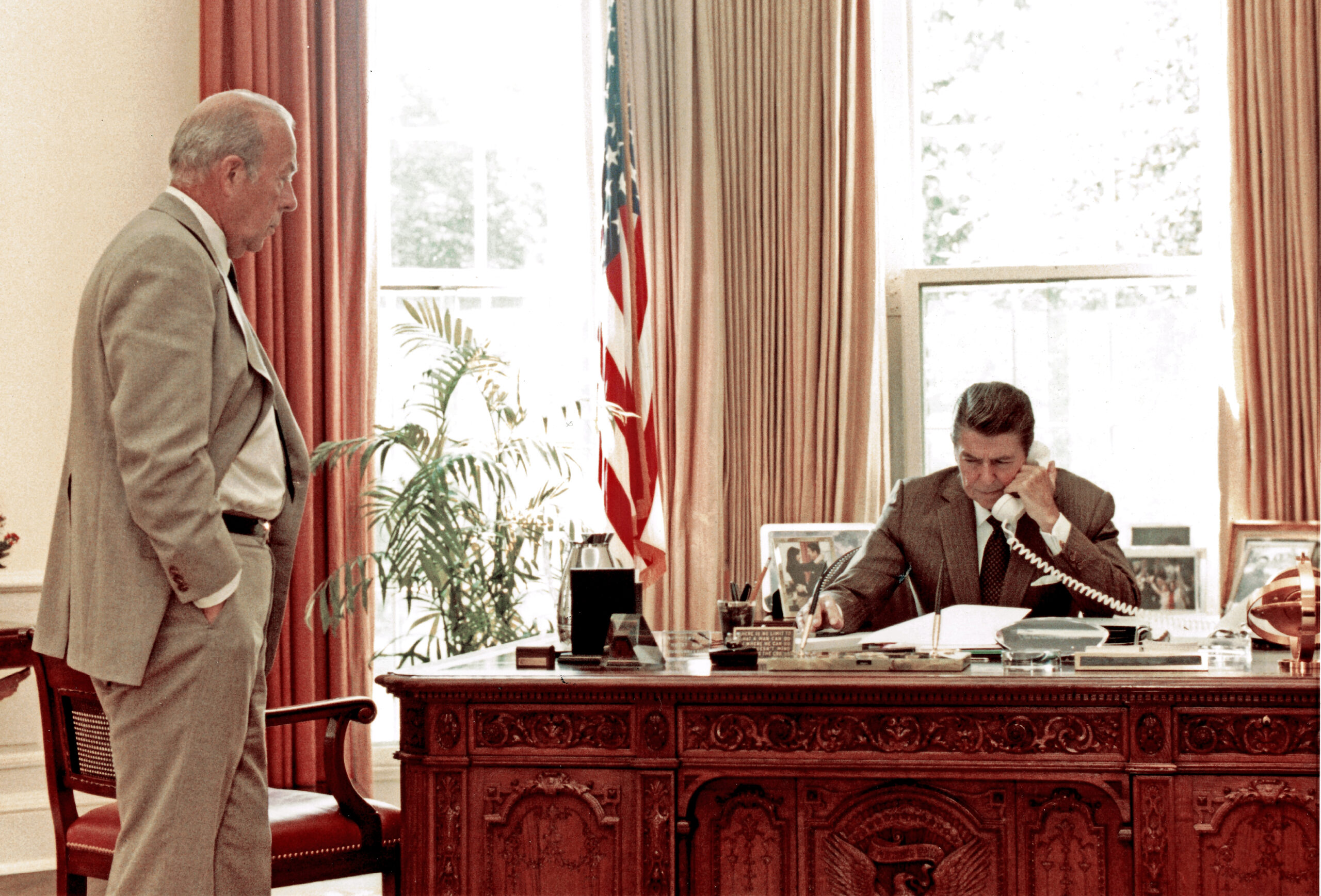
Israel succeeded in forcing the PLO to withdraw, but not without infuriating the United States and Reagan, who threatened to sanction Israel and described the bombings to Israel’s Prime Minister Menachem Begin as a “holocaust.” Reagan applied real pressure—within 20 minutes of a phone call between the leaders, during which he warned the behavior was going to threaten the relationship between the U.S. and Israel, Begin ordered a halt to the bombing. Reagan himself was shocked by the power he had to force the issue. There was no talk of standing with Israel above all else after this. The president was infuriated by the intransigence of an ally.
By August, Reagan’s envoy, Philip Habib, was able to achieve a ceasefire between the warring parties, and the PLO withdrew by September. Nevertheless, tensions remained extremely high, leading to the assassination of the Israeli-backed Lebanese president-elect. Shortly thereafter, Israel sent their allied Lebanese forces into civilian refugee camps filled with elderly men, women, and children, where they committed one of the bloodiest massacres of the war. Men were castrated; children died in the arms of their mothers. Tom Friedman’s reporting on what happened later earned him a Pulitzer. The response from American officials was strong and direct. Everyone, from Morris Draper to George Shultz to Reagan himself, was left horrified by the fact that an American ally permitted the massacre to happen.
There are lessons aplenty here for the current administration if it should so choose to learn them. To paraphrase Bill Clinton, who’s the superpower here? Reagan knew the answer and was surprised at the power he could project on that basis. Yet many American politicians seem to have forgotten it. Once more, Israel is isolated in its neighborhood and is dependent on American military might to back it up; once more, the U.S. is ready to sign up for more Middle East adventures. The lesson of Reagan and Lebanon is twofold. First, there is little reason to expend American blood in a region that does not want it and where the agenda is unclear. Second, if there is to be involvement, whether that be troops or weapons, America has not just a say but arguably a veto on where and when those are to be used. Countries seeking a more independent foreign policy are welcome to find one—to the extent it isn’t subsidized by the American taxpayer.
Trump was elected on winding down foreign wars, not signing up to perpetuate horrors in the name of an ally. It is unlikely there will be appreciation in all quarters for this, but ultimately these decisions are to be made by the superior partner in the relationship. In Reagan’s time, that was the United States. Time will tell who it is during Trump’s.
The post On Israel, Trump Should Echo Reagan appeared first on The American Conservative.








 New Posts (Home)
 ChatBox
 Popular Posts
  Game Zone
 Top PodCasts