www.theamericanconservative.com
Trump’s Russia–Ukraine Diplomacy Is Good. Here’s How It Could Be Better
Foreign Affairs
Trump’s Russia–Ukraine Diplomacy Is Good. Here’s How It Could Be Better
Experts highlighted challenges and shared recommendations for achieving peace.
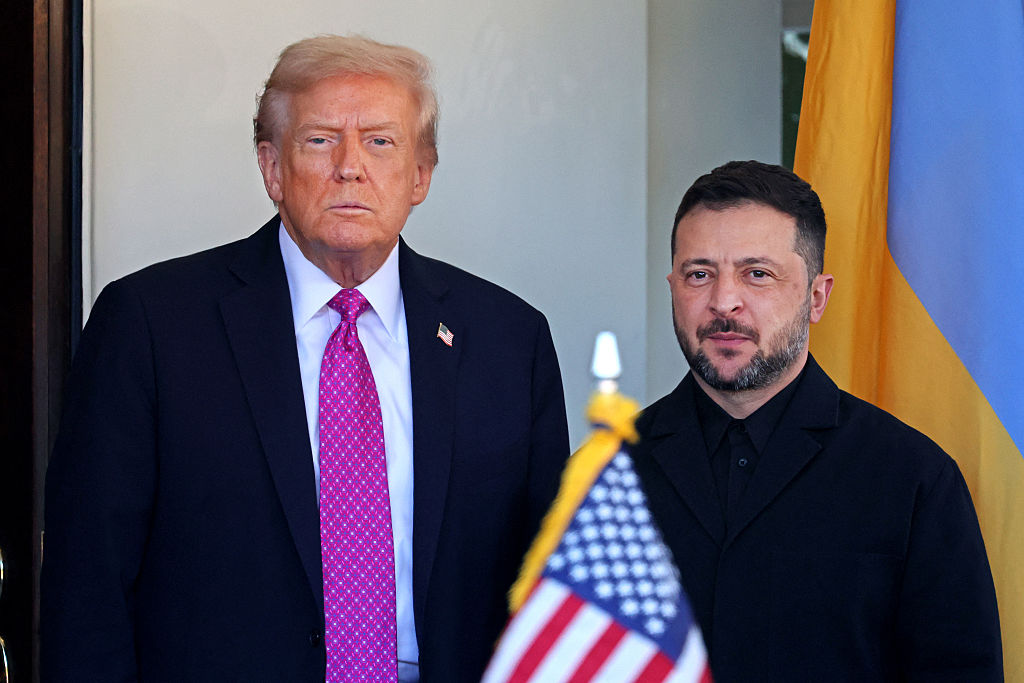
(Photo by TOM BRENNER/AFP via Getty Images)
President Donald Trump’s Russia–Ukraine diplomacy has sparked much criticism. Typically, the critics who grab the most attention are those who accuse the White House of being “pro-Russian.” This has been the case especially following the leak two weeks ago of the administration’s 28-point peace plan, which was dismissed as a “wish list” for Russia’s Vladimir Putin and a “surrender” document for Ukraine’s Volodymyr Zelensky.
Given this one-sided political discourse, many experts who favor constructive U.S. diplomacy with Moscow devote precious time to defending the administration’s efforts. But they have their own criticisms of those efforts, as well as recommendations for how best to achieve peace. To better understand this neglected point of view, I reached out to four U.S.-based experts and one former Zelensky aide, all of whom take what I consider a balanced, pragmatic view of the conflict.
The U.S.-based experts’ insights collectively pertain to three obstacles to settling the war: 1) The Trump administration’s failure, at least early on, to assemble a dedicated negotiating team; 2) obstructionist Russia hawks in Washington (including at the White House) and in Europe who oppose any peace deal that Moscow might accept; and 3) the inherent difficulties of resolving the war given the gulf between Russia’s and Ukraine’s negotiating positions.
Experts emphasized or at least alluded to the absence of a well-coordinated U.S. negotiating team that could do the long, difficult work of conflict diplomacy. Emma Ashford of the Stimson Center said the administration’s biggest mistake has been “engaging in high-level summit diplomacy before the working-level details are hammered out.”
Similarly, Jennifer Kavanagh of Defense Priorities, while praising the administration’s devotion to finding peace even amid “unfair criticism,” said the war was too complex to be resolved “with a few high-level summits.” Rather, “a sustained process for working through the issues at the core of the conflict is needed.” Anatol Lieven of the Quincy Institute said the Trump administration had complicated matters by failing “to unify its negotiating team.”
But the failure to assemble a strong negotiating team may have derived, in part, from external political pressures, according to the Quincy Institute’s George Beebe, a former director of Russia analysis at the CIA. Beebe pointed to “Russiagate,” the scandal from Trump’s first term in which the president was falsely accused of colluding with Moscow to steal the 2016 election. As part of that sordid saga, Trump’s own officials, including Fiona Hill and Alexander Vindman, depicted him as being easily manipulated by Putin. Consequently, Beebe said, Trump in his second term has been wary of bringing in Russia–Ukraine experts he doesn’t already know.
Without a strong bench of experts, Beebe said, the White House team was unduly influenced by outgoing special envoy Keith Kellogg, who saw Putin as an imperialist looking to grab more land. Beebe said Kellogg didn’t understand that the Kremlin genuinely perceived an “existential threat” in Ukraine’s growing partnership with NATO. Thus, Kellogg mistakenly believed that tightening sanctions on Russia and boosting military aid to Ukraine would lead Putin to reconsider the invasion.
Ashford intimated that another hawk, even more central within Trump’s orbit, possibly has hindered the peace process: Marco Rubio. As secretary of state and national security advisor, Rubio is arguably the second-most powerful person in the U.S. government, and Ashford said that “the U.S. secretary of state may oppose a deal.” This assessment comports with claims by senators that Rubio privately told them the 28-point plan was a “wish list” for Russia, which discredited the document in the eyes of many. (The White House denied these claims.)
The experts pointed to Europe as an obstacle to the Trump administration’s peace efforts. Ashford said that most European capitals believe Ukraine can get a better deal later (so it should resist an ugly deal now). Kavanagh detected a more cynical motivation in Europe’s strategic thinking around Ukraine. “Europe is happy to see the war continue since it gives more time for them to rearm,” she said, referring to European efforts to build forces in anticipation of U.S. retrenchment and escalating Russian revanchism.
Beebe was even more scathing. He pointed to a “Coalition of the Unwilling” that he said comprises “diehard elite Atlanticists in Washington and Europe” who struggle to accept the end of U.S. primacy and to see the necessity of compromise with Russia. “Can Trump overcome the Coalition of the Unwilling in Europe and Washington to forge and implement a settlement of the Ukraine war?” Beebe asked. “Getting Russia and Ukraine to compromise with each other may prove easy by comparison.”
Notwithstanding that wry humor, all the experts were attentive to serious difficulties of resolving the war, and more than one highlighted seemingly incompatible demands of the belligerents. Lieven pointed to Russian demands that he said are nonstarters for Kiev and Europe, namely, “withdrawal from the remainder of the Donbas [eastern region] still held by Ukraine; a formal ban on Ukrainian NATO membership; and an explicit ban on Western troops in Ukraine.”
Ashford identified an even more fundamental dispute: “Russia still does not recognize Ukraine as a fully sovereign country, and Ukraine wants its territory back, along with the freedom to pursue its own foreign policy.” Kavanagh assessed that Moscow, because of its battlefield advantages, isn’t ready to stop fighting, while Kiev isn’t ready to do so since it sees the conflict as “existential” and doesn’t trust that a peace deal will hold.
Still, the experts did not discount the possibility of peace. Kavanagh said Washington lacks the leverage to force Kiev and Moscow to make a deal, but that the war likely will end “in the next year or so,” and possibly in the spring. Importantly, Kavanagh assessed that getting to peace in the next few months would require Washington to “exert some pressure” on Kiev “even if it makes the settlement seem imposed.”
Ashford adumbrated a likely deal, which she said is coming into view: “some recognition of Russian territorial control (at least de facto) and some restrictions on Ukraine’s ability to join NATO, matched with the ability for Ukraine to arm itself for future deterrence.”
The person who provided the most comprehensively positive assessment of Trump’s diplomatic efforts was Iuliia Mendel, a former press secretary for Zelensky and current critic of the Ukrainian government. Trump, she said, “has steadfastly championed an end to the conflict between Russia and Ukraine.” For all the complaints about Trump’s transactional approach, Mendel said, “no viable alternatives have emerged, save for the endless invocation of unattainable ideals and the hollow vow to ‘stand with Ukraine as long as it takes.’”
Mendel offered a decidedly unromantic view of the conflict, which she noted involves “unrelenting death, devastation, economic ruin, rampant wartime corruption, and egregious human rights abuses.” While any likely peace deal won’t be flawless, she maintained, the alternative is much worse.
To help Ukraine avoid that worse alternative, Trump might turn the insights reported above into actions: sustaining a diplomatic process led by trusted negotiators; distinguishing between honest critics and saboteurs who oppose any deal Moscow might accept; and nudging Kiev to make concessions that, however painful, are likely needed to end a war that is devastating Ukraine.
The post Trump’s Russia–Ukraine Diplomacy Is Good. Here’s How It Could Be Better appeared first on The American Conservative.








 New Posts (Home)
 ChatBox
 Popular Posts
  Game Zone
 Top PodCasts