www.theblaze.com
A 9-point win becomes a ‘humiliating near-loss’? Please.
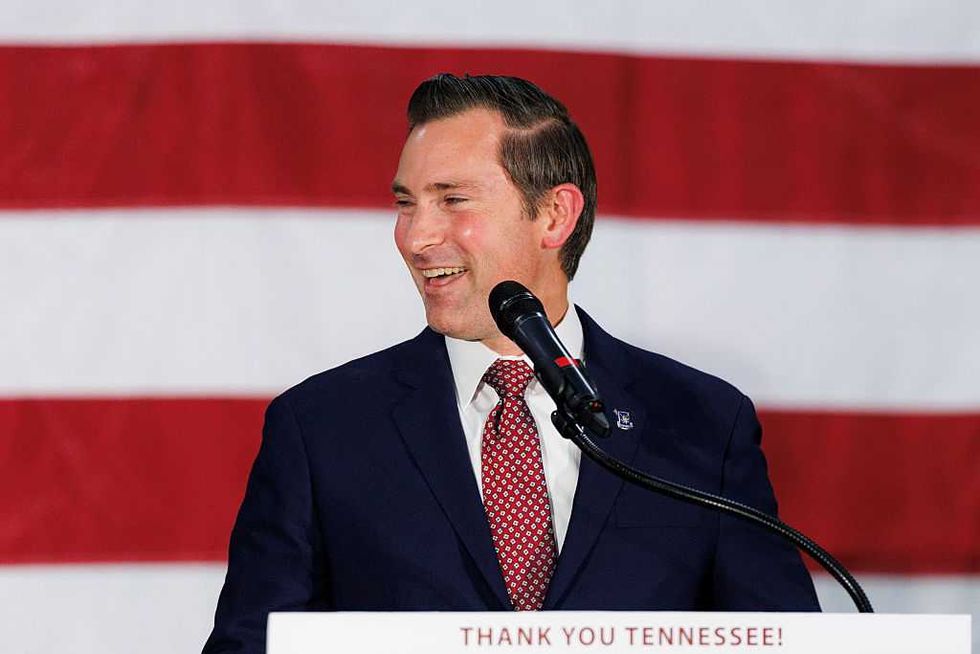
Republican Matt Van Epps has won a special election in Tennessee’s 7th Congressional District — a race the media immediately framed as “shockingly close,” a supposed omen of GOP collapse heading into next year’s midterms.That is how the Independent described it. Nearly every major outlet followed the same script: Van Epps “squeaked through,” “barely won,” or “scraped by” against flaky Democrat Aftyn Behn — a candidate so culturally radical she publicly insists that men can give birth and openly sneered at the people and culture of the district she sought to represent.The Tennessee race did not expose a Republican crisis so much as it exposed the cultural realignment reshaping the country.The narrative writes itself: If a progressive activist who hates her own potential constituents nearly flipped a House seat in deep-red Tennessee, then “fascist” Donald Trump and the Republican Party must be in free fall.The problem? None of that holds up.Van Epps did not “squeeze through” anything. He won by nine points against an opponent backed by a tidal wave of out-of-state woke-capitalist money. Democrats outspent Republicans roughly 2-1. Even so, Van Epps secured a solid victory, not the “humiliating near-defeat” hallucinated by the Daily Beast and dutifully echoed across left-wing media.Context also matters, and the press prefers to ignore it. In 2022, Tennessee’s 7th Congressional District was redrawn to pull in more of deep-blue Nashville. Van Epps’ predecessor, Rep. Mark Green, warned that packing more of the city’s electorate into the district would narrow future margins. That change did not stop Trump or Green from running up impressive totals in their home territory, but it guarantees a steeper climb for any Republican candidate.Viewed in that light, a nine-point GOP win looks less like a crisis and more like a stable hold in a reshaped district.Another reality the press downplays: Republicans carried their traditional coalition — small-town and rural voters, self-identified Christians, the suburban families who still vote their interests. GOP turnout operations clearly did their job in a midterm environment that does not exactly thrill Republican voters.Urban support for Republicans, however, continues to erode, and that pattern now shows up nationwide. The notion that “wokeness is over” or that the left has moderated itself belongs to fantasy. More than 80% of Nashville voters lined up behind Behn, a candidate who often sounded like a woke caricature conjured by a far-right blogger. New York City voters backed Zohran Mamdani in overwhelming fashion. Seattle just elevated a Mamdani clone to the mayor’s office. Claims that woke politics melted away do not survive contact with the vote totals.RELATED: Young, broke, and voting blue: 2025’s harsh lesson for the right Photo by Jon Cherry/Getty ImagesThe role of upscale left-wing donors — woke capitalists — also deserves attention. These people do not operate as Marxists or socialists in any serious sense. They behave like cultural revolutionaries with money and influence, eager to use redistribution as a tool to reshape society. They have no problem talking about higher taxes on “the rich,” because the true cost lands on the working and middle classes through lower wages and higher prices. They bankroll candidates like Behn because they want a different country — one less anchored in the values of the people who actually live in places like Tennessee’s 7th.The special election in Tennessee reflects the same class conflict now defining national politics. Cultural polarization keeps intensifying, and Tuesday’s special election showcased that reality in miniature.“Affordability” only partially explains the anti-Trump, pro-left tilt in certain electorates. A far worse economy, with rampant inflation and rising medical and food costs, did not prevent the Biden administration from outperforming expectations in the midterms. Something deeper drives that trend.The Tennessee race did not expose a Republican crisis so much as it exposed the cultural realignment reshaping the country. That shift will not simply fade away, no matter how often the media insists otherwise.








 New Posts (Home)
 ChatBox
 Popular Posts
  Game Zone
 Top PodCasts