www.eff.org
Age Verification Is Coming For the Internet. We Built You a Resource Hub to Fight Back.
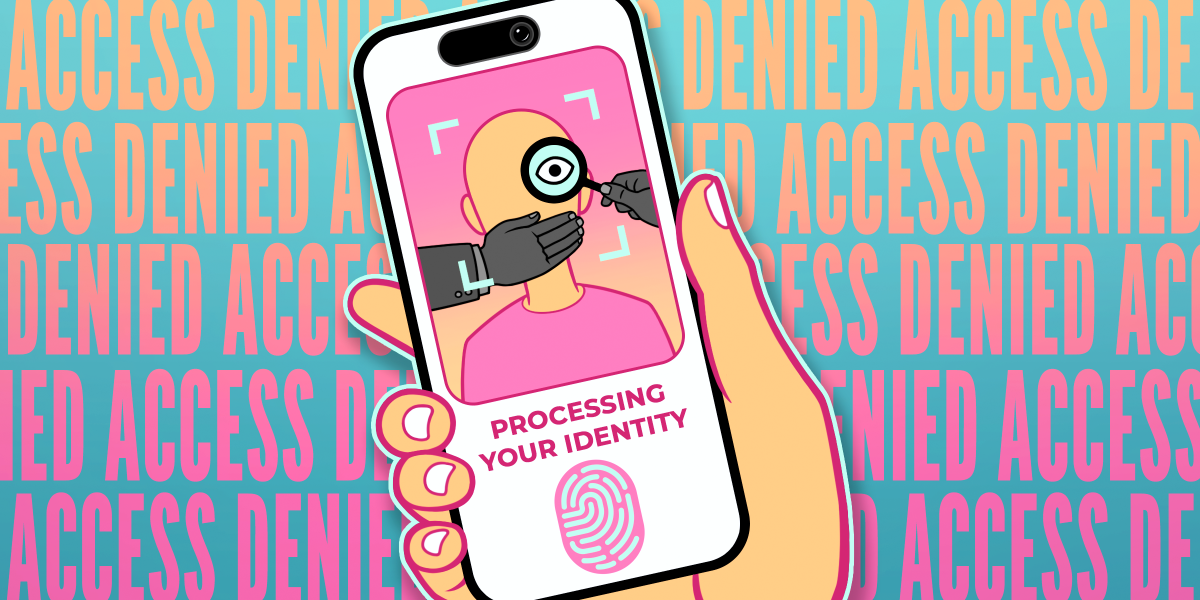
Age verification laws are proliferating fast across the United States and around the world, creating a dangerous and confusing tangle of rules about what we’re all allowed to see and do online. Though these mandates claim to protect children, in practice they create harmful censorship and surveillance regimes that put everyone—adults and young people alike—at risk.
The term “age verification” is colloquially used to describe a wide range of age assurance technologies, from age verification systems that force you to upload government ID, to age estimation tools that scan your face, to systems that infer your age by making you share personal data. While different laws call for different methods, one thing remains constant: every method out there collects your sensitive, personal information and creates barriers to accessing the internet. We refer to all of these requirements as age verification, age assurance, or age-gating.
If you’re feeling overwhelmed by this onslaught of laws and the invasive technologies behind them, you’re not alone. It’s a lot. But understanding how these mandates work and who they harm is critical to keeping yourself and your loved ones safe online. Age verification is lurking around every corner these days, so we must fight back to protect the internet that we know and love.
That’s why today, we’re launching EFF’s Age Verification Resource Hub (EFF.org/Age): a one-stop shop to understand what these laws actually do, what’s at stake, why EFF opposes all forms of age verification, how to protect yourself, and how to join the fight for a free, open, private, and yes—safe—internet.
Why Age Verification Mandates Are a Problem
In the U.S., more than half of all states have now passed laws imposing age-verification requirements on online platforms. Congress is considering even more at the federal level, with a recent House hearing weighing nineteen distinct proposals relating to young people’s online safety—some sweeping, some contradictory, and each one more drastic and draconian than the last.
We all want young people to be safe online. However, age verification is not the silver bullet that lawmakers want you to think it is.
The rest of the world is moving in the same direction. We saw the UK’s Online Safety Act go into effect this summer, Australia’s new law barring access to social media for anyone under 16 goes live today, and a slew of other countries are currently considering similar restrictions.
We all want young people to be safe online. However, age verification is not the silver bullet that lawmakers want you to think it is. In fact, age-gating mandates will do more harm than good—especially for the young people they claim to protect. They undermine the fundamental speech rights of adults and young people alike; create new barriers to accessing vibrant, lawful, even life-saving content; and needlessly jeopardize all internet users’ privacy, anonymity, and security.
If legislators want to meaningfully improve online safety, they should pass a strong, comprehensive federal privacy law instead of building new systems of surveillance, censorship, and exclusion.
What’s Inside the Resource Hub
Our new hub is built to answer the questions we hear from users every day, such as:
How do age verification laws actually work?
What’s the difference between age verification, age estimation, age assurance, and all the other confusing technical terms I’m hearing?
What’s at stake for me, and who else is harmed by these systems?
How can I keep myself, my family, and my community safe as these laws continue to roll out?
What can I do to fight back?
And if not age verification, what else can we do to protect the online safety of our young people?
Head over to EFF.org/Age to explore our explainers, user-friendly guides, technical breakdowns, and advocacy tools—all indexed in the sidebar for easy browsing. And today is just the start, so keep checking back over the next several weeks as we continue to build out the site with new resources and answers to more of your questions on all things age verification.
Join Us: Reddit AMA & EFFecting Change Livestream Events
To celebrate the launch of EFF.org/Age, and to hear directly from you how we can be most helpful in this fight, we’re hosting two exciting events:
1. Reddit AMA on r/privacy
Next week, our team of EFF activists, technologists, and lawyers will be hanging out over on Reddit’s r/privacy subreddit to directly answer your questions on all things age verification. We’re looking forward to connecting with you and hearing how we can help you navigate these changing tides, so come on over to r/privacy anytime between Monday (12/15) at 12pm PT and Wednesday (12/17) at 5pm PT, and ask us anything!
2. EFFecting Change Livestream Panel: “The Human Cost of Online Age Verification”
Then, on January 15th at 12pm PT, we’re hosting a livestream panel featuring Cynthia Conti-Cook, Director of Research and Policy at the Collaborative Research Center for Resilience; a representative of Gen Z for Change; EFF Director of Engineering Alexis Hancock; and EFF Associate Director of State Affairs Rindala Alajaji. We’ll break down how these laws work, who they exclude, and how these mandates threaten privacy and free expression for people of all ages. Join us by RSVPing at https://livestream.eff.org/.
A Resource to Empower Users
Age-verification mandates are reshaping the internet in ways that are invasive, dangerous, and deeply unnecessary. But users are not powerless! We can challenge these laws, protect our digital rights, and build a safer digital world for all internet users, no matter their ages. Our new resource hub is here to help—so explore, share, and join us in the fight for a better internet.








 New Posts (Home)
 ChatBox
 Popular Posts
  Game Zone
 Top PodCasts