www.upworthy.com
People have newfound empathy for Boomers after video reveals the world they grew up in
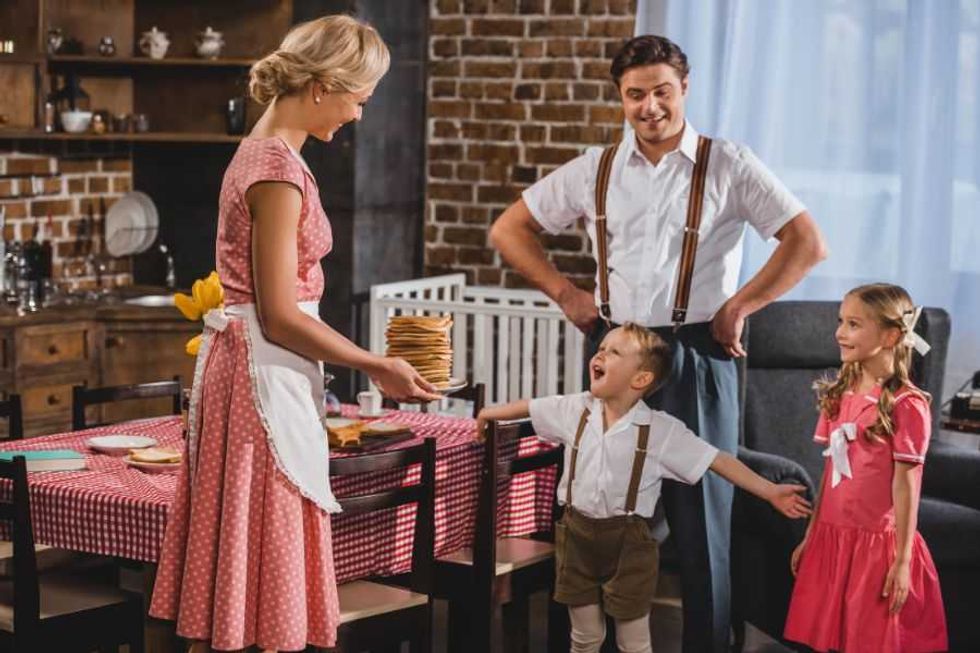
Over the past couple of decades, Boomers have been taking a lot of heat from younger generations. Their generation has become synonymous with being cold, rude, and chronic complainers. But a recently resurfaced video is bringing a level of empathy for the Boomer generation that has been lacking.The video is an excerpt from the 1990s series, Making Sense of the Sixties. The film crew interviewed hundreds of Baby Boomers from 1989 to 1990, allowing them to reflect on their childhoods in the 1950s. They intended to help make sense of the behavior of young adults in the mid-1960s, a period that saw a massive countercultural movement in which free-loving hippies rejected traditional norms. A look through historical archives suggests that Boomers went from a Leave It to Beaver–style ideal of family life to experimenting with drugs and embracing more nomadic lifestyles.It turns out that families in the 1950s weren't perfect at all. It was a highly curated facade meant to fool neighbors, classmates, and coworkers into believing they were a "normal" family. But it seems everyone was playing the same game, reinforced by videos that would now be viewed as propaganda. Family bonding over a game of dominoes in a cozy retro setting.Photo credit: Canva"Everyone watched Ozzy and Harriet, and assumed that everyone they knew lived that life, and then they went around pretending that they lived it too, but no one really did," author Elaine Tyler May says. "Even Ozzy and Harriet didn't, so on some level, there's been a myth all along, and part of the plague of the 50s was the incredible personal efforts, the incredible pain involved in perpetuating that myth about one's own family. About one's own happiness in that family, about the health of that family."Those interviewed recall an emphasis on rules and a high-control environment that discouraged anything that made a child stand out. Schools showed films that depicted the "proper" way children and teens were expected to behave, reinforcing these strict societal rules. One person interviewed said rules were so important that they were all anyone talked about, even when teens were with friends. Classic vibes: A vintage car parked in front of brick houses.Photo credit: Canva"The rules were things you talked about on the telephone with your friends," James Gilbert recalls. "They were imposed by your parents. Parents talked about it a lot. There were high school counselors who told you what the rules were, and even if they weren't written down, everybody really knew, and you could almost read them out, cite them. And I think looking back on it from the 60s...what people did in the 60s I think subconsciously was break every damn one of them."According to those interviewed, children weren't allowed to show negative emotions or express opinions that conflicted with what they were told to think. It appears all family members were expected to pretend to be happy while ignoring whatever emotions they were actually experiencing. So what were the rules?The rules were simple and few: blindly obey authority without question; always control your emotions; fit in with the group no matter what; and, finally, don't think about sex. Ever.These constantly repeated rules, along with the expectation to never break them, were stifling. One woman describes how lonely she felt growing up in the 1950s idea of the "perfect family." Another says children weren't treated as people, but as aliens expected to have no emotions. Retro family time: modern tech meets vintage charm.Photo credit: Canva"What startles me when I look back on my yearbook photos now, they all look so old," Anne Beatts shares. "Everybody looks so old. I mean, they look like little adults...it's startling to me how old, how already getting into the groove all these people look with their flattop crew cuts, and then every so often you turn the page, and you see the guy with the duck tail, and you know ah, here's the rebel."This small glimpse into how Boomers were raised is stirring empathy among viewers. Several say it's giving them a new perspective on their parents. One man said he had to turn the video off, writing, "Jeez. I just can't watch this anymore. It makes me physically ill. And I didn't even live through that period - I was born in 1958." Classic car cruising along a scenic coastal road.Photo credit: CanvaAnother person shares, "As a late 80s born Millennial raised by young Boomers, this explains a lot about why my parents are who they are-especially my dad."Someone else explains that their parents were happy to leave the 1950s behind: "I'm a child of the 80's & early 90's, so I thankfully never had to deal with the 50's. My parents were kids of the late 40's and throughout the 50's. They were teens in the mid 60's and came of age in the late 60's. Mom didn't miss the 50's at all and I think Dad was content to have left it behind, too."One person empathizes, "It's no wonder the rebellion of the '60s happened - strict social hierarchies where emotions are repressed inevitably lead to an overcorrection. People are not meant to be robots on a schedule, we think and feel, it's essential to being human."








 New Posts (Home)
 ChatBox
 Popular Posts
  Game Zone
 Top PodCasts