www.thegospelcoalition.org
What I Learned from a Year with Lesslie Newbigin
Thirty-three books by one author, read in the order of publication. That was the reading goal I set for myself in 2025. Over the years, I’ve learned to appreciate the writings of Lesslie Newbigin. Many of his books I’d read before, but I wanted to discover how his ideas developed over time.
In mid-2025, I planned to spend a month at the Newbigin archives at the University of Birmingham, England. I believed a yearlong immersion in the thought world of the famous missiologist would be an enriching experience. I was right.
Faithful and Flawed
Many people I mention Newbigin’s name to have never heard of him. That’s probably because I’m a conservative evangelical ministering in evangelical spaces, and Newbigin operated in a different theological lane.
Newbigin and his wife, Helen, were dispatched to India by the Church of Scotland in 1936, where they served as missionaries for over three decades. Along the way, Newbigin was instrumental in helping to launch the Church of South India, which resulted from a merger (he called it a reunion) of three Protestant denominations. He went on to serve administratively in both the International Missionary Council and the World Council of Churches (WCC).
After retiring, he returned to England and became a prolific author and speaker devoted to a fresh missionary encounter with Western culture. During his retirement years, he pastored a small, multicultural congregation in a community that was experiencing “a famine of hope.”
Newbigin was a prolific author and speaker devoted to a fresh missionary encounter with Western culture.
Why should evangelicals read Newbigin, given his involvement with the WCC and his position within mainline Protestantism? It’s a fair question, and one that deserves a brief answer before we explore my lessons from his writings.
Newbigin was trained in Cambridge at a theologically liberal school, and that experience influenced his ministry in ways that diverged from orthodoxy. For example, although Newbigin had a high view of Scripture’s authority, he denied inerrancy. He also became increasingly open to soteriological inclusivism over his life. While he did reject universalism and believed that the cross of Christ was the only means of salvation, he held out hope that God would save more people based on Christ’s death than we surmise.
I believe in inerrancy, and I reject soteriological inclusivism. However, I’ve learned to appreciate much of Newbigin’s ministry. He was a lifelong member of a tradition that can best be described as theological liberalism. Yet his convictions often skewed toward evangelicalism.
In the archives last summer, I was privileged to see an exegetical paper he wrote on the atonement in the Old Testament. In his autobiography, Newbigin describes this as the flowering of his theological ideas about the atonement, which first developed as he studied the Greek text of Romans: “At the end of the exercise I was much more of an evangelical than a liberal.”
Learn from Newbigin
What insights from the life of this missionary-statesman can we apply to our lives? I’ve learned at least three lessons by reading Newbigin this year.
1. Live with courage.
When I read A South India Diary, I was gripped by the stories of Newbigin’s sometimes dangerous ministry. He described a hazardous mountain ascent on a motorcycle and negotiating amid violent conflict. He was willing to risk his life for the gospel. But his courage wasn’t merely physical.
In the last years of his life, he challenged the evil of abortion at a WCC gathering. He wrote a letter defending a biblical sexual ethic to the editor of a British newspaper. He confronted the wickedness of apartheid. Newbigin was a man courageous enough to follow his Savior even when his peers were going the other way.
2. Center life and ministry on the cross.
Newbigin was converted when he had a vision of the cross, and he never lost his focus on that climactic event. From his books geared toward lay readers (Sin and Salvation) to his works on church unification (The Reunion of the Church) to his works on missiology (The Open Secret), Newbigin kept the cross at the center.
Newbigin declared, “By [Christ’s] incarnation, His ministry, His death and resurrection, He has finally broken the powers that oppress us and has created a space and a time in which we who are unholy can nevertheless live in fellowship with God who is holy.”
3. Work toward the conversion of Western culture.
Although a “vibe shift” might be underway, evangelicals are still swimming upstream in Western culture. Yet Newbigin’s later writings are all devoted to a fresh missionary encounter between the gospel and the West. And he believed it was possible for the West to be reconverted.
Without falling prey to the Constantinian temptation of conflating church and state, Newbigin fostered cruciform engagement with the wider culture. Tim Keller formally answered Newbigin’s challenge in his Princeton lecture and in his book How to Reach the West Again. People like Keller and Newbigin believed revival was possible but that it would only come through a razor-sharp focus on the gospel.
This is why the local church is crucial. Newbigin asked, “How is it possible that the gospel should be credible, that people should come to believe that the power which has the last word in human affairs is represented by a man hanging on a cross? I am suggesting that the only answer, the only hermeneutic of the gospel, is a congregation of men and women who believe it and live by it.”
Newbigin believed revival was possible but that it would only come through a razor-sharp focus on the gospel.
Newbigin’s writings can still motivate and inspire us because the throughline of all his works was the gospel. He was a humble and confident witness who consistently pointed to Jesus over the course of a ministry that spanned six decades. I’m glad I spent the last year reading most of his works.
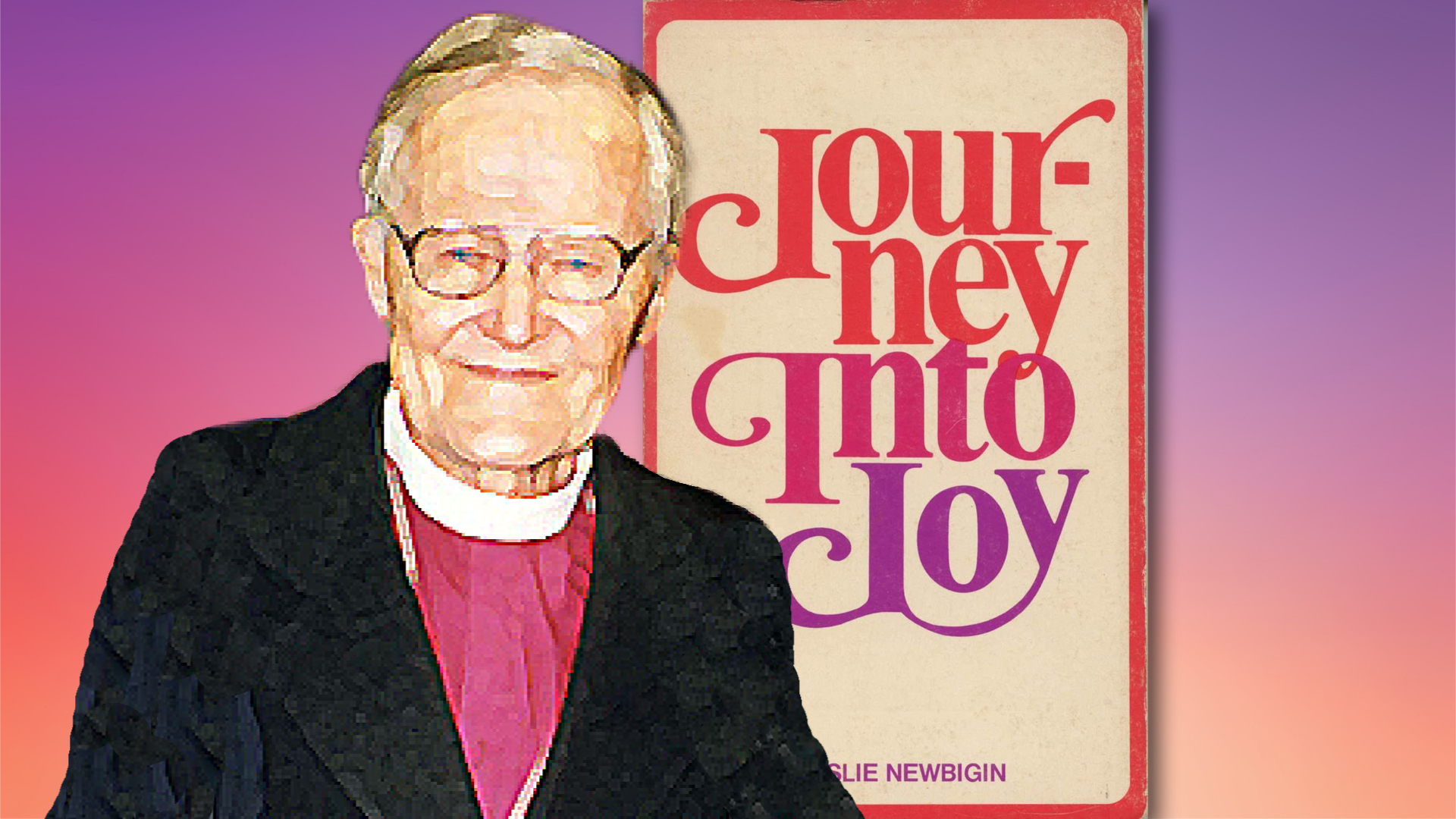
If you’re interested in reading Newbigin but don’t know where to start, I recommend Journey into Joy. There, you’ll discover the joy that Newbigin found when Jesus found him at the cross.








 New Posts (Home)
 ChatBox
 Popular Posts
  Game Zone
 Top PodCasts