reactormag.com
Five Horror Stories About Inanimate Objects Coming to Life
Books
reading recommendations
Five Horror Stories About Inanimate Objects Coming to Life
Creepy dolls and sinister puppets are bad, but how about a haunted, sentient rollercoaster?
By Lorna Wallace
|
Published on January 6, 2026
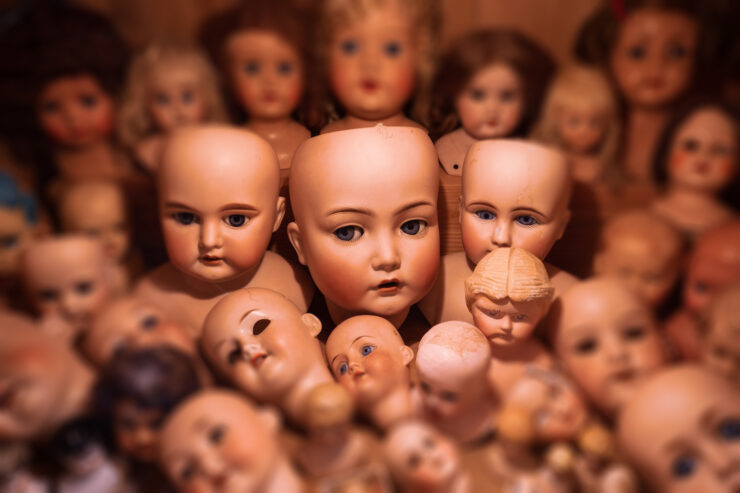
Photo: Tapio Haaja [via Unsplash]
Comment
0
Share New
Share
Photo: Tapio Haaja [via Unsplash]
The idea of inanimate objects coming to life may sound whimsical, but in the hands of horror authors, it can be absolutely terrifying. Stephen King has employed this strategy to great effect over the course of his career: Not only has he given sentience to objects with clear lethal ability, most notably a car in Christine (1983) and an industrial ironing machine in “The Mangler” (1972), but he’s even managed to transform seemingly harmless objects into the stuff of nightmares—I’m looking at you, topiary animals from The Shining (1977).
Of course, Stephen King isn’t the only author to imbue inanimate objects with life to sinister effect. Here are five other memorable examples.
“The Ancestors” by Adam Nevill (2009)
(Collected in Some Will Not Sleep) It’s not all that uncommon for small children to witness something creepy, but to not be aware of how disturbing the event is to the adults around them. This disparity helps drive the narrative, and the reader’s deepening sense of unease, in “The Ancestors.” Young Yuki has moved into a new house with her parents and although she initially didn’t want to leave her old life behind, she’s feeling better about it now that she’s befriended Maho, the resident ghost.
Friendships with ghosts aren’t necessarily scary or sinister—Casper is notoriously friendly, after all—but certain aspects of Maho’s behavior with Yuki would definitely freak out an adult. This includes Maho wrapping Yuki up in her long black hair when she sleeps (that’s a big no thank you from me). The one thing that does give Yuki pause is the fact that all of the toys in the house come to life at night, but Maho assures her that they’re friendly.
Given that this is a horror story and not Toy Story (1995), it’ll come as no surprise that the toys aren’t exactly innocent, but I’ll let you discover exactly how for yourself.
The Silent Companions by Laura Purcell (2017)
Set largely during the Victorian period, The Silent Companions is a creepy and atmospheric Gothic tale that unfolds over three connected timelines.
The main story begins in 1865, with Elsie Bainbridge, a recently widowed pregnant woman, moving into her late husband’s ancestral home, The Bridge. Along with the help of his cousin, Sarah, and a few housekeepers, Elsie works to fix up the dilapidated house. In a locked room, she finds life-size wooden figures—known as silent companions—and decides to decorate the house with them. She also finds the diary of Anne Bainbridge and this narrative, written during 1635, forms the second timeline. The third thread of the story follows Elsie in a psychiatric hospital at an unspecific time in the future.
We know from the jump that things go wrong for Elsie at The Bridge (the book opens with her confined to the hospital) and it’s obvious that the eerie silent companions had something to do with it, but there’s also a psychological element to this novel that leaves the reader constantly questioning events.
Gothic by Philip Fracassi (2022)
Tyson Parks was once a bestselling horror author, but his past few books have flopped and he’s struggling to get words down on the page for his current work-in-progress. That all changes when his girlfriend gifts him an antique desk for his birthday. Sure, the fact that the desk had fallen and crushed a worker at the antique dealers is a little unsettling. And yes, some of the ornate images carved into the wood are pretty grotesque. But Tyson doesn’t much care because at least he’s finally writing again.
It quickly becomes clear that the desk is possessed by something sinister, though, and while it reignites Tyson’s literary spark, it also twists him into an abhorrent person [CW: this involves a graphic rape scene]. Gothic is an exploration of a writer’s descent into madness, and along the way the reader is treated (or subjected, depending on your point of view) to some gruesome body horror courtesy of this demonic desk.
How to Sell a Haunted House by Grady Hendrix (2023)
Based on the cover alone, How to Sell a Haunted House looks like a typical haunted house story, but there’s an extra horror element at play: creepy puppets and dolls.
The story starts with Louise learning that her parents have been killed in a car crash. Grieving is hard enough as it is, but she’s also tasked with settling her parents estate with the help (or, in her view, interference) of her brother, Mark. The siblings have never seen eye to eye and their combative dynamic is only exacerbated by their attempts to clean out the house so that it can be sold. But the situation goes from pretty bad to significantly worse when they discover that their mom’s extensive collection of puppets and dolls has been brought to life by a dangerous spirit haunting the house.
Grady Hendrix is known for his fun and intentionally campy writing style—something which lends itself well to possessed puppet horror—but this story manages to balance humor with a serious and heartfelt exploration of grief.
“The Merge Monster Incident: One Year Later” by Johnny Compton (2025)
If dolls and desks don’t seem like big enough threats when it comes to inanimate objects coming to life, then how about something on a grander scale—perhaps a whole rollercoaster? The Merge Monster is a coaster that was Frankensteined together from the parts of other decommissioned carnival rides. Then one day, the rollercoaster simply comes to life and walks out of the theme park—with people still strapped in.
This short story is told from the perspective of a journalist one year after the seemingly impossible event took place. Our protagonist is trying to piece together any information they can about the Merge Monster Incident by digging into the coaster’s construction, interviewing theme park guests who witnessed the event—clear video footage unfortunately doesn’t exist—and attempting to track the coaster’s movements since it simply walked away.
The idea of a rollercoaster coming to life might seem silly to begin with, but the story quickly takes on a chilling air and by the end leaves readers haunted by a few key questions which are only partially answered. Where exactly did the Merge Monster go? And what happened to the people who were still on the ride?
If you’d prefer to watch inanimate objects come to life on the screen, rather than read about them on the page, you can check out this list of horror movies! And please chime in below to recommend and discuss other scary stories about formerly inanimate objects come to life…[end-mark]
The post Five Horror Stories About Inanimate Objects Coming to Life appeared first on Reactor.








 New Posts (Home)
 ChatBox
 Popular Posts
  Game Zone
 Top PodCasts