reclaimthenet.org
Starmer’s Looking for an Excuse to Ban X
If you're tired of censorship and dystopian threats against civil liberties, subscribe to Reclaim The Net.
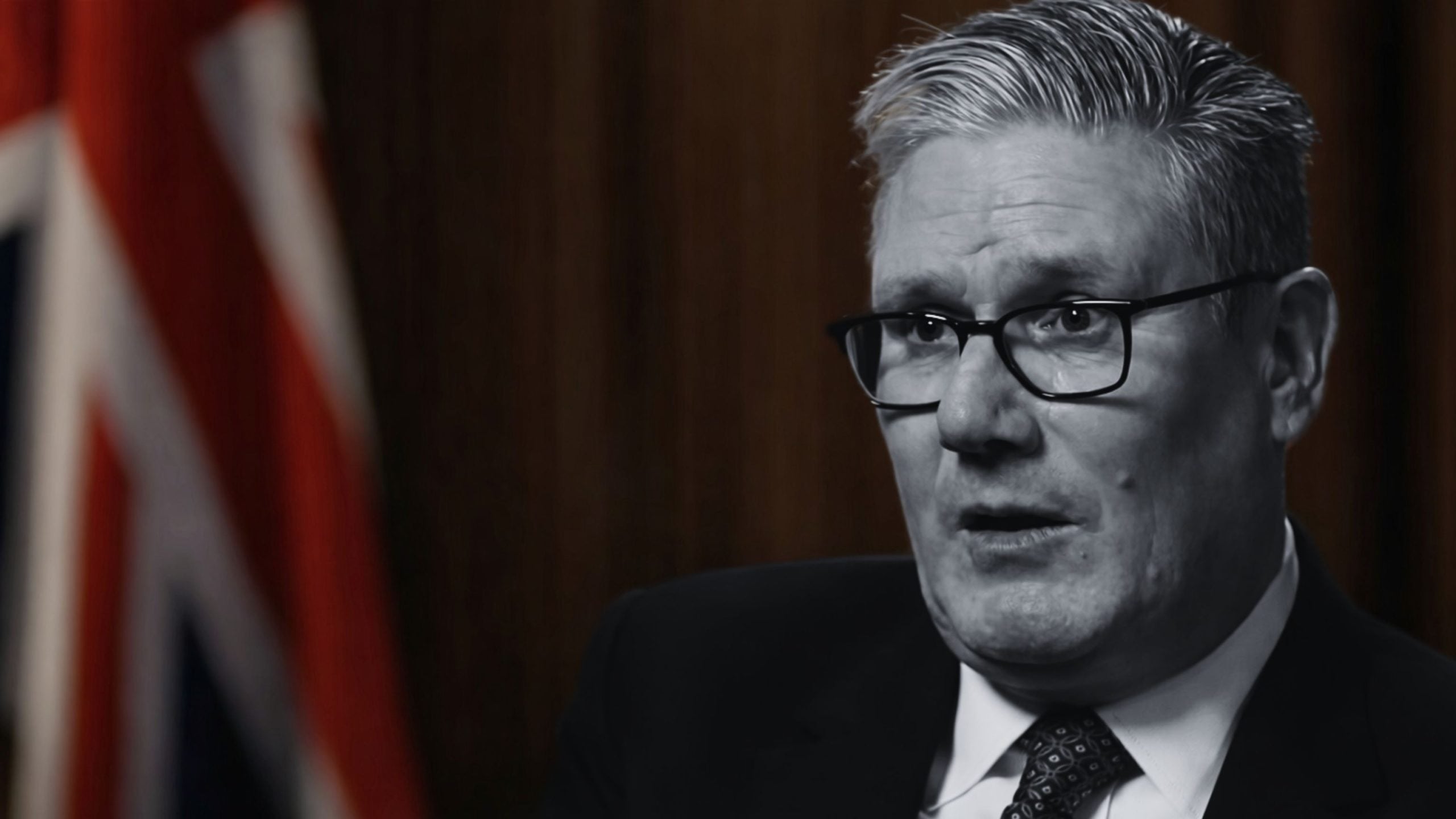
Keir Starmer has signaled he is prepared to back regulatory action that could ultimately result in X being blocked in the UK.
The Prime Minister of the United Kingdom has suggested, more or less, that because Elon Musk’s AI chatbot Grok has been generating images of women and minors in bikinis, he’ll support going as far as hitting the kill switch and blocking access to the entire platform.
“The situation is disgraceful and disgusting,” Starmer said on Greatest Hits Radio; the station best known for playing ABBA and now, apparently, for frontline authoritarian tech policy announcements.
“X has got to get a grip of this, and Ofcom has our full support to take action…I’ve asked for all options to be on the table.”
“All options,” for those who don’t speak fluent Whitehall euphemism, now apparently includes turning Britain’s digital infrastructure into a sort of beige North Korea, where a bunch of government bureaucrats, armed with nothing but Online Safety Act censorship law and the panic of a 90s tabloid, get to decide which speech the public is allowed to see.
Now, you might be wondering: Surely he’s bluffing? Oh no. According to Downing Street sources, they’re quite serious.
And they’ve even named the mechanism: the Online Safety Act; that cheery little piece of legislation that sounds like it’s going to help grandmothers avoid email scams, but actually gives Ofcom the power to block platforms, fine them into oblivion, or ban them entirely if they don’t comply with government censorship orders.
More: Keir Starmer’s Censorship Playbook
Ofcom, the country’s media regulator, is now in “urgent contact” with both X and xAI, Grok’s parent company, after reports that users were using the chatbot to generate images of real people in bikinis.
UK Secretary of State for Science, Innovation and Technology Liz Kendall told Ofcom it should consider blocking X in the UK, that she expects action in “days not weeks,” and that Ofcom would have the “full backing of the government” if it used blocking powers.
But here’s the problem. In the government’s fury over Grok and its users, they’re now open to ban an entire global communications platform. The equivalent of bulldozing the post office because someone sent a rude postcard.
People have been using Photoshop to create fake, explicit, deeply creepy images for decades. If you had a PC, half a clue, and a little too much time in the early 2000s, you could slap a celebrity’s face onto anything you wanted; with results that ranged from ridiculous to criminal.
And nobody suggested shutting down Adobe, or banning Microsoft Paint, or arresting the paperclip from Word for aiding and abetting. Because, and this used to be common sense: the tool is not the crime.
But now, with AI, all that reason goes out the window. Grok, Midjourney, DALL·E; you name it. These systems don’t wake up in the morning and decide to be pervy. They generate what they’re told to generate. That’s it.
They don’t have taste, they don’t have shame, and they certainly don’t have a moral compass. They have some restraints, but they can easily be overcome if people know how to prompt. This will always be true.
They’re glorified suggestion boxes that vomit out whatever the user types in. If someone prompts an AI to produce a woman in a bikini and you think that’s a problem, that someone is the problem; not the platform, not the algorithm, and not the wires it’s running on.
You can do the exact same thing with a pencil and paper. In fact, some of the most disturbing imagery ever created didn’t come out of a neural net. It came from human hands, in basements, bedrooms, and badly lit studios. But we’re not banning Bic pens. We’re not raiding Staples because someone bought a sketchpad and had dark thoughts.
Predictably, Elon Musk is not thrilled. He has accused the UK government of attempting to “suppress the people.”
“Anyone using Grok to make illegal content will suffer the same consequences as if they upload illegal content,” Musk added, putting the blame on the users, not the tool.
It’s not just Elon either. Sarah B Rogers, the US Secretary of State for Public Diplomacy, warned: “Erecting a ‘Great Wall’ to ban X, or lobotomizing AI, is neither tailored nor thoughtful.”
President Trump has previously referred to the UK’s online censorship law as as “not a good thing,” and while Keir Starmer is playing Internet Emperor, Anna Paulina Luna, a Republican congresswoman who sits on the House Committee on Foreign Affairs, is calling out the UK’s absurd overreach and threatening to bring legislation to sanction both Starmer and the country if he goes ahead with his tantrum.
Some of the images in question are inappropriate. Some are satire. But they’re not being created by X itself. They’re being created by users. People. And even with guardrails on Grok, there are always ways to prompt your way around them.
So even though there are likely millions of tools that can put a woman in a bikini, why is Starmer threatening to support the blocking of the entirety of X?
When BBC News host Huw Edwards was convicted of having actual images of child abuse and only received a suspended sentence, Starmer famously said: “As far as the sentence is concerned, I mean, that is for the court to decide.”
Without even getting into the hypocrisy of Starmer, his duplicity means what we’re looking at here is less about child protection and more about a government flailing in the age of AI, social media, and digital speech it no longer understands or controls.
The government is looking for any excuse to suppress one of the biggest thorns in its side.
It’s political theater; the kind that looks strong on morning television but crumbles under scrutiny.
What makes that clear is that plenty of other AI systems can do the exact same thing Grok’s being dragged over the coals for.
OpenAI’s image models have slipped up. Some AI image generators have whole fanbases built around photorealistic deepfakes of celebrities.
There are dodgy Discord bots out there generating worse in seconds, with less scrutiny and zero accountability. But none of those platforms are being threatened with a national ban.
And let’s not kid ourselves here: X is one of the last places online where you can still talk about things Keir Starmer would really, really rather you didn’t.
Ever since Elon Musk got his hands on Twitter, the platform has become a giant headache for the political establishment, and not just because people keep replying to their speeches with clown emojis. The real reason they hate it is that it’s torched their grip on the flow of information.
X moves faster than the official narrative. Way faster. Before a newsroom has even had time to spin up a headline, the footage is already out there; raw, unedited, and usually filmed by someone on the ground with a phone and zero interest in protecting anyone’s PR strategy.
Leaks, whistleblowers, inconvenient facts: they don’t wait for permission to speak anymore, they just hit “post.”
It’s also true that the major platform Keir Starmer’s government is gearing up to punish, with the full force of Ofcom and the legal system revving like a bulldozer, is also the only major platform where he gets roasted in real time.
X is where Starmer gets community-noted, quote-tweeted, and ratio’d into orbit every time he opens his mouth. So now the platform isn’t only a tech problem. It’s a PR problem. And in modern politics, that’s the only kind anyone actually takes seriously.
If you're tired of censorship and dystopian threats against civil liberties, subscribe to Reclaim The Net.
The post Starmer’s Looking for an Excuse to Ban X appeared first on Reclaim The Net.








 New Posts (Home)
 ChatBox
 Popular Posts
  Game Zone
 Top PodCasts