www.thegospelcoalition.org
‘He Will Be Called a Nazarene’: Matthew’s Messianic Clue
Matthew’s infancy narrative ends with a passage that has baffled biblical scholars: “And [Joseph] went and lived in a city called Nazareth, so that what was spoken by the prophets might be fulfilled, that he would be called a Nazarene” (Matt. 2:22–23).
The problem is that the Old Testament never says the Messiah would be called a “Nazarene.” In fact, Nazareth isn’t mentioned in the Old Testament, and it’s believed that the town didn’t even exist when the Old Testament was written.
Various theories have been suggested for Matthew’s meaning here, but I suggest the clue is to be found in the mystery (and even foolishness) associated with a Messiah coming from the obscurity of this small town in Galilee.
‘Nazarene’ Points to the Messianic ‘Branch’
Perhaps the most popular guess at Matthew’s meaning is that the name “Nazarene” is a play on words, as the Hebrew word for “branch” is nezer. This nezer or “branch” contains messianic connotations, or so it’s thought, based on the prophecy in Isaiah 11:1–3 of a coming Messiah:
There shall come forth a shoot from the stump of Jesse,
and a branch from his roots shall bear fruit.
And the Spirit of the LORD shall rest upon him,
the Spirit of wisdom and understanding,
the Spirit of counsel and might,
the Spirit of knowledge and the fear of the LORD.
And his delight shall be in the fear of the LORD.
Jesus is that Branch, that nezer, and his being called a Nazarene evokes that messianic image. Other passages also contain the image of a messianic “branch” but use a different Hebrew word (Jer. 23:5; 33:15; Zech. 3:8; 6:12).
Was this the connection Matthew wants us to make? We can’t be sure, but another view is now gaining traction, and it has much in its favor.
‘Nazarene’ Points to Messianic Rejection
Matthew’s citation in 2:23 differs in two ways from his typical formula when citing the Old Testament. First, he speaks of “the prophets” (plural), hinting that he isn’t referring to any particular prophecy but to a broader idea to which the prophets spoke.
Second, the citation is introduced with the term “that” (hoti), rather than his usual term “saying” (legontos), suggesting a more general idea is in mind (cf. 4:6; 21:16). The word “that” merely introduces the general content of a prophetic tradition. The NIV rightly captures this thought: “So was fulfilled what was said through the prophets, that he would be called a Nazarene.’”
The clue is to be found in the mystery (and even foolishness) associated with a Messiah coming from the obscurity of this small town in Galilee.
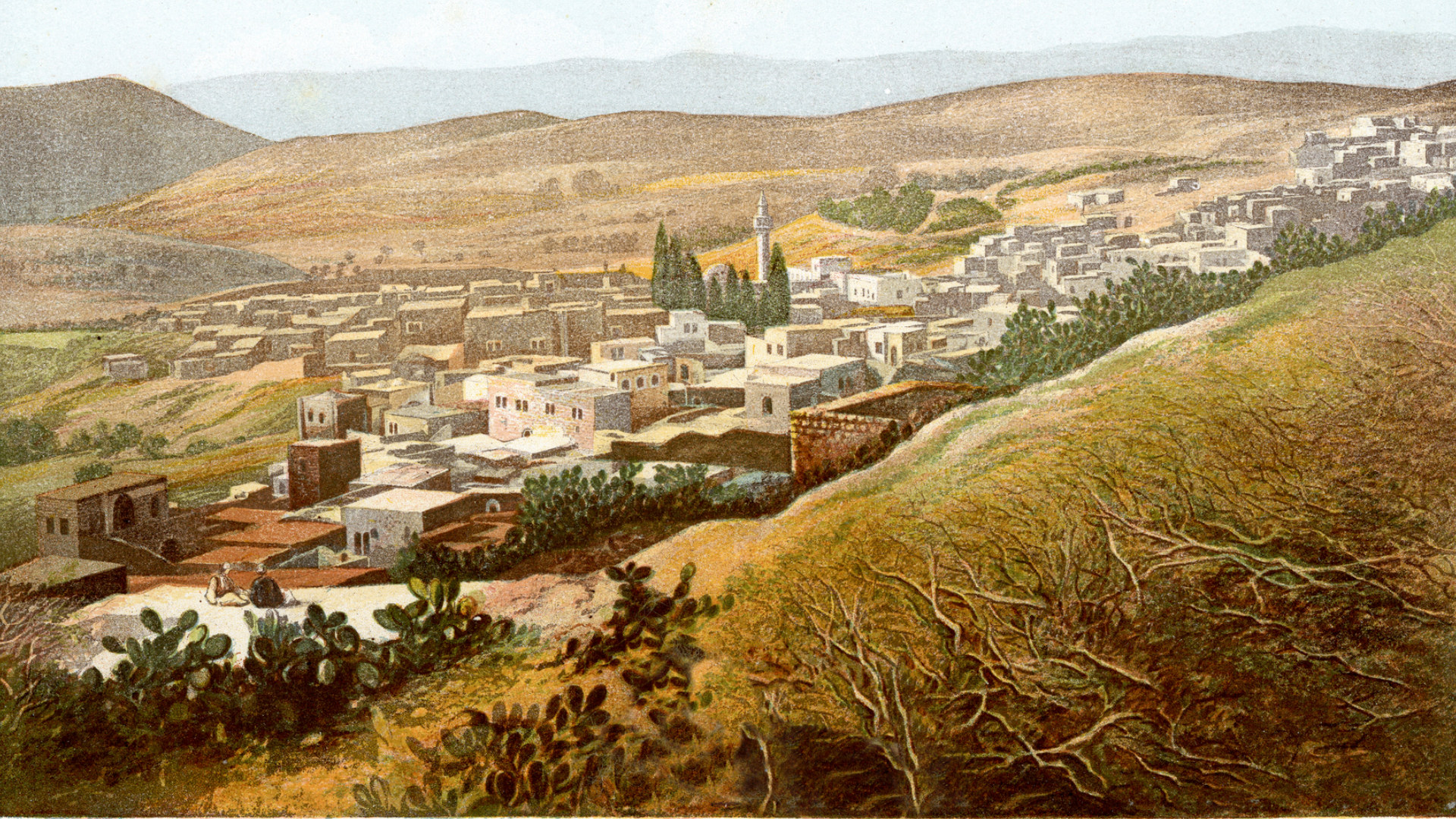
During his life, Jesus is known as “Jesus of Nazareth” instead of “Jesus of Bethlehem.” But how could the Messiah come from such an insignificant village of probably less than 500 people, way up in the hill country of Galilee? In John’s Gospel, Philip tells Nathanael, “We have found him of whom Moses in the Law and also the prophets wrote, Jesus of Nazareth, the son of Joseph.” Nathanael replies, “Can anything good come out of Nazareth?” (John 1:45–46).
A Messiah coming from Nazareth seems inconceivable and even foolish to Nathanael, as it would to any Jew. For Jesus, to be called a Nazarene seems nothing but an insult.
Instead of labeling Jesus a Bethlehemite, Matthew identifies him as a Nazarene, one who would inevitably be misunderstood and ultimately rejected. This is precisely what the prophets predicted would happen. Consider the description of the Suffering Servant in Isaiah 53: “He grew up before him like a young plant, and like a root out of dry ground” (v. 2).
The Servant’s origin would be unexpected and surprising. Isaiah continues,
He had no form or majesty that we should look at him,
and no beauty that we should desire him.
He was despised and rejected by men,
a man of sorrows and acquainted with grief;
and as one from whom men hide their faces
he was despised, and we esteemed him not. (Isa. 53:2–3)
In the first-century Jewish mind, it would be foolish to think the Messiah could come from Nazareth, but doesn’t such an origin reflect the very foolishness of the gospel itself—the message of a crucified Messiah? Jesus describes as “foolish” those who were slow to believe all that the prophets had spoken, that the Messiah would have to suffer before entering his glory (Luke 24:25–26).
In God’s mysterious design, his Son’s birth wouldn’t take place in a royal palace but in a cattle stall. He wouldn’t be raised in the luxury of a prince but in the humble home of a carpenter. He wouldn’t come from the political capital of Jerusalem, much less Rome, but from a tiny, obscure village outside the corridors of power. He’d be scorned by the religious leaders; he’d be despised and rejected, being held in low esteem; and he’d suffer the shame and agony of a Roman cross.
He’d be, as the apostle Paul describes it, “a stumbling block to Jews and folly to Gentiles”—nothing but a Nazarene (1 Cor. 1:23). The Messiah must first suffer before entering his glory.
‘Nazarene’ as a Discipleship Calling
“Can anything good come out of Nazareth?” You wouldn’t think so—but God arranged the events of Jesus’s birth so he’d be called a “Nazarene.” And in Acts 24, that’s just what Paul’s Jewish opponent derisively called Jesus’s followers—“Nazarenes” (v. 5).
The Messiah must first suffer before entering his glory.
That’s what it means to be a Christian. Take up your cross and follow Jesus, in his obscurity and humility, bearing his reproach, as he bore yours. Cast off all that would cause you to boast in the world—all your achievements and all your good deeds—all that would bring you honor and glory in the world’s eyes. In fulfilment of the words spoken by the prophets, Jesus was called a Nazarene. Are you willing to be called one, too?








 New Posts (Home)
 ChatBox
 Popular Posts
  Game Zone
 Top PodCasts