pacificlegal.org
Ohio entrepreneur seeks Supreme Court ruling on right to share information
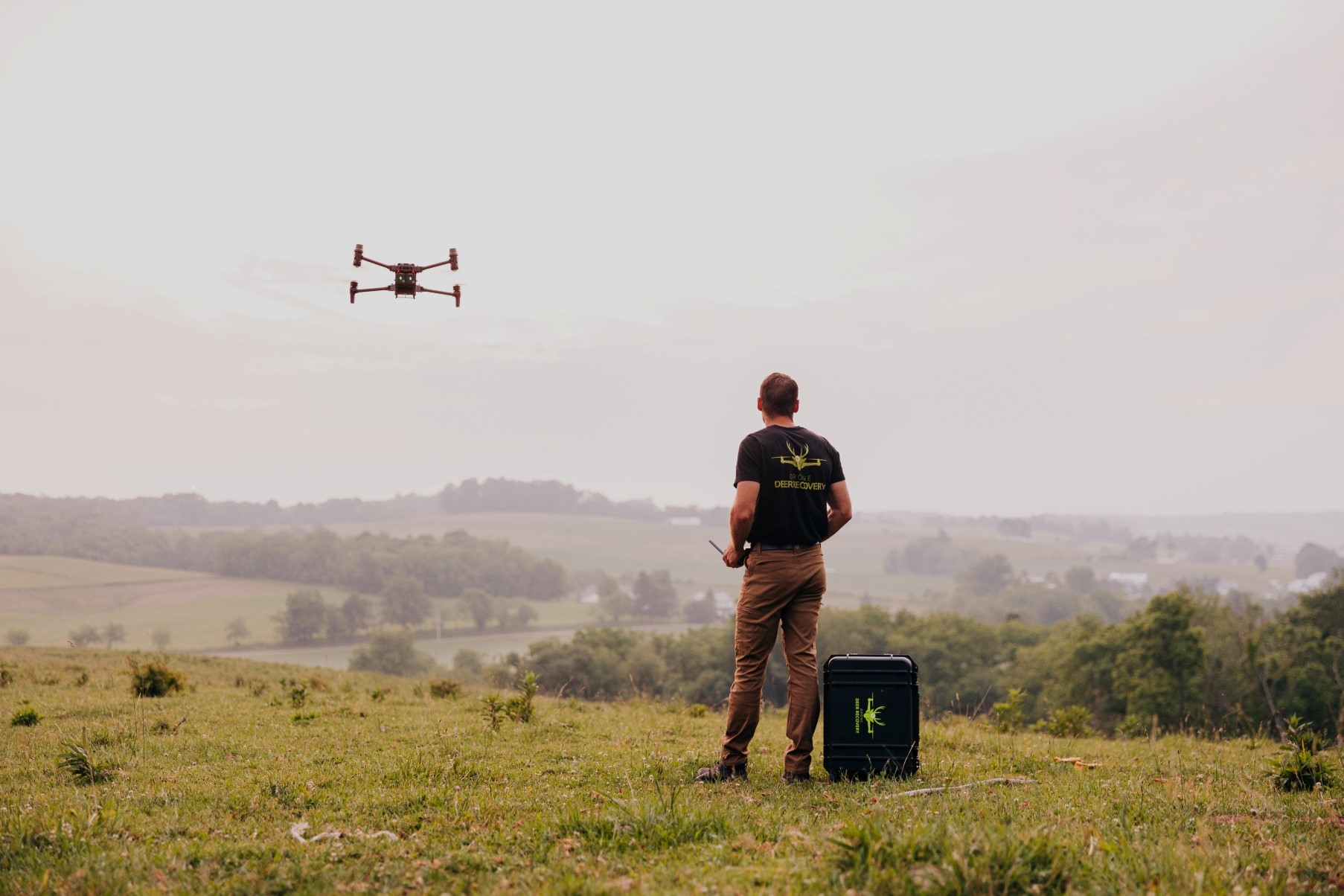
When Mike Yoder started flying drones, he wasn’t trying to make a statement. He was trying to solve a problem common among hunters in his area: Game sometimes runs off after being shot, and hunters have a hard time locating it.
Using drones equipped with thermal imaging technology, Mike’s company, Drone Deer Recovery, helps hunters locate downed game. DDR provides this service only after the hunter has shot the animal and stowed his or her weapon, and it does not pilot drones to pursue live animals. Mike is also FAA-certificated to fly drones.
Hunters say the drones are less intrusive to the environment and more effective than other methods of tracking downed game, such as trail cameras and tracking dogs.
A drone ban expanded beyond its purpose
Michigan law bans using drones to “take” game. The statute was passed in 2015 to, among other things, prevent hunters from having an unfair advantage by using drones to locate animals to hunt. But state officials now claim it bans using drones even after a hunt is over, solely to locate downed game.
Violating the rule can lead to criminal penalties, including jail time.
Meanwhile, the state permits drones to be used for other purposes, like photographing wildlife and landscapes.
Mike and his customers, including lifelong Michigan hunter Jeremy Funke, challenged this restraint in federal court.
The right to create and share information
Their case raises a fundamental constitutional question: Do Americans have the right to use modern tools to gather and share information?
Drone Deer Recovery acquires, creates, and provides precise location data that allows hunters to recover their property and comply with conservation rules, including a Michigan law that requires hunters to make reasonable efforts to retrieve their game. That information is shared with willing recipients.
And under the First Amendment, the government doesn’t get to decide who may gather and communicate lawful information.
What the courts have said so far
A federal district court initially dismissed the case, holding that drone use is conduct, not speech, and therefore is not protected by the First Amendment.
On appeal, the U.S. Court of Appeals for the Sixth Circuit agreed that Mike and Jeremy had the right to bring their case and that creating information with drones implicates free speech interests.
But the court drew a line between political and non-political speech, denying Mike’s First Amendment protection by claiming speech creation for non-political speech falls outside the First Amendment’s protection. No other circuit has set such a limitation.
Consequences far beyond hunting
This case isn’t really about hunting; it’s about whether outdated laws can be used to block new forms of communication.
Today, drones are used by journalists, filmmakers, artists, and entrepreneurs. If the government can limit their livelihood simply because these new tools are unfamiliar, innovation slows and opportunity shrinks. Ordinary Americans pay the price.
Asking the Supreme Court to step in
Pacific Legal Foundation has asked the U.S. Supreme Court to review Mike’s case in the hopes that the court will clarify a simple principle: The First Amendment protects not just what we say, but how we gather and share information in a modern world.
If the state is authorized to suppress speech it deems non-political, the government would have broad discretion to silence speech before its value or relevance can be truly known. As PLF’s cert petition explains, “Information that begins as non-political fact often becomes the foundation for later public debate, advocacy, or reform.”
Entrepreneurs like Mike shouldn’t have to choose between innovation and obedience to outdated rules. A free society depends on people brave enough to pursue new ideas, and the Supreme Court now has an opportunity to reaffirm that freedom.
The post Ohio entrepreneur seeks Supreme Court ruling on right to share information appeared first on Pacific Legal Foundation.








 New Posts (Home)
 ChatBox
 Popular Posts
  Game Zone
 Top PodCasts