pacificlegal.org
Mr. Beast v. the bald eagle
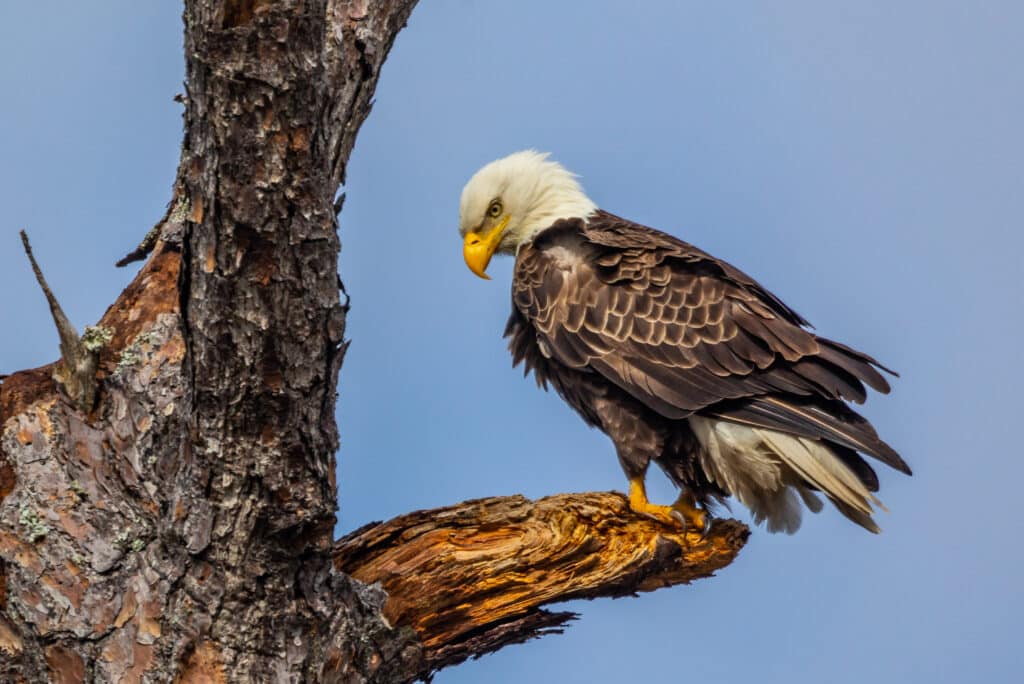
During a recent appearance on The Tonight Show, YouTube legend Mr. Beast told host Jimmy Fallon about the time a bald eagle derailed the filming of one of his videos. The majestic bird did not disrupt the production by swooping in front of the camera or drowning out the dialogue with its signature high-pitched whistle. No. The only hindrance was the eagle’s mere presence in the general vicinity of the shoot. And that presence alone uprooted the production six months into filming.
As Mr. Beast told Fallon, “We’re millions of dollars deep for the shoot and someone spotted a bald eagle. I didn’t know this, but you can’t make loud noises near a bald eagle’s nest because they’re protected and it can scare them away.”
He continued:
I was like can we just pick up the nest and move it? Nope. That’s a federal crime. So we had to pack everything up, spend an obscene amount of money, and move to a different lake.
Mr. Beast, of course, meant no harm to the eagle or its nest. And at no point during the filming was the bird in any sort of immediate danger. But thanks to strict, and often unnecessary, federal protections, Mr. Beast had to either relocate or risk paying hefty fines and even the possibility of serving jail time.
While the anecdote made for a lighthearted and interesting interview, federal protections for bald eagles have caused a lot of harm to property owners.
Bald eagles v. property owners
In 2005, urban planner Ed Contoski was 69 and ready to retire. His plan was to sell half of his 18 lakeside acres in Central Minnesota to developers and use the money to fund the next chapter of his life.
But Ed was stopped in his tracks before the plan could get underway.
Environmental officials told Ed that he was not allowed to build on his own land because of a pine tree that contained one single bald eagle nest. The nest was empty, but even in the absence of an actual eagle, officials argued that the bird might return one day and, under federal law, this prohibited Ed from using his land.
At the time, the bald eagle was listed under the Endangered Species Act (ESA). ESA regulation effectively prohibited human activity within the vicinity of bald eagle nests—eagle or no eagle. And any disturbance caused to a bald eagle or eagle nest could result in tens of thousands of dollars in penalties and/or a year in jail, with the potential to double or triple for any combination of eagles, eggs, and chicks.
Now, as for what counted as a “disturbance” under the ESA, no one really knew. The law was vague and hard to determine. But Ed wasn’t eager to find out just how strict the federal government was going to be. So there he was, left with all this land but unable to even cut firewood or trim a tree without facing penalties.
Federal protections for bald eagles date back to the 1918 Migratory Bird Treaty Act, which made it illegal to kill or capture any of the birds covered in the treaty. The Bald Eagle Protection Act gave those protections explicitly to bald eagles in 1940, and the 1962 Bald and Golden Eagle Protection Act (BGEPA) amended and extended those protections to include nest-disturbance rules, noise restrictions, buffer zones, and permit requirements.
In 1973, Congress passed the ESA and the bald eagle became one of the first species listed under the new law. At the time, it made sense. When the bald eagle was named our national bird in 1782, there were around 100,000 bald eagles in the contiguous U.S. Over time, that number suffered a steep decline. Although the species continued to thrive in Alaska, by 1963, there were only a few hundred bald eagles left in the lower 48 states.
By 1999, however, the bald eagle population had grown significantly enough for President Bill Clinton to announce that the bird would be taken off the federal government’s endangered species list. But the government did not follow through on the promise. Deadlines kept getting delayed, and even though the bird was no longer endangered, its protections remained intact while landowners like Ed found themselves at odds with bald eagles.
A 2007 research report found that the amount of land that was “stringently regulated” due to the presence of bald eagles was about 5.6 million acres—that’s roughly the size of New Jersey. Congress had never intended the ESA to be used as a tool against property owners, but that is exactly what happened. Adding insult to injury, property owners were still expected to pay property taxes on land they were unable to use.
At the risk of being painted as a villain for fighting back against protections for America’s most sacred animal, Ed fought back. On his behalf, Pacific Legal Foundation filed a lawsuit in 2006 and helped him secure a victory and protect his property. A district court judge ruled the government needed to remove the bald eagle from the endangered species list by February 16, 2007.
Yet here we are nearly 20 years after the court’s ruling and Mr. Beast is still facing the same regulatory hurdles Ed fought against in court.
Even though the bird is no longer on the ESA, BGEPA protections remain intact, severely limiting any activity near an eagle or eagle nest. Unfortunately, these restrictions continue to harm property owners, despite the 2007 ruling. In 2024, one Auburn, Alabama, resident followed the rules and secured a permit from Fish and Wildlife, to remove a nest on his property. He then faced so much backlash from local city council members, the agency was forced to review the removal of the nest.
This goes to show you that all too often, laws written with good intentions evolve into tools that penalize individuals. Protecting bald eagles and respecting individual property rights are not mutually exclusive. Fortunately, Mr. Beast can afford to move his high budget production to another site. But countless ordinary property owners, like Ed, do not have that luxury.
The post Mr. Beast v. the bald eagle appeared first on Pacific Legal Foundation.








 New Posts (Home)
 ChatBox
 Popular Posts
  Game Zone
 Top PodCasts