www.wearethemighty.com
President Lincoln personally led a recon mission during the Civil War
As the United States marks Presidents Day ahead of its 250th anniversary, Americans are invited to reflect on the individuals who carried the weight of the presidency during moments of national peril. Standing tall among them is Abraham Lincoln, a leader remembered not only for preserving the Union and ending slavery, but also for evolving under fire into an active wartime commander.Also Read: 12 strange and surprising facts about the Civil War In May 1862, the second year of the Civil War, Lincoln did something few presidents have before or since. He traveled to the front lines and took direct, hands-on control of a tactical military operation. The target was Norfolk, a critical Confederate port and naval hub whose capture would reshape the strategic balance in the Chesapeake. What followed was a remarkable episode of presidential leadership that revealed Lincoln’s growing confidence as commander-in-chief and demonstrated how decisive action at the top can change the course of a war.
A Test of Presidential Leadership
When the Civil War began in 1861, Lincoln faced a daunting reality. He had been in office only weeks when the Union fractured. Though constitutionally designated as commander-in-chief, he lacked formal military training and relied heavily on professional generals. Early in the war, this reliance proved frustrating. Union armies moved slowly. Opportunities slipped away. Commanders hesitated.By early 1862, Lincoln began to realize his role required more than passive oversight. He needed to understand strategy, logistics, and battlefield realities. The war demanded not only political leadership but operational insight.Nowhere was this clearer than along the Virginia coast.Norfolk was one of the Confederacy’s most valuable coastal cities. Its naval facilities allowed Confederate engineers to transform the burned hull of what was once the Union warship USS Merrimack into a revolutionary ironclad vessel. The rechristened CSS Virginia shocked the world and threatened Union control of the Chesapeake.
A photo of the USS Monitor fighting the CSS Virginia, formerly USS Merrimack at Hampton Roads. (Naval History and Heritage Command)
Related: Why the battle between the Monitor and the Merrimack was so epicThe importance of Norfolk cannot be overstated. It housed shipyards, supply depots, and defensive fortifications, making it a cornerstone of rebel naval power. Its location allowed Confederate forces to project strength into Hampton Roads and threaten Union shipping lanes.As long as Norfolk remained under Confederate control, Union forces faced constant danger. The port served as a base for naval operations and a gateway to the James River, which led toward Richmond. Capturing it would not only secure Union naval dominance but also remove a major Confederate threat. Yet, Union commanders hesitated.Union forces did hold a key position nearby. Fort Monroe was a massive coastal fortress that remained in Union hands throughout the war. From this base, Union troops and ships could monitor Confederate movement, but they struggled to act decisively. The problem was not a lack of manpower or ships. The problem was caution.Union commanders feared that any attempt to move directly against Norfolk would expose their forces to attack by the Confederate ironclad. The ship’s presence created a psychological and tactical barrier. Reports to Washington emphasized uncertainty and risk. Lincoln grew increasingly frustrated. He understood that wars are often decided not only by strength but by initiative. Waiting allowed the Confederacy to dictate terms. Acting boldly could shift momentum.So he decided to go see for himself.
President Lincoln on the Front Line
The Union’s massive “Lincoln Gun” at Fort Monroe in 1862. (Library of Congress)
In early May 1862, Lincoln left for Fort Monroe alongside Secretary of War Edwin Stanton and Secretary of the Treasury Salmon P. Chase. Their presence signaled the seriousness of the mission. Presidential visits to active military theaters were rare and risky. Lincoln’s decision underscored his determination to break the stalemate. He wanted firsthand knowledge, not filtered reports.Upon arrival, he quickly assessed the situation. Commanders were cautious. Plans were tentative. The threat of the ironclad loomed large. Despite Union advantages in manpower and naval resources, no one seemed willing to make the first move.Lincoln concluded that waiting was more dangerous than acting. His first major contribution was psychological. He brought urgency. He insisted that something be done and done quickly.He met with naval officers, army commanders, and Cabinet advisers. Maps were spread out. Reports were examined. Lincoln asked direct questions and challenged assumptions. Why could troops not land on the south bank of the James River? What prevented naval support? How shallow were the waters?His approach was persistent. He pushed for solutions. He encouraged creative thinking. He made clear that inaction was unacceptable. This shift in tone had an immediate effect. Formerly hesitant officers began to explore options. Plans took shape. The idea of an amphibious landing, once considered too risky, became the centerpiece of the operation.
Designing an Amphibious Landing
The plan that emerged along the lower Chesapeake in May 1862 was daring in both conception and execution. Union troops would cross the James River and land on the south side of Norfolk, effectively turning Confederate defenses that were oriented toward a more conventional approach from the north. Instead of launching a direct assault against fortified positions and risking heavy casualties, the Union would outmaneuver the defenders and threaten their lines of retreat. The psychological effect alone could compel evacuation, and was central to the plan’s logic.The maneuver required careful coordination between the Army and Navy. Troops needed reliable transport across unfamiliar waters. Naval forces had to protect landing craft while also suppressing Confederate shore batteries that might fire on vessels approaching the southern bank. The geography of the region complicated every step. Channels were narrow and unpredictable. Tides shifted sandbars. Charts were incomplete. Even experienced naval officers hesitated to move larger vessels into waters they did not fully trust.Some commanders worried that deep draft ships would run aground before reaching the landing site. Others feared that slow-moving transports would present easy targets for rebel artillery. There were also concerns that the CSS Virginia was lurking nearby andmight suddenly appear to wreak havoc on the vulnerable troop carriers. Each obstacle seemed to reinforce caution and delay.Lincoln, drawing on his experience as a former riverboatman who navigated the shallow and shifting waterways of the interior, approached the problem differently. To him, rivers were not abstract lines on a map. They were dynamic environments that could be understood through observation and improvisation. Rather than accept uncertainty as an excuse for inaction, he encouraged officers to examine the physical realities of the river more closely. He asked practical questions about depth, current, and shoreline composition. He wanted to know what could be done, not merely what might go wrong.His involvement shifted the conversation. What had been a list of obstacles began to look like a series of manageable challenges. The concept of a turning movement across the James River gained momentum. With President Lincoln present and engaged, hesitation gave way to planning. Maps were reconsidered. Soundings were taken. The possibility of landing south of Norfolk moved from speculation to operational planning.
A Presidential Recon Mission
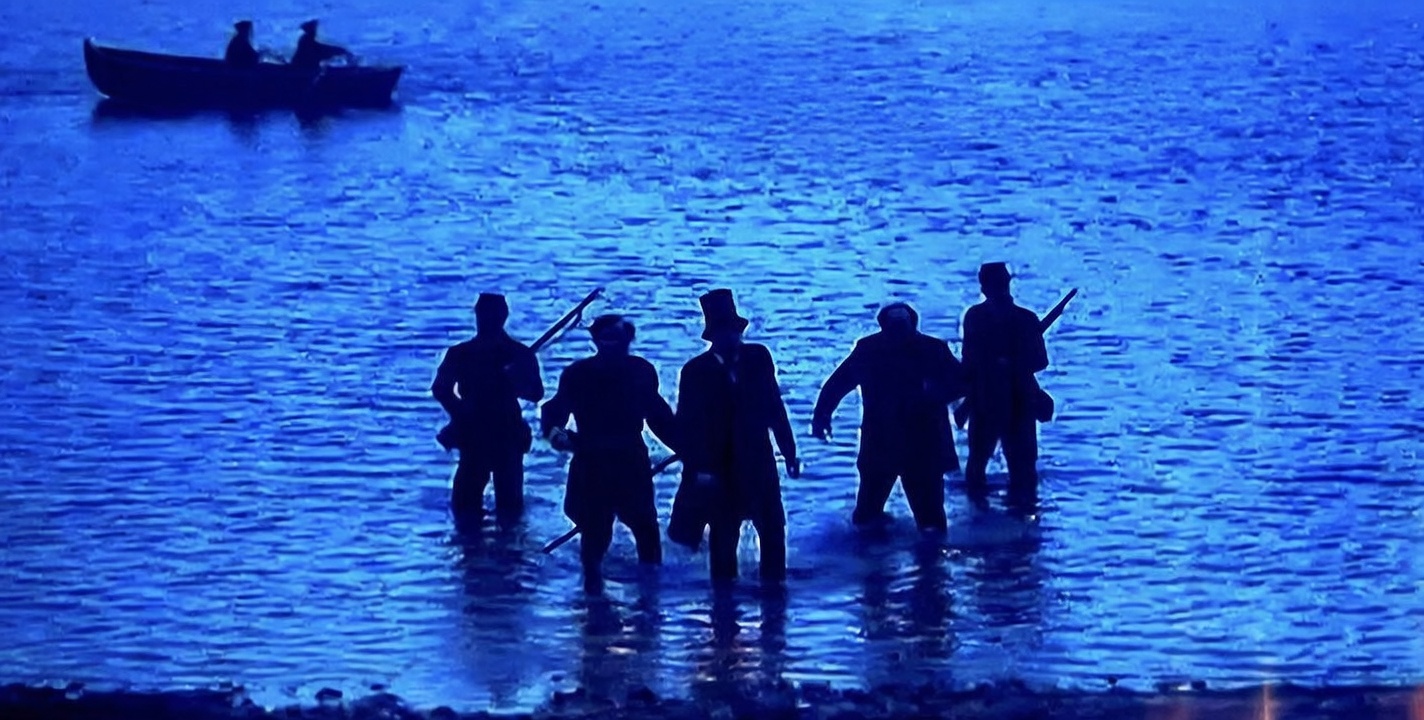
In one of the most striking examples of presidential leadership, Lincoln decided that the best way to resolve lingering doubts was to go and see the terrain himself. He boarded a small vessel and traveled along the shoreline of the James River, examining potential landing areas firsthand. This was not a ceremonial tour. It was a working reconnaissance mission personally undertaken by the Commander-in-Chief of the U.S. military.Lincoln studied the riverbanks carefully. He observed how the shoreline sloped toward the water and how mudflats extended from certain points. He asked sailors about depth measurements and inquired about how tides affected navigation at different hours of the day. He considered how troops might disembark from boats and move quickly to secure a foothold. Every detail mattered.His familiarity with river navigation gave him a practical advantage. Years earlier, he worked the western rivers, guiding flatboats and learning the challenges of shallow water travel. He understood how ships could ground unexpectedly and how channels could shift with the seasons. That experience informed his questions and his conclusions.By personally inspecting the terrain, Lincoln gained confidence in the feasibility of the landing. He could now speak with authority about water depth, shoreline conditions, and the practicalities of moving troops. His presence also energized the officers accompanying him. If the president was willing to venture into dangerous waters to gather information, it underscored the mission’s importance and the expectation of action.The president’s reconnaissance helped identify a viable landing site. It also clarified the resources required to execute the maneuver safely. With these details in hand, planning accelerated. What once seemed uncertain began to look achievable.
Improvise, Adapt, Overcome
As a youth, Lincoln worked a ferry across the Ohio River, and even pioneered a new flatboat design.
One of the most innovative aspects of the operation emerged from the practical challenges Lincoln observed on the river. Larger troop transports and warships could not reliably approach the shallow southern banks without risking grounding. Smaller, flat-bottomed vessels could navigate those waters with relative ease. Lincoln suggested using shoal-draft canal boats to carry troops across the river.These vessels, although common on inland waterways, were not designed for combat operations. However, they possessed exactly the qualities needed for this mission. Their shallow draft enabled them to navigate waters that would stop larger ships, and flat bottoms made them stable platforms for transporting soldiers and equipment. With naval protection and careful timing, they could ferry troops to the selected landing site with reduced risk.The idea addressed several concerns at once. It allowed the Union to move soldiers without exposing large transports to Confederate fire. It minimized the danger of grounding in shallow channels. It relied on existing resources rather than waiting for specialized vessels. Most importantly, it transformed a logistical obstacle into an operational advantage.This solution reflected Lincoln’s broader approach to leadership. He was not bound by rigid military tradition or constrained by conventional thinking. It demonstrated how creative thinking at the highest levels of command could influence outcomes on the ground. Lincoln did not issue detailed tactical orders in the manner of a field general, but his willingness to engage with logistical realities and propose solutions made a difference. The amphibious landing was suddenly feasible. The threat to Norfolk became real. And the momentum of the campaign shifted.
The bombardment of Seward’s Point. (Naval History and Heritage Command)
On May 8, 1862, Lincoln positioned himself at Fort Wool, a small fort situated on an artificial island in Hampton Roads. From there, he observed naval operations against Confederate batteries at Sewell’s Point. The bombardment was a precursor to the planned landing. It tested rebel defenses and diverted attention from Union preparations. Lincoln watched closely, consulted with naval officers, and helped coordinate the timing of operations.His presence on the scene reinforced the mission’s urgency. Officers understood that the president expected results. There would be no retreat into caution. This moment captured the transformation of a wartime president. He was no longer merely reacting to events. He was shaping them.
The Fall of Norfolk
The Union’s preparations had the desired effect. Confederate leaders in Norfolk realized that their position was becoming untenable. With Union troops poised to land south of the city and naval pressure mounting, they faced an encirclement. Rather than risk capture, the Confederates in Norfolk evacuated. On May 9, 1862, they abandoned the city, destroying supplies and withdrawing their forces. Union troops entered soon afterward, securing the port without a major battle.The fall of Norfolk had immediate consequences for the CSS Virginia. Without access to the city’s facilities, the vessel had no viable base. Unable to operate effectively and unwilling to surrender it, Confederate sailors destroyed the ship days later.Strategically, the impact was profound. Union control of the Chesapeake strengthened. The threat to Union shipping diminished. The path toward Richmond became more accessible.
Lincoln’s Wartime Confidence
(National Archives)
The success of the Norfolk operation marked a turning point in Lincoln’s development as commander-in-chief. He saw firsthand how hesitation could stall progress and how decisive action could break a stalemate. Secretary Chase later observed that without Lincoln’s personal intervention, Norfolk might have remained in rebel hands much longer. The president’s presence accelerated decision-making and inspired confidence.Lincoln did not become a field general. He continued to rely on professional officers for battlefield command. Yet, he gained something equally important. He gained confidence in his own strategic judgment. He learned when to push, when to listen, and when to act. This experience shaped his leadership for the remainder of the war. He replaced ineffective commanders, supported aggressive strategies, and worked closely with generals who shared his determination.Lincoln’s actions highlighted the flexibility of the American presidency during wartime. The Constitution designates the President as Commander-in-Chief, but the extent of direct involvement in military operations has varied widely.Most presidents set strategic goals and leave tactical decisions to generals. Lincoln, in this instance, stepped beyond that norm. He did not command troops in battle, but he influenced planning, logistics, and timing. He helped design an operation that achieved its objective with minimal bloodshed.This level of involvement is rare. It carries risks. But it demonstrates how leadership can adapt to circumstances. In moments of crisis, the president may need to engage more directly. Lincoln’s example shows that effective leadership requires both trust in advisers and the courage to act when necessary.
Lincoln would personally visit many Civil War battlefields, but Norfolk was the first time he exercised authority as commander-in-chief. (National Archives)
Lessons for America at 250
As the United States approaches its 250th anniversary, Lincoln’s actions at Norfolk offer enduring lessons about leadership and national resilience. Initiative matters. Waiting for perfect conditions can allow problems to grow. Sometimes progress requires bold action.Knowledge is power. Lincoln’s firsthand observation of terrain and logistics informed better decisions.Adaptability wins. The use of canal boats and creative planning overcame obstacles that had stalled previous efforts.Leadership inspires. Lincoln’s presence motivated commanders and clarified priorities.Civilian control is vital. The president’s role as commander-in-chief ensures military actions align with national goals and democratic values.
Remembering Lincoln on Presidents Day
Presidents Day invites Americans to reflect on the individuals who have shaped the nation. Lincoln’s leadership during the Civil War remains one of the most compelling examples of presidential courage and growth. The events of May 1862 show a president willing to step into uncertainty, confront hesitation, and take responsibility for action. They reveal a leader learning in real time, adapting, evolving, and ultimately guiding the nation through its greatest trial.As America celebrates its past and looks toward its future, Lincoln’s example reminds us that leadership is not static. It develops through experience, challenge, and the willingness to act when history demands it. That moment remains a powerful testament to the enduring strength of presidential leadership and to the resolve that continues to define the United States as it approaches its 250th anniversary.
Don’t Miss the Best of We Are The Mighty
• 6 simple reasons the Union won the Civil War• A War of 1812 veteran saw the Battle of Gettysburg from his porch, then joined it• The Civil War started and ended at the same guy’s house
Civil War
Civil War
President Lincoln personally led a recon mission during the Civil War
By Daniel Tobias Flint
Civil War
12 strange and surprising facts about the Civil War
By Blake Stilwell
Civil War
That time an entire battle stopped to watch two soldiers in a fistfight
By Blake Stilwell
Civil War
How female spies changed the course of the Civil War
By Bethaney Phillips
Civil War
Robert E. Lee’s nephew got beaten by an all-Black brigade so bad he had to lie about it
By Samantha Dunne
The post President Lincoln personally led a recon mission during the Civil War appeared first on We Are The Mighty.








 New Posts (Home)
 ChatBox
 Popular Posts
  Game Zone
 Top PodCasts