www.civilwarmonitor.com
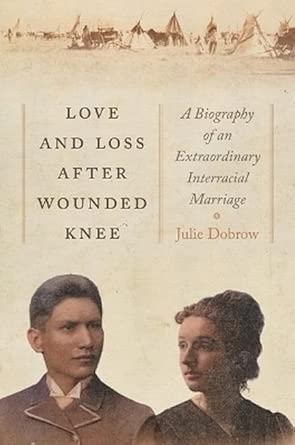
Love and Loss After Wounded Knee (2025)
Charles Eastman was born on the Santee Dakota reservation in the Minnesota Territory in 1858. Three months later—and with dire consequences for the native nations reserved within its borders—Minnesota joined the Union as the thirty-second state. Eastman’s entire life was shaped by those consequences, for both good and ill. Separated from his family during the Dakota War of 1862 (the family fled to the haven of Métis-controlled Assiniboia, the precursor to modern Manitoba), Eastman attended “civilizing” mission schools and academies, was baptized, and took the Christian name Charles, forsaking the name given him at birth. Eastman attended Beloit College in Wisconsin and Knox College in Illinois before graduating from Dartmouth in 1887 and Boston University’s medical college in 1890. He became among the first Native Americans to attain an advanced medical degree.
Eastman is hardly an obscure figure in Native American history. He wrote numerous autobiographical works. He was also a highly visible public figure in the late nineteenth century, serving as a speaker, public intellectual, and tragic mascot of sorts for the Society of the Friends of the Indians, a group of liberal Republican reformers who reshaped the federal Indian administration in the late-nineteenth and early-twentieth centuries. He has been the subject of numerous scholarly studies; however, in author Julie Dobrow’s hands, Eastman becomes wholly transformed, refreshingly unfamiliar, and ready to become known again: not as a singular figure in U.S. history, but as one half of a singularly significant and ultimately tragic marriage.
Elaine Goodale, the other subject of Dobrow’s dual biography, is the standout here. She is also far from obscure. Elaine and her sister, Dora, born during the Civil War, were well-published child poets; their stanzas could be found in both Harper’s and Scribner’s. But never has Elaine Goodale been so thoroughly contextualized within the tragic history of the Peace Policy, the Indian Wars, and the calamitous cultural and land losses extracted from Native Nations by the policies of allotment and acculturation—policies enacted by Elaine Goodale’s sectional compatriots and social peers.
The field of women’s history has long tilled the fertile soil of late nineteenth century reform, including the role that women played in the Indian Mission movement and in groups like the Friends of the Indian. However, much of that previous focus has been lavished upon another Massachusetts woman from a generation earlier than Goodale: Helen Hunt Jackson. Jackson famously published A Century of Dishonor in 1881, a scathing criticism of the U.S. army and American Indian Policy going back to founding of the republic. She gifted a copy to every sitting member of Congress, with a note scribbled in each of the dust jackets: “Look upon your hands, for they are stained with the blood of your relations.” Hers was the clarion call that ultimately led to the passage of the Dawes Act, the suppression of military administration in the Indian Bureau, and the rapid expansion of Indian boarding schools. Yet Jackson, who died in 1885, never lived long enough to confront the blood that would be put upon her own hands.
What is fascinating about Goodale in this volume is that she is a woman from the same world as Helen Hunt Jackson, yet she was younger—and lived long enough to face, very intimately and tragically, the complications and consequences Indian assimilation. Eastman and Goodale’s first meeting was almost a doomed fate. The “civilizing” mission of New England Christianity drew them both to the Dakota Territory shortly before the massacre at Wounded Knee in 1890, where they met while treating Miniconjou and Hunkpapa bodies broken by the violence of the 7th Cavalry Regiment. They were wed in New York the following year and ultimately had six children.
It was Elaine Goodale, with her skills, experience, and connections in the world of publishing, that helped make Charles Eastman a public figure. And yet, after three decades of marriage, turning Eastman’s life into fodder for books and lecture circuits had not only alienated the doctor from himself and indigenous roots, but had alienated the couple from one another. In 1921, the marriage crumbled under the weight of the prejudice both had faced from their mixed marriage (as well as evidence of Eastman’s infidelity). Though they never divorced, they separated, and Eastman’s life as a public figure came to an end.
This most excellent dual biography is a worthy consideration for any audience, scholarly or popular. While reading, this reviewer could not help but think of the parallels between Dobrow’s work and Martha Sandweiss’ much celebrated book Passing Strange (2009), about the double-life of U.S. Geological Survey director Clarence King and his secret marriage to Ada Copeland, a formerly enslaved woman, in Brooklyn, New York. Both volumes render legible how the racial prejudices of the Gilded Age and Progressive Era impacted even the most mundane aspects of everyday life, as well as the most intimate components of human relationships. Like Sandweiss, Dobrow gives the reader a chance to live with two extraordinary individuals trying and failing to navigate the perilous waters of personal, sexual, and racial politics in the nineteenth century.
Aaron David Hyams is a lecturer in the Department of History at Sam Houston State University.
The post Love and Loss After Wounded Knee (2025) appeared first on Civil War Monitor.








 New Posts (Home)
 ChatBox
 Popular Posts
  Game Zone
 Top PodCasts