www.wearethemighty.com
Captain America and the boldest punch in American pop culture
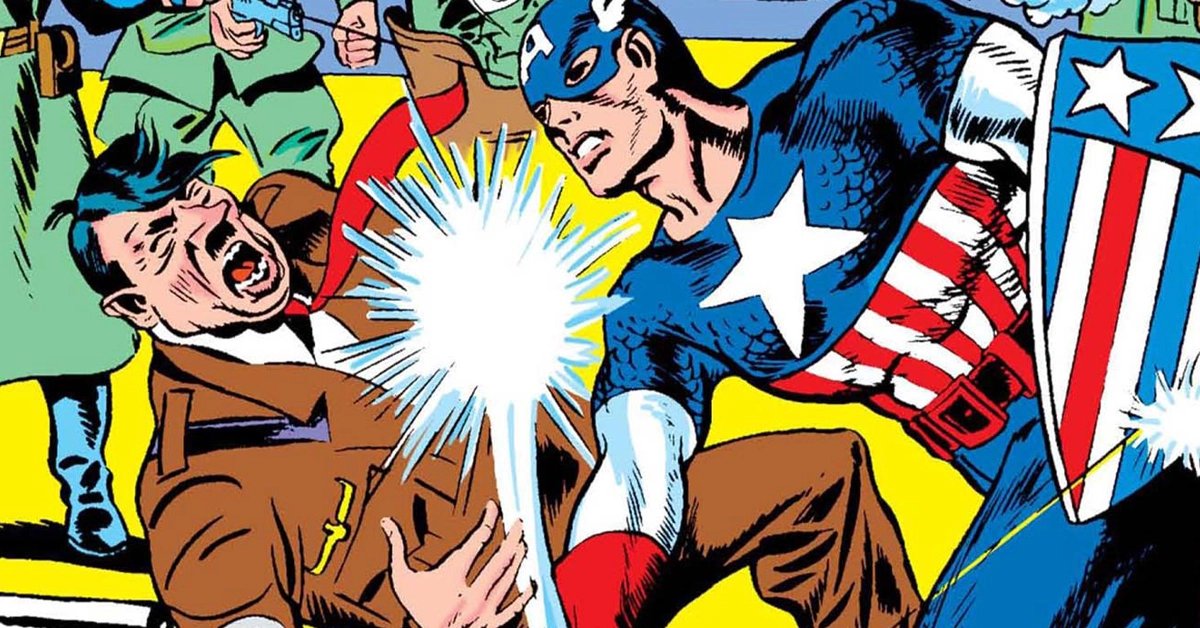
In December 1940, as snow dusted city streets and America prepared for another uneasy holiday season, a comic book quietly appeared on newsstands that would forever alter the relationship between popular culture and politics. “Captain America Comics” #1, cover-dated March 1941, featured an image so confrontational that it bordered on the unthinkable for its time: a costumed American hero delivering a crushing right hook directly to the jaw of Adolf Hitler.Also Read: The Marine Corps used ‘Doom II’ to train Marines to work togetherThis was not metaphor. It was not subtle symbolism. It was not historical hindsight. The United States was not yet at war with Germany. Pearl Harbor was still a year away. Roughly 80 percent of Americans opposed entering the conflict raging across Europe. Yet here, in bright primary colors meant for children and working-class readers, was an unmistakable declaration: Nazism must be confronted, and America would eventually have to fight.The story behind that punch is one of fear, urgency, political conviction, and personal courage. It is also a reminder that comics, often dismissed as disposable entertainment, have long served as vehicles for moral argument and resistance.
America in 1940
A meeting of the German American Bund. (CSUN Archives)
To understand the audacity of this issue of “Captain America Comics”, it is essential to grasp the national mood of the United States in 1940. World War II had already been raging for more than a year. Poland fell. France collapsed. Britain stood alone under bombardment. Nazi Germany appeared unstoppable.But the United States remained firmly isolationist. The trauma of World War I still haunted the nation. Many Americans believed entry into another European war would be catastrophic and unnecessary. The America First Committee, which included prominent figures like Charles Lindbergh, argued that the nation should avoid foreign entanglements at all costs.Antisemitism also existed openly in American society. Pro-Nazi rallies were held in cities like New York. German American Bund members marched in uniform. Radio personalities such as Father Charles Coughlin spread conspiracy theories and anti-Jewish rhetoric to millions of listeners. Hitler, disturbingly, still had admirers in the United States.In this environment, attacking Hitler publicly was not just controversial. It was dangerous.
Joe Simon and Jack Kirby
Joe Simon and Jack Kirby were not politicians, generals, or diplomats. They were young comic book creators trying to make a living in New York’s booming pulp and comic industry. Both were sons of Jewish immigrants, raised in working-class neighborhoods where the news from Europe was not abstract.They read the newspapers. They saw the photographs. They understood exactly what Nazi ideology meant for Jewish people. Long before the full extent of the Holocaust was known, it was already clear that Jews were being targeted, dispossessed, beaten, and murdered.Simon, the writer and editor, and Kirby, the artist born Jacob Kurtzberg, felt a growing sense of dread. Kirby in particular had firsthand experience with antisemitism and physically fought Nazi sympathizers in the streets of New York. This was personal.They believed that war was inevitable. More importantly, they believed silence was complicity.At a time when much of American media hedged its language or avoided direct confrontation, Simon and Kirby decided to take a stand through the one medium they controlled: a comic book.
Joe Simon and Jack Kirby.
A Hero Made for the Moment
Captain America was conceived as a deliberate political figure, not a vague superhero who happened to fight criminals. Everything about him was intentional.He was not an alien. He was not a billionaire. He was not a god. He began as Steve Rogers, a physically weak, sickly young man desperate to serve his country. Rejected by the military due to his frailty, he volunteers for an experimental program that transforms him into the perfect soldier.This origin resonated deeply during a time of global crisis. It suggested that heroism was not innate but earned through courage and sacrifice. It also reflected a powerful mythological parallel: the Jewish legend of the Golem, a protector created through knowledge and moral purpose to defend the innocent from destruction.The scientist who transforms Rogers, Dr. Reinstein (later renamed Erskine), is himself a Jewish refugee from Europe. His role as a learned figure who creates a defender against tyranny reinforces the allegorical connection.Captain America was not just a superhero. He was a moral argument.
(Marvel)
The Punch as Politics
The decision to place Hitler on the cover was not made lightly. It was a calculated act of defiance.At the time, depicting a real, living world leader as a villain was virtually unheard of in comics. Comics often relied on fictional criminals or abstract threats. Simon and Kirby shattered that convention.Simon later described the cover as a “conscious political creation.” He recalled that opponents of the war were well organized and vocal. Simon and Kirby wanted their voices heard as well.The image was unmistakable. Captain America bursts into a Nazi command center, dodging gunfire, as his fist connects with Hitler’s face. Hitler is not caricatured into harmless absurdity. He is furious, caught mid-speech, exposed and vulnerable. It was not escapism. It was a challenge.
The Fear Behind the Deadline
One of the most revealing aspects of the story is the fear that drove the comic’s rapid production. Simon, Kirby, and publisher Martin Goodman were haunted by a chilling possibility: what if Hitler died, or worse, what if the Nazis won, before the comic even reached the public?This fear created a sense of urgency that shaped every decision. The message had to be delivered immediately. Delays were unacceptable. The punch had to land while it still meant something. The creators were not worried about being proven wrong. They were worried about being silenced by events.This urgency explains the raw intensity of the cover. It was not designed for subtlety or longevity. It was designed to confront the present moment head-on.
A Reckless Risk in a Dangerous Time
Publishing “Captain America Comics” #1 was a gamble with real consequences. Nazi Germany was not some distant abstraction. It was a powerful regime with international influence and sympathizers inside the United States. By placing Hitler on the cover, Simon, Kirby, and Goodman effectively painted a target on themselves. They knew this. They did it anyway.The backlash was immediate and severe. Hate mail poured in. Death threats arrived at the Timely Comics offices. The hostility was not theoretical. It was specific and personal. The threats became so serious that New York City Mayor Fiorello La Guardia intervened. Recognizing the danger, he arranged for police protection for the creators and the publisher.That detail alone underscores how extraordinary the situation was. A comic book had become a matter of public safety.
Oops. Lucky Lindburgh, forever unclean. (Irving Haberman/IH Images/Getty Images)
Symbolism and Strategy
Interestingly, the famous punch occurs only on the cover. Inside “Captain America Comics” #1, Hitler never appears directly in the story. This was intentional.The cover served as a political billboard. The interior stories focused on fictional Nazi agents and espionage plots. By isolating the most confrontational imagery to the cover, Simon and Kirby maximized impact while reducing legal and narrative complications.The cover also featured Captain America wielding a triangular shield. This design element would not last long. MLJ Comics, which published a hero called “The Shield,” raised concerns about similarity. To avoid conflict, Timely Comics redesigned Captain America’s shield into the now-iconic circular form beginning with issue #2.Ironically, a legal dispute helped cement one of the most recognizable symbols in pop culture history.
Public Reaction, Commercial Explosion
Despite the threats, or perhaps because of the controversy, “Captain America Comics” #1 was an instant success. Nearly one million copies sold, an extraordinary number for a debut comic. Readers responded to the clarity of the message. In an era of uncertainty and denial, Captain America offered moral certainty. He named the enemy. He acted decisively. Children saw a hero standing up to a bully. Adults saw a statement they were afraid to make themselves. Captain America quickly became one of Timely Comics’ flagship characters. More importantly, he became a cultural symbol long before the United States officially entered the war.On Dec. 7, 1941, Japanese forces attacked Pearl Harbor. The United States entered World War II. Overnight, the national mood shifted. What had once been considered reckless suddenly looked prophetic. Captain America no longer seemed controversial. He seemed obvious.Superheroes across the industry followed his lead, punching Nazis, selling war bonds, and reinforcing wartime morale. But Captain America was there first. Simon and Kirby took their stand when it was unpopular, when it was dangerous, and when it was uncertain whether history would prove them right.
Comics as Conscience
The significance of “Captain America Comics” #1 extends far beyond its sales numbers or artistic impact. It stands as one of the clearest examples of popular culture acting as moral resistance. This was not government propaganda. It was not a commissioned message. It was two creators using their platform to speak out against evil when silence was easier.The Golem parallel, whether intentional or not, reinforces the deeper meaning of Captain America. He is a protector born of fear and hope, created not to conquer but to defend the innocent. In later decades, Captain America would question authority, challenge government overreach, and wrestle with the meaning of patriotism. That complexity was present from the beginning. His first act was not obedience. It was defiance. Today, the image of Captain America punching Hitler is one of the most reproduced and discussed covers in comic history. It appears in textbooks, documentaries, and museums. It is often cited as proof that comics matter. But its true power lies not in hindsight, but in timing. The punch mattered because it came early. It mattered because it was risky. It mattered because it was real.In December 1940, when fear, denial, and isolationism dominated American discourse, two Jewish creators decided that silence was no longer an option. They picked up pen and brush instead of a rifle, and they swung first. Before Pearl Harbor. Before official declarations. Before consensus.Captain America’s first punch was not just aimed at Hitler. It was aimed at indifference.And it landed.
It’s no big deal now, but still good to see. (Marvel Comics)
Teaching Captain America, War Bonds, and the Homefront
I use the story of “Captain America Comics” #1 as a gateway for students to understand that World War II was not fought solely overseas. It was also fought on the American homefront through culture, messaging, and mass participation. Comic books were a powerful part of that effort, helping shape public opinion, boost morale, and mobilize civilians long before victory seemed guaranteed.When I introduce the iconic image of Captain America punching Hitler, students immediately focus on the audacity of the moment. The United States was not yet at war, yet the message is unmistakable. This allows us to examine how popular culture can influence national attitudes and psychologically prepare a society for conflict. Simon and Kirby were not responding to government directives. They were taking a stand and, in doing so, modeling how culture could rally a divided nation.To reinforce this idea, I pair the comic with a scene from “Captain America: The First Avenger.” In the film, Steve Rogers tours the country in a star-spangled costume, selling war bonds while repeatedly punching Hitler on stage. Students often laugh at the exaggerated theatrics, but that reaction becomes a teachable moment. We pause and unpack what is really happening in the scene. Captain America is not fighting on the front lines. He is selling confidence, unity, and belief in victory.This naturally leads to a discussion about war bonds and their critical role in keeping the American war machine moving. I explain that World War II was extraordinarily expensive and that the federal government relied heavily on civilians to help finance the war. By purchasing war bonds, ordinary Americans helped fund factories, ships, planes, weapons, and supplies. The bonds were not just financial instruments; they were emotional commitments to the war effort.Students begin to see how superheroes, Hollywood, posters, and comics worked together to encourage participation. Captain America became a symbol of trust. If he believed the war was worth fighting, then buying a bond became an act of patriotism. The fictional punch against Hitler mirrored a very real call to action at home.From there, we broaden the lesson by examining wartime comic covers, bond posters, and advertisements alongside the film clip. Students analyze how messages were simplified, dramatized, and repeated to reach a mass audience. They come to understand that morale was a strategic resource. Fear and doubt could slow production and weaken resolve, while optimism and shared purpose could accelerate victory.By the end of the lesson, students recognize that comic books were not distractions from the war. They were tools of engagement. Captain America was not just fighting Nazis in ink and on screen. He was helping mobilize an entire nation to invest, believe, and contribute. In that sense, the war was being fought not only on distant battlefields, but also in theaters, newsstands, classrooms, and living rooms across America.
Don’t Miss the Best of We Are The Mighty
• How ‘Major Payne’ became a Marine Corps comedy classic• ‘Project Jedi’ aimed to teach soldiers to use the Force when firing weapons• ‘The Iron Major:’ James Capers Jr.’s long road to the Medal of Honor
Entertainment
Entertainment
Captain America and the boldest punch in American pop culture
By Daniel Tobias Flint
Military News
Legendary actor, Army veteran, and Navy brat Robert Duvall dies at 95
By Blake Stilwell
Movies
Here’s what’s going on with the ‘Top Gun: Maverick’ lawsuit saga
By Shannon Corbeil
Movies
The new Jimmy Stewart biopic depicts his World War II service
By Blake Stilwell
Movies
Here’s the Tom Cruise classic ‘Top Gun’ in under 3 minutes
By August Dannehl
The post Captain America and the boldest punch in American pop culture appeared first on We Are The Mighty.








 New Posts (Home)
 ChatBox
 Popular Posts
  Game Zone
 Top PodCasts