www.optimistdaily.com
10 brain-boosting hobbies for older adults that help keep the brain and body young
BY THE OPTIMIST DAILY EDITORIAL TEAM
Many people yearn for the golden years of retirement, where the grind often slows down, and we have more free time. But how we spend that time can make a big difference in how we age. Science continues to show that our lifestyle choices in midlife and beyond can influence everything from longevity to cognitive sharpness, and the good news is that you don’t need a gym membership or a PhD to benefit.
In fact, a wide range of easily accessible hobbies, from walking and dancing to learning something new, can help protect both your brain and body. While no single habit can claim the title “fountain of youth”, doing several of these consistently can help maintain your independence and vitality for years to come.
Here are 10 engaging, research-backed activities that support healthy aging that you might actually enjoy!
1. Walking: the underrated brain and body booster
Forget the idea that only high-intensity workouts matter. Walking is one of the simplest, most effective ways to improve both brain and physical health. Studies have found that even modest activity, like regular walking, can help increase brain volume and enhance neuroplasticity, or in other words, our brain’s ability to change and adapt.
In older adults, walking is associated with a reduced risk of death and age-related decline. One recent review even found that walking just 4,000 steps a day can contribute to a longer life.
“I used to be a flag-waver for high-intensity,” says Dr. Laura D. Baker, a professor of gerontology at Wake Forest University School of Medicine. “But now I think walking is the best possible activity.” Bonus points if you have a walking buddy because the social connection adds even more benefit.
2. Trying new sports: challenge body and mind
Walking is wonderful, but if you crave a bit more of a challenge, trying a new sport may offer added brain benefits. Just take the example of Olga Koteko, a Canadian teacher who took up track and field in her 70s and broke records into her 90s. Brain scans later showed her white matter, which is critical for planning and decision-making, resembled that of someone decades younger.
Pushing yourself to learn new physical skills can help maintain cognitive function, especially in areas most vulnerable to aging.
3. Learning a language: a workout for your mind
Picking up a second (or third!) language can be especially powerful for preserving brain function. A 2019 study found that older adults who engaged in a short-term language learning program showed measurable cognitive gains. Even people who learned another language later in life maintained more cognitive abilities than monolingual peers.
“There’s increasing scientific evidence that learning new things throughout the life span is neuroprotective,” says Dr. Art Kramer, founding director of the Center for Cognitive and Brain Health at Northeastern University. (He notes that his 103-year-old aunt is currently learning Italian.)
4. Quilting and photography: hands-on learning for memory
Creative, skill-based hobbies can be surprisingly potent when it comes to brain health. In one landmark study, older adults who learned quilting or digital photography for 16 hours a week over three months showed stronger memory and processing speed compared to peers doing less demanding tasks.
According to lead researcher Dr. Denise Park of the Center for Vital Longevity, it’s not just the skills themselves, but more importantly, the mental effort and social interaction. “Having interests is really important,” she says, “but you have to be able to afford it.” Thankfully, many public libraries, senior centers, or local community programs offer low-cost access to new skills.
5. Ongoing education: never stop learning
From mastering a new app to taking a community college course, continuing to learn keeps the brain engaged. Baker points out that many daily challenges disappear in retirement, so we have to actively seek new ones.
The cerebellum, a part of the brain that handles coordination and habit-building, responds well to new mental challenges. And setting clear learning goals helps sustain motivation. As Baker puts it: “The brain needs regular stimulation, not just two days this month, but every day this month.”
6. Teaching: learning by sharing
It turns out that teaching others is one of the best ways to solidify your own knowledge. “When you teach a class, you really have to know the material,” says Kramer. “I’ve learned the most when I’ve taught.”
Planning lessons, anticipating questions, and adapting material to different learners all exercise cognitive flexibility. Whether it’s leading a book club, teaching a language, or volunteering to mentor, the cognitive demands of teaching are a win-win.
7. Juggling: coordination with cognitive rewards
Juggling isn’t just for circus performers. A 2022 review of 11 studies found that juggling enhances neuroplasticity, helping to build new connections in the brain.
“Juggling is a complex perceptual-motor task,” says Kramer. “You have to know where the balls are, anticipate them, move your arms.” It’s affordable, adaptable (can be done sitting or standing), and doesn’t require a partner or equipment beyond a few soft beanbags.
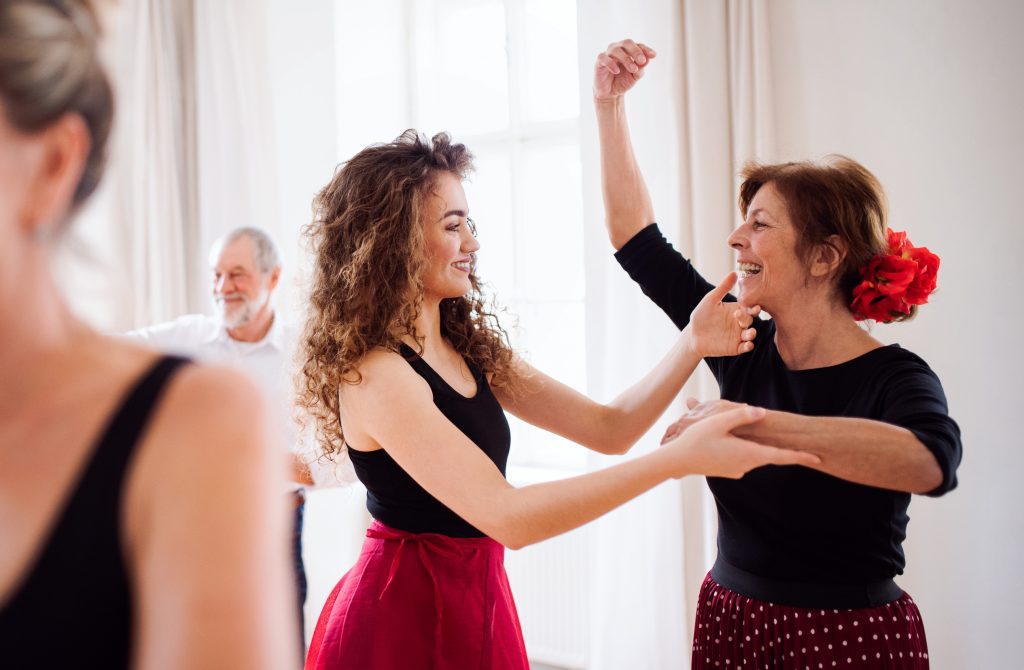
8. Dancing: memory, movement, and fun
Dancing, on top of getting your heart rate up, challenges memory, coordination, and balance. In one long-term study, older adults who danced weekly saw positive brain changes in the hippocampus, a region associated with memory. And unlike repetitive exercises, dance routines require constant learning and attention.
From line dancing to jazz or square dancing, the mental load of remembering steps might be what makes the difference. Plus, dancing often gets you out into the community, another plus for longevity.
9. Video games: surprising memory benefits
Not all screen time is created equal. In one study from the University of California, Irvine, older adults who played 3D games like Super Mario World showed improved memory after just four weeks. The benefits stuck around for another month after they stopped playing.
The researchers believe the immersive, three-dimensional environment helped stimulate brain regions involved in spatial memory. So yes, even gaming (when done right) can be part of a brain-healthy lifestyle.
10. Mindfulness: managing stress for longevity
Excess stress, especially later in life, has been linked to inflammation, memory problems, and even a shorter lifespan. Mindfulness practices like meditation, yoga, or journaling help regulate stress and keep the nervous system balanced.
Spending time with animals may also offer cognitive boosts. One study found that older adults who spent time with pets experienced improvements in memory and energy.
Mix and match for maximum benefit
With so many positive options, the best strategy may be to combine several. Baker, who leads the U.S. POINTER trial on dementia prevention, notes that lasting brain health isn’t about any single hobby, but more about the synergy of physical activity, mental stimulation, a healthy diet, and social connection.
Another international trial found similar results: when older adults engaged in a mix of exercise, socializing, cognitive training, and nutritional support, they saw better cognitive outcomes than with any drug on the market.
Whether it’s walking with a friend, learning to juggle, or teaching someone a skill you’ve mastered, each habit adds up to a more vibrant, resilient brain. The secret isn’t choosing the “perfect” hobby; it’s simply staying curious, active, and connected.
Did this solution stand out? Share it with a friend or support our mission by becoming an Emissary.The post 10 brain-boosting hobbies for older adults that help keep the brain and body young first appeared on The Optimist Daily: Making Solutions the News.








 New Posts (Home)
 ChatBox
 Popular Posts
  Game Zone
 Top PodCasts