pacificlegal.org
Today’s oral arguments in Pung v. Isabella County
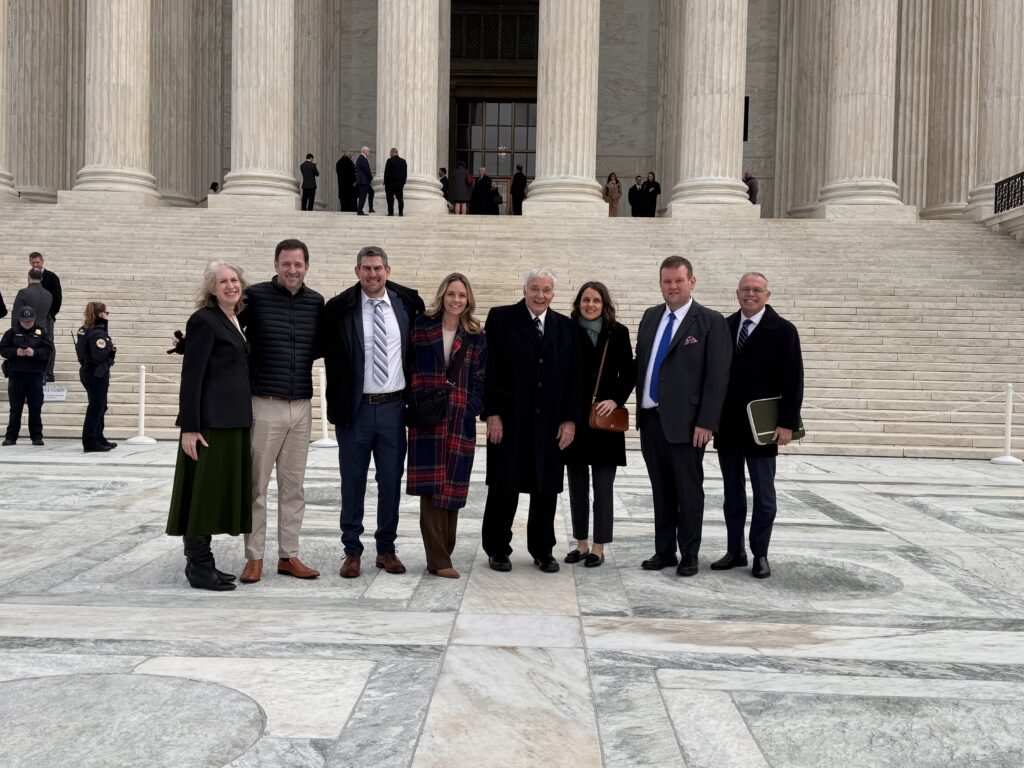
This morning, the U.S. Supreme Court heard oral arguments in Pung v. Isabella County, a lawsuit challenging a Michigan county’s failure to provide just compensation after seizing and selling the Pung family home over a $2,200 tax debt that was never owed.
Justice Sotomayor’s remarks included a succinct summary of the case.
“Justice Barrett very eloquently described [this case] as feeling… fundamentally unfair. [The Pung family is] fighting over a $2,200 tax debt that at least two courts said wasn’t owed, and yet [the government] plowed ahead…
At some point, doesn’t the Constitution have something to say under the rubric of what just compensation is? I mean, is it just to give the state that much leeway?”
Today’s arguments primarily focused on arguments over what constitutes “just compensation,” as required by the Fifth Amendment when the government takes and forecloses on a home to satisfy unpaid taxes. The Court spent little time on the lawsuit’s Eighth Amendment claim that the County imposed an unconstitutionally excessive fine by depriving the Pungs of over $100,000 in equity.
Arguing for the Pungs, Michigan attorney Phil Ellison was joined by Pacific Legal Foundation’s property rights lawyers. They asked the Supreme Court to overturn the Sixth Circuit’s ruling, which held that when the government seizes properties to satisfy tax debts, it only needs to give the former owner whatever proceeds come from the auction—no matter how unfair the auction is or how far the value of the property is diminished in that sale.
The Pungs argue that the government is constitutionally required to provide just compensation, which has always been measured by the fair market value of the property, minus the tax debt owed. Mr. Ellison stated,
“I would say that the taking here is the taking of the equity, the value above the $2,200 tax that’s owed…
The issue here ultimately is that there is a piece of property that has been uncontested by the government to be worth approximately $200,000. Once the government has decided that it’s going to take more property than what the actual value of the debt is, that’s what triggers the takings obligation. And if it’s not a takings obligation, of course, we’ve also argued it’s an excessive fine.”
By contrast, the government contends that it should only have to pay the difference between the tax debt and whatever amount the property is sold for in a tax foreclosure auction—even if the property is sold at a fraction of its actual market value in that auction. However, this argument raised some eyebrows in the courtroom, as in an exchange between the attorney for the government and Justice Barrett:
MR. NELSON: Our position is that the auction price—when the auction is fair—reflects the market’s assessment of the property’s value. And that is an appropriate measure of compensation.
JUSTICE BARRETT: But isn’t it undisputed here that the auction price was far below the property’s assessed value?
MR. NELSON: The assessed value and the auction price were different, yes. But—
JUSTICE BARRETT: And the property was subsequently sold by the auction purchaser for close to the assessed value?
MR. NELSON: That’s correct.
JUSTICE BARRETT: So the auction purchaser paid 40% of the property’s value and then turned around and sold it for close to the full value?
MR. NELSON: Yes, that’s what occurred.
JUSTICE BARRETT: And you’re saying that’s just compensation?
During the argument, the Justices repeatedly returned to the unusual circumstances surrounding the disputed tax debt. Justice Jackson asked why the Pungs did not pay the tax when Isabella County notified them of the relatively small debt. Mr. Ellison put the matter bluntly:
“He didn’t do that because he didn’t owe the tax.”
An individual government employee spent years attempting to impose a punitive, retroactive charge onto the Pungs’ property. Even though that charge was repeatedly struck down by an administrative law judge, the tax assessor continued to pursue the non-issue until the County seized the Pungs’ family home over it, years later.
Justice Gorsuch expressed bafflement at these circumstances.
“I’m just curious how a[n]… erroneously applied, it seems, $2,000 tax bill led to taking someone’s home in a sale for a third of what it’s worth, then very promptly the whole value is secured again by the person who collected it out of bankruptcy, out of the foreclosure. It’s a striking set of facts. How did it happen? …
Really? Nobody can say, hey, there was a mistake? … I have to foreclose on someone’s home for a tax bill I know is false but I, you know, I’m forced to do it?”
Justice Barrett agreed. Reflecting on the case history—and the disproportionate nature of the County’s taking—she invoked the classic Les Misérables:
“I want to echo what Justice Gorsuch said. I mean, it seems like there was some real harm to your client… [F]rankly, reading the briefs, it sounds to me like this tax assessor was like Inspector Javert. But it was even worse because Jean Valjean hadn’t stolen the bread. I mean, [the Pungs] didn’t even owe the tax. And it’s this small tax and the big loss of the family home and of the money, so it does seem that there’s some unfairness there.”
As the hearing progressed, the Justices pressed opposing counsel on how small a debt the government would be willing to use as justification to seize someone’s home, asking,
“Is this always how the County does it? I mean, if the tax bill were 100 bucks, you would still take a house?”
The attorney for the lawyers admitted that, yes, the government would take a home over a sum as low as $100. Pacific Legal Foundation can attest to multiple examples of the State of Michigan doing just that—including over a mere $8.41 in Uri Rafaeli’s case.
As attorney for the plaintiffs, Mr. Ellison was given the last word of the hearing. In his closing remarks, he emphasized opposing counsel’s concession that Isabella County’s actions qualify as a taking under the Fifth Amendment. He concluded by urging the Court to hold the government accountable for abusing Americans’ right to just compensation.
“[The government must] take the bitter with the sweet. If you’re going to take the benefits of tax foreclosure and you’re going to take more property than necessary, you’ve got to also take the historical practices of the limitations on there. … And if you’re not going to take those, you’re no longer a debt collector—you’re now a confiscatory government, and you’re responsible under the Takings Clause.”
The post Today’s oral arguments in Pung v. Isabella County appeared first on Pacific Legal Foundation.








 New Posts (Home)
 ChatBox
 Popular Posts
  Game Zone
 Top PodCasts