www.theamericanconservative.com
Trump Seeks to Extend Domestic Spying Powers He Once Condemned
Politics
Trump Seeks to Extend Domestic Spying Powers He Once Condemned
The White House is pushing Congress to extend the government’s surveillance authority.
In an April 10, 2024 post on Truth Social, then-candidate for president Trump urged Republicans in Congress to “KILL FISA,” referring to the U.S. law establishing procedures for foreign surveillance. “IT WAS ILLEGALLY USED AGAINST ME, AND MANY OTHERS. THEY SPIED ON MY CAMPAIGN!!!” Yet now that he has entered the White House for a second term, Trump is seeking to extend those spying powers he once denounced.
As POLTICO reported last week, the Trump administration, in an effort led by White House deputy chief of staff Stephen Miller, is quietly pressing Congress to approve a “clean” extension of Section 702 surveillance authorities, potentially through 2027.
Section 702 of the Foreign Intelligence Surveillance Act originally became law in 2008 after the U.S. Congress voted to retroactively authorize parts of a secret, unconstitutional warrantless surveillance program constructed under the George W. Bush administration during the War on Terror after it was exposed to the American public in December 2005 by James Risen of the New York Times. As Risen and a colleague wrote at the time, citing anonymous U.S. officials,
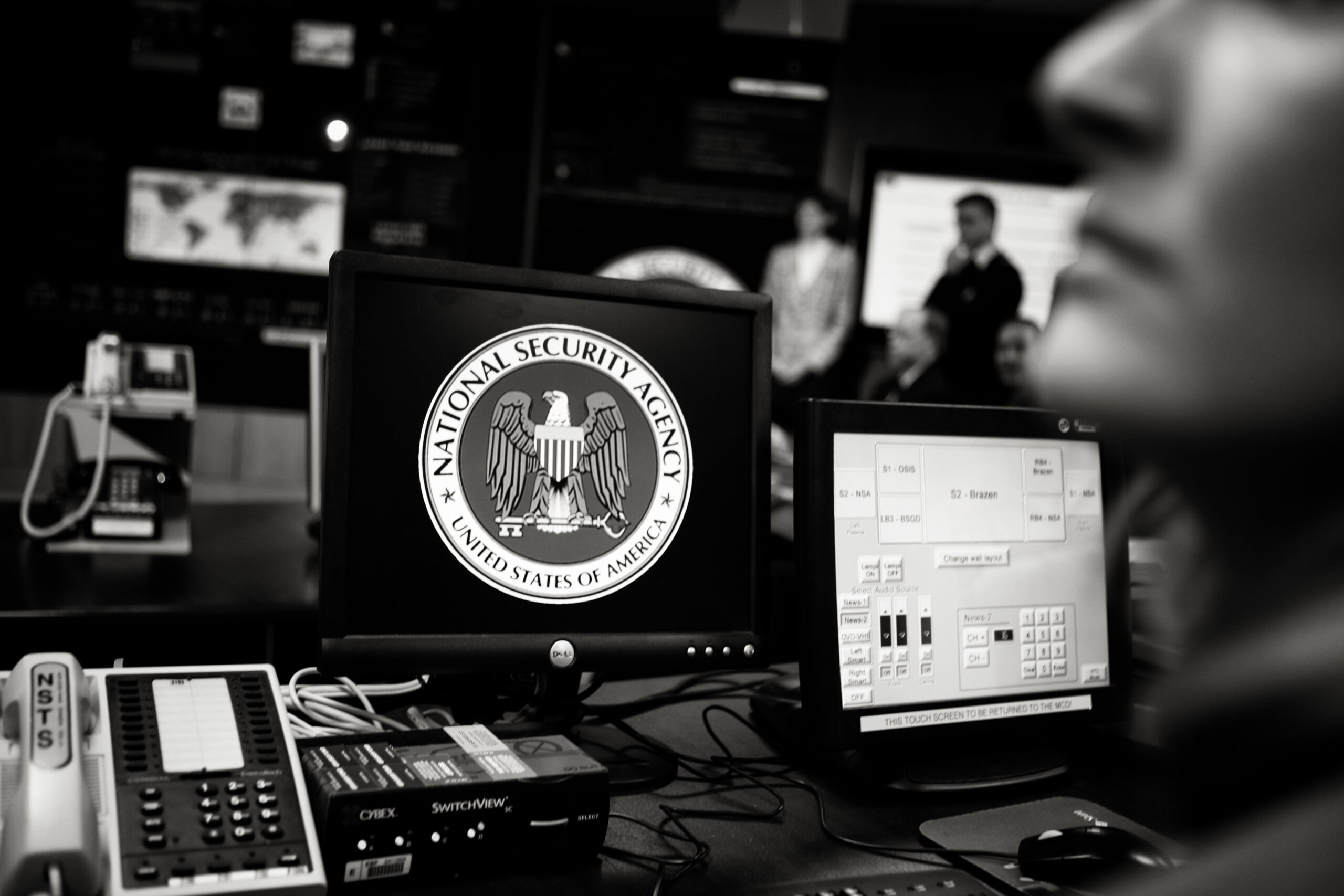
Under a presidential order signed in 2002, the intelligence agency [NSA] has monitored the international telephone calls and international e-mail messages of hundreds, perhaps thousands, of people inside the United States without warrants over the past three years in an effort to track possible “dirty numbers” linked to Al Qaeda.
We later learned through the brave whistleblowing of Edward Snowden and reporting from Glenn Greenwald that the NSA’s secret data collection program extends well beyond the originally reported “hundreds, perhaps thousands” of Americans; the NSA’s internal motto is “collect it all,” and that organization engages in surveillance and bulk data collection against every American citizen.
Under the pretext of targeting foreigners abroad, Section 702 of FISA has expanded the federal government’s ability to warrantlessly collect Americans’ private communications, then later search through those communications using Americans’ personal data. So-called “incidental” or “backdoor” searches have long allowed intelligence agencies like the FBI to access constitutionally protected private communications without ever going to a judge. Congress has nominally required intelligence agencies to estimate the frequency of such database queries, yet when intelligence officials are—albeit rarely—confronted by lawmakers, they have repeatedly failed to produce meaningful numbers. With the FBI and other intel agencies ignoring even minimal legal mandates to keep a tally of its own “backdoor searches,” the true scope of warrantless access to Americans’ communications remains largely unknown.
Even so, Americans do not have to wonder whether or not those vast spying powers will ever be wielded for political purposes against them. That has already happened.
In a 2019 report, Justice Department Inspector General Michael Horowitz found that the FBI made “fundamental errors” and provided misleading information to the secret FISA court in order to obtain surveillance authorization targeting 2016 Trump campaign official Carter Page. In April 2022, the Office of the Director of National Intelligence released its annual transparency report on the intelligence community’s use of national security surveillance authorities, revealing that the FBI conducted up to 3.4 million warrantless queries of Americans’ data in 2021.
Those high profile spying abuses led to a legislative battle in April 2024 between the House intelligence committee—which had proposed a version of FISA that kept all of the U.S. security state’s abilities to surveil and collect data on American citizens in tact—and the House judiciary committee—which sought to introduce reforms to prevent intelligence agencies from engaging in those surveillance activities against Americans.
House Speaker Mike Johnson (R-LA)—who in July 2023 claimed that the unchecked power of intelligence agencies “is what keeps [him] up at night” and denounced how “the top law enforcement agency in the country, that is supposed to be protecting and serving the American people, is being used against them, it’s violating the privacy of Americans”—ultimately cast the deciding vote to reject an amendment requiring law enforcement to obtain a warrant before searching Americans under Section 702, extending the U.S. security state’s authority until its scheduled sunset on April 20, 2026.
In January 2025, a federal district court ruled that law enforcement agencies must obtain a warrant before searching Americans’ communications collected under Section 702 of FISA, rejecting the government’s longstanding reliance on a “foreign intelligence” exception. But the current version of Section 702 that Miller and the Trump administration are pushing through Congress does not include an official warrant requirement for querying Americans’ data, signaling the administration’s willingness to openly violate the Constitution and continue the now decades-long process of shredding Americans’ fourth amendment protections. Congress, which has routinely abdicated its own responsibilities to the executive branch on matters of war and intelligence oversight, will likely follow their lead.
The post Trump Seeks to Extend Domestic Spying Powers He Once Condemned appeared first on The American Conservative.








 New Posts (Home)
 ChatBox
 Popular Posts
  Game Zone
 Top PodCasts