www.theamericanconservative.com
A War in Search of a Strategy
Foreign Affairs
A War in Search of a Strategy
The attack on Iran is an obvious folly.
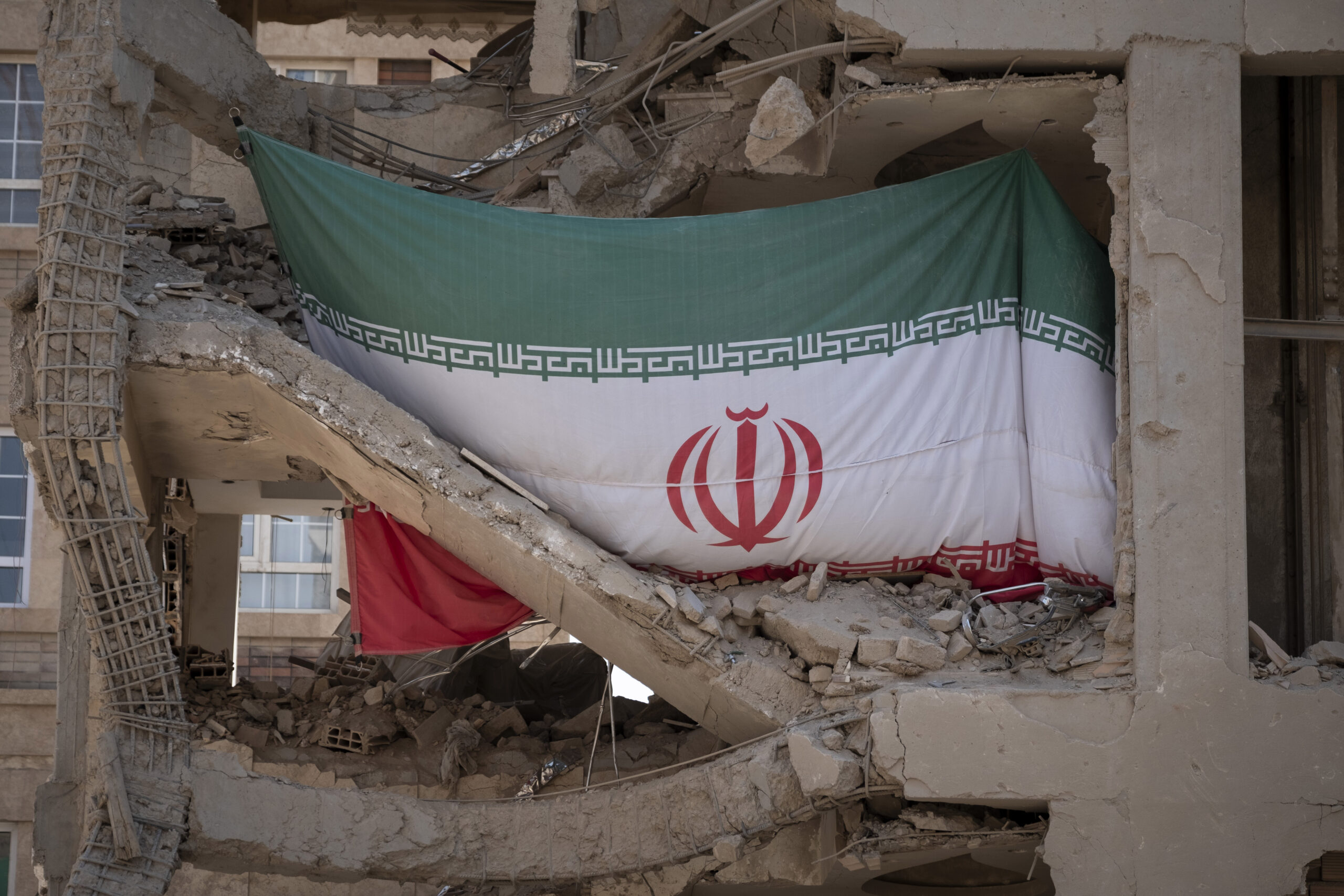
As one of the few realist Republicans to actively oppose the neoconservative fever sweeping the land during the ill-fated reign of George W. Bush, I must admit a familiar sickening feeling is presently in the pit of my stomach. For, as with the disastrous adventure in Iraq, the American-Israeli attack on Iran amounts to nothing so much as being a war in search of a strategy.
As was true in the early 2000s, the administration is currently—like a very bad high school debater—throwing myriad weak strategic arguments at the wall, hoping that something, somehow, will stick; that analytical quantity will somehow obviate the need for analytical quality.
First, we are told the joint attack is designed to stop Tehran from rekindling its nuclear program, the very one the president proudly proclaimed had been “obliterated” following the attack on Fordow last summer. Well, if that is the case, why the urgent rush to end a program we already got rid of eight months ago? Of course, the reality is somewhere between the crowing that went on then, and the grudging hatred of TDS-laden Democrats, who acted as if the attack was much ado about nothing. The reality is that, according to most intelligence estimates, Iran’s nuclear program has been set back for a number of years (say three to four), though certainly not forever. But this is surely far enough away that taking out Iran now is not a clear and present danger to anyone.
Second, we are told that the mullahs are threatening American lives. This also doesn’t pass the analytical laugh test. The long-range missiles some desperate neocons are touting that might be able to strike America simply don’t exist. The only Americans in harm’s way seem to be the U.S. servicemen on bases in the region. It seems beyond credible that an Iran on its knees would have chosen to strike the Americans there. There are anti-missile platforms in place to protect them, so the effect would be marginal. To do so would surely prove suicidal for a regime already on its last legs. Why on earth would the canny Iranians give their American enemies a gold-plated casus belli? Again, it simply makes no sense.
Third, the White House charges that Iran amounts to a security threat impacting primary American national interests. This, too, is an exercise in delusion. The Trump administration deserves great credit for reordering admittedly creaky American geostrategic doctrine on largely realist terms. Gone has been the disastrous Wilsonian/neocon establishment blob notion that America must intervene everywhere, all the time, all at once, as if all regions were of equal importance to the country. The discredited foreign policy establishment had surely forgotten the nostrum that if you love everything, you love nothing, that failing to make strategic choices based on American national interests is a choice in itself.
Instead, in the National Security Strategy and elsewhere, the Trump team made a series of bold realist choices, making American foreign policy fit for the new multipolar era. In accordance with the Roosevelt corollary to the Monroe Doctrine, the Western Hemisphere comes first, then the pivotal Indo-Pacific (with much of the world’s future political growth as well as much of its future political risk), followed by Europe, and only then the Middle East. In such a circumstance, transitioning to serving as an offshore balancing power makes the most sense; America should only aggressively intervene in such an important but not pivotal region when the organic balance of power comes unstuck.
The idea that present-day Iran is a threat to such a regional balance of power is ludicrous. The economically illiterate mullahs have ruined the economy; the nuclear program has been decisively set back; the government has been forced to shoot thousands of their own children to stay in power; Iranian proxies are just a shadow of their former selves, whether they be Hamas, Hezbollah, the departed Assad regime in Syria, the chaotic Iraqis, or the piratical Houthis. To put it plainly, these are not the attributes of a power about to run the table and upend the strategic regional order in the Middle East. So, no, I’m not terrified by this point, either.
That leaves the real reason (I think) for the attack: regime change. Israel’s Prime Minister Benjamin Netanyahu put it far more plainly and (blessedly) directly: The goal of the attacks is to end the existential threat that comes from the regime of the ayatollahs. But if this is the truth, it can just as simply be dispensed with.
Iran certainly does pose a greater risk to Israel than to the United States, in terms of geography, missile wherewithal, and the like. But as American interests are not the same as any other country’s (including even longstanding allies such as Israel), why in the world should that motivate the Americans to such folly? We are here to serve American interests, and no other. Anyone not willing to get on board such an obvious statement really shouldn’t be seriously listened to, certainly not in terms of the American strategic debate, which should only revolve around this country’s specific national interests.
Second, Iran is not (despite neoconservative and Mossad whisperings) in a state of revolutionary ferment; it is not a house of cards that one more bombing is likely to tumble. Even if the grand ayatollah is dead (as some reports now say), the regime itself shows no signs of crumbling. Rather, during recent, tragic demonstrations, the reverse was proven. Despite tens of thousands of its people taking to the streets, and despite assurances from Reza Pahlavi, the desperate crown prince, that portions of the pivotal Islamic Revolutionary Guards Corps (IRGC) would join the people, nothing of the sort happened.
My political risk firm has done a good deal of work evaluating what it takes to mount a successful revolution, whether in France, the U.S., Russia, China, or Cuba. One of the essential factors across the board is for mid-level members of the security establishment (the army, intelligence services, interior ministry) to go over to the people: colonels, majors, and captains first fraternizing with the demonstrators, and then helping to actively arm them. This is the essential political risk step in any revolutionary process, the alchemy that turns mere unrest into sustained political change. Yet, recently, and despite the callow crown prince’s assurances, nothing of the sort happened. Rather than coming over to the people, the IRGC murderously shot them down. There is absolutely no indication—that whatever happens to the ailing ayatollah—that this is a house of cards that is about to fall.
The driving force behind all this is what statisticians call the “hot hand fallacy,” that because someone has been lucky (for example, you’ve made four three-point baskets in a row) you will continue to be so. The administration emerged victorious from its gamble in Fordow, and likewise in Venezuela after breathtakingly snatching Maduro. But the notion that such success will effortlessly continue is just that, a fallacy. For one, those were very specific, limited missions, with very clearly defined metrics for success and failure. This time, with rolling strikes over many days, the mission is lengthier, and crucially—as we have just made crystal clear—the yardstick for success and failure is not just obscure; it simply isn’t there.
It is almost impossible to succeed in foreign policy if the terms of that success are not made plain; here, as was true with Iraq, all we have is a war in search of a strategy. If this were to succeed on such terms, it would amount to a first in history. However, what is surely at risk is one of the high points of the Trump era: The idea that we must stop fighting ill-conceived wars of choice and serve the needs of “America First.”
The post A War in Search of a Strategy appeared first on The American Conservative.








 New Posts (Home)
 ChatBox
 Popular Posts
  Game Zone
 Top PodCasts