pacificlegal.org
Federal court hands Florida property owner a major win in fight to protect his beach
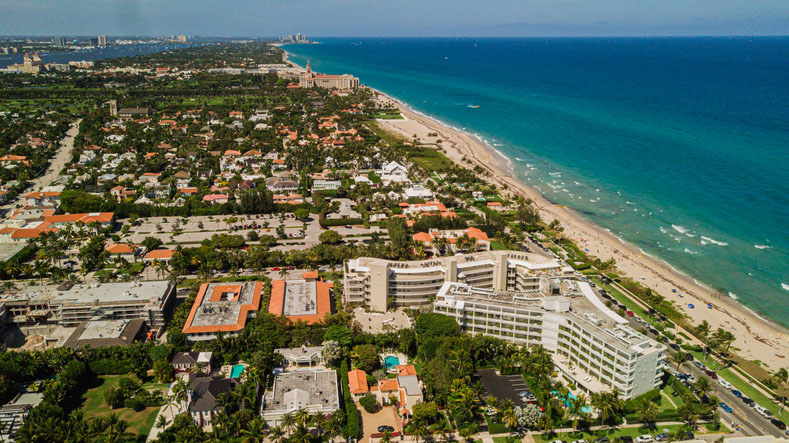
For two decades, Leslie Daniels has owned a beachfront home in Palm Beach, Florida. His property includes a sandy beach parcel—land he holds title to, pays taxes on, and uses for family gatherings. For most of that time, the Town of Palm Beach agreed the beach was his. Town maps labeled it private. Police enforced trespassing laws on it. Officials even told Daniels to install posts marking his property boundaries so officers could keep unwanted visitors off his land.
Then, in late 2021, the town changed its mind—and told Daniels everything it had said before no longer applied.
Private beach turned public
Officials announced that the public had an easement for “traditional beach use” on private sandy beaches where renourishment projects had added sand. Police received a directive to stop enforcing trespassing on Daniels’ land. The town forced Daniels to remove the very boundary markers it had told him to install, calling them prohibited “structures” under the town code. When he switched to small plastic cones with “Private Property” signs, the town ordered those removed too.
When strangers settled on his beach and refused to leave, Daniels called the police—and officers told him they would not remove them. The town manager testified that the public could use Daniels’ land at any hour. The town council president told him his beach was simply not private.
The town based its claim on a Florida statute that has been on the books for 60 years, but has never been interpreted by any court to impose a public easement on private land merely because sand was added. Daniels, now represented by Pacific Legal Foundation, filed a federal lawsuit challenging the town’s actions as an unconstitutional taking of his property and a violation of his First Amendment right to post signs on his own land.
Governments turning private beaches into public land
Daniels’ fight is not an isolated case. Across the country, Pacific Legal Foundation has seen the same pattern: governments declaring private beach property public, stripping owners of the right to decide who can access their property and refusing to pay a cent for it.
In Rhode Island, PLF represents David Welch and Stilts, LLC. There, state lawmakers passed a law in 2023 that moved the public beach boundary inland—directly onto private property—without compensating the owners. A state court ruled the law resulted in an unconstitutional taking. When the state then tried to impose the same requirements through a permitting process, PLF went back to court and won an injunction blocking those conditions. Those cases are now before the state supreme court.
In Malibu, California, PLF represented Dennis and Leah Seider, whose neighbor had posted a “Private Beach” sign to help beachgoers understand where the public easement ended. The California Coastal Commission ordered the sign removed. Without it, strangers wandered onto the Seiders’ property and refused to leave. Malibu’s code prohibited any signs marking the boundary between public and private beach—effectively keeping property owners silent about their own rights. PLF filed a federal lawsuit, and the commission ultimately settled, allowing the Seiders to post truthful signs on their land.
The through line in every one of these cases is the principle the Supreme Court affirmed in Cedar Point Nursery v. Hassid: the right to exclude others from your property is one of the most fundamental rights of ownership, and the government cannot take it away without paying just compensation.
A clear path to trial for Daniels
Last month, a federal court delivered a strong ruling in Daniels’ favor. The court granted Daniels summary judgment on his First Amendment claim, finding that the town’s code bans too much speech by prohibiting all signs on his sandy property. As the court wrote in its opinion, Daniels “has a free speech right to say ‘Private Property’ on his own land.”
The court also rejected every argument the town raised to dispose of the takings claim—including its reading of the Florida statute and its statute of limitations defense—and denied the town’s motion. A bench trial on whether the town’s actions constitute an unconstitutional taking is set for April.
The town is entitled to change its policies. But it cannot simply declare private property public and strip an owner of any means to protect it.
The post Federal court hands Florida property owner a major win in fight to protect his beach appeared first on Pacific Legal Foundation.








 New Posts (Home)
 ChatBox
 Popular Posts
  Game Zone
 Top PodCasts