www.theblaze.com
Messy car? That could now mean $500 fines — or even jail.
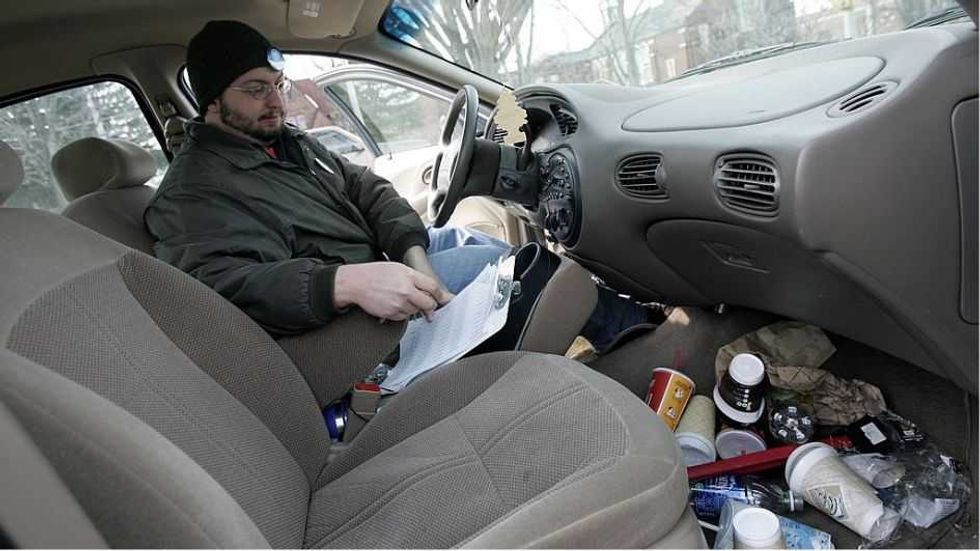
Leaving trash in your car might seem like a personal problem.In Hilton Head, South Carolina, it can now bring fines of up to $500 — or even 30 days in jail.Governments routinely regulate safety equipment, emissions standards, and parking behavior. Regulating how clean the inside of a car must be moves into far less settled territory.A new local ordinance allows authorities to penalize situations where garbage inside a vehicle could provide food or shelter for rats. What might sound like an odd local rule has sparked a broader question about government authority, vague enforcement standards, and whether similar laws could eventually spread to larger cities already struggling with rodent infestations.Rat's nestThe ordinance took effect February 1 as part of the town’s effort to control a growing rat problem. Hilton Head’s municipal code places vehicles under the same sanitation rules that apply to buildings, treating them as potential environments where rodents could find food or shelter.The rule appears in a section addressing “conditions affording food or harborage for rats.” Under the ordinance, it is unlawful to allow garbage or rubbish to accumulate in any building, vehicle, or surrounding area if it could provide food or shelter for rodents.For drivers, the penalties are significant. Violations can bring fines of up to $500, jail time of up to 30 days, or both. Each day the violation continues can count as a separate offense, meaning penalties could quickly multiply.The ordinance is framed as a public health measure. Garbage accumulation can attract rodents, and Hilton Head’s code treats vehicles the same way it treats buildings if trash creates conditions that could support infestations.The challenge is how broadly that standard could be applied.RELATED: Per-mile driving taxes: The latest way to punish those who drive the most? Kevork Djansezian/Getty ImagesA little litter?The law does not define how much trash qualifies as “accumulating garbage,” nor does it spell out how enforcement officers should determine whether a vehicle could realistically attract rodents. A few empty coffee cups or fast-food wrappers might look harmless to one person but like a sanitation problem to another.In practice, enforcement would likely occur in situations where trash is visible from outside the vehicle or discovered during other routine enforcement actions, such as parking violations or abandoned-vehicle inspections. The ordinance itself provides little guidance on how those decisions should be made.Pest controlThat ambiguity raises a broader question.If a local government can regulate the interior condition of a private vehicle in the name of pest control, how far does that authority extend?Cities like New York and Los Angeles already struggle with well-documented rat infestations. New York City alone spends tens of millions of dollars annually on rodent mitigation, expanding sanitation enforcement and imposing stricter trash-handling rules.In cities under pressure to show results, the temptation to expand enforcement tools is real. If Hilton Head’s ordinance survives legal scrutiny, other municipalities dealing with rodent problems could see it as a model.Test caseThat possibility raises an uncomfortable policy question.Vehicles are private property, even when parked on public streets. Governments routinely regulate safety equipment, emissions standards, and parking behavior. Regulating how clean the inside of a car must be moves into far less settled territory.There are also practical questions the ordinance does not answer.Would a car parked temporarily on a street face the same scrutiny as a vehicle abandoned for weeks? Could a citation be issued immediately, or would drivers first be given an opportunity to correct the problem?For now, motorists in Hilton Head are the test case.But drivers elsewhere — especially in cities already battling rat infestations — should pay attention. Regulations often start small, aimed at solving a specific problem in a specific place. Over time, those rules can expand in ways few people originally anticipated.And when government authority moves into new territory, it rarely retreats on its own.








 New Posts (Home)
 ChatBox
 Popular Posts
  Game Zone
 Top PodCasts