www.theamericanconservative.com
More Sport, Less War
Culture
More Sport, Less War
The Olympics should be a unifying occasion, not an outlet for political acrimony.
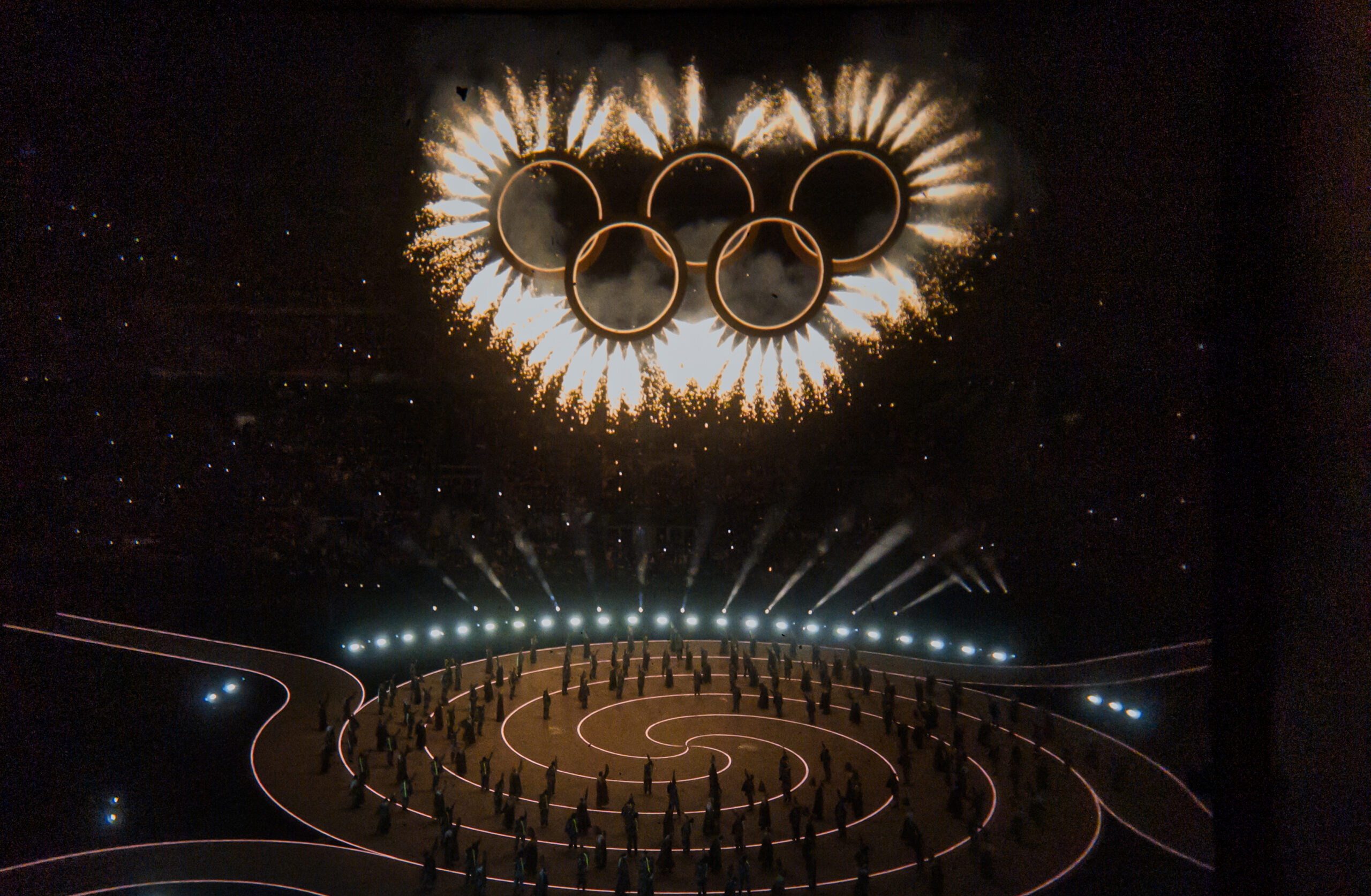
The vexed question of the role of politics in sport has surfaced yet again at the Winter Olympics in Milan. The Ukrainian skeleton skier Vladyslav Heraskevych wanted to wear a “helmet of remembrance” displaying 24 fellow athletes killed during the Russian invasion of his country. The International Olympic Committee refused. He was offered the compromise of wearing it before and after the races. Because he insisted on wearing the helmet during the actual race, he was banned from the competition. President Volodymyr Zelensky awarded him Ukraine’s Order of Liberty.
Defending the ban, IOC President Kirsty Coventry said it was crucial to “keep a safe environment for everyone” on the field of play. But cleaving to the Olympic ideal has been increasingly contentious. In September 2025, the International Paralympic Committee lifted the suspension on Russian athletes competing under their own flag. In protest, seven countries—the Czech Republic, Estonia, Finland, Latvia, Lithuania, Poland and Ukraine—said they would boycott the opening ceremonies. When the Games opened in the Roman amphitheater in Verona on 6 March, four Russians appeared to booing by the crowd.
The extent to which international sport has been politicized, or I would say weaponized, is shown by the fact that Russian and Belarusian athletes, if allowed to compete at all, can only compete under the label “independent neutral athletes.” For example, the top Russian tennis players Daniil Medvedev, Andrey Rublev, and Belarusian Aryna Sabalenka can play at Wimbledon only as “neutrals.” No Russian athletes are allowed to compete in team sporting events.
The weaponization of sport can take the form of boycotts, exclusions, or political gestures within the sporting arena itself (like “taking the knee” by American athletes). Sport as peaceful competition on neutral ground has given way to sport as an expression of moral outrage or political coercion. The position is much the same in literature and music. Whereas Daniel Barenboim started an Israeli–Palestinian orchestra in 1999 as an experiment in coexistence—a space for dialogue—today Russian artists like opera singer Anna Netrebko and conductor Valery Gergiev have suffered bans for showing “a lack of sufficient distance” from Putin’s policies. The weaponization of science and technology, potential human benefactors, advances apace.
Is sport bound to be entangled in politics, athletes inevitably tainted with the sins of their governments? It was not always so, and need not be.
The Olympic Games were supposed to offer a zone of peace in times of trouble. They started in classical Greece as a “truce” (ekecheiria) between warring sides. Perhaps the nearest modern equivalent would be a ceasefire—not guaranteeing permanent peace, but pointing to its possibilities.
The late-19th-century revival of the Games was driven largely by a Frenchman, Pierre de Coubertin: “Let us export rowers, runners, and fencers… the cause of peace will have received a new and mighty ally,” he said.
No doubt the idea that sport can stop wars is as much of a pipe dream as the belief that free trade can do so. The revived Olympics did not stop the First World War, and unofficial Christmas Day truces between the warring soldiers only briefly interrupted the mass slaughter. The 1936 Olympic Games in Berlin did not prevent the outbreak of the Second World War.
The argument is not that sport can stop war, rather that by channeling destructive instincts into competitive but peaceful activities it makes the world a little less likely to be violent by fostering respect for others. It also increases tolerance. For example, the outstanding performance of African athletes in international sport helped to debunk pseudo-scientific racial hierarchies. Suppose these fine athletes had been excluded because of the often murderous conduct of their governments?
Sports boycotts are sometimes defended on the grounds that they help bring about desirable regime change. The famous case is the boycott of South African sport in the 1960s. Because white South Africans were mad about sport, excluding them from international competition in cricket, rugby, and athletics is said to have brought important pressure to bear on the white regime, causing it to give up apartheid.
The evidence is far from convincing. The sporting ban started in the 1960s was UN-authorized and universal, unlike today’s partial boycott of Russian athletes, so there were no escapes. Yet the regime survived 30 years of sporting sanctions. Today it is generally believed it was not sport but disinvestment in South Africa, and Portugal giving up the “buffers” of Angola and Mozambique, which spelt the doom of white rule in Africa.
Finally, there is the argument that sporting boycotts, even if they do no good, offer a relatively harmless way of showing moral disapproval. But we need to weigh two moralities: the morality of outrage and the morality of reconciliation. It is easy for moral outrage to run amok, something to which democracies are particularly prone. Today Russian athletes are banned; but why should not athletes from the USA, Israel, China and many other murderous states around the world be banned on account of the crimes of their governments? If so, the Games as we know them will become morally acceptable to only a few, and the rest will start their own Games. How can the moral cause of international peace and understanding be strengthened by such a narrowing of the channels of communication?
The world is drifting to war. A way must be found of giving expression to the competitive spirit in individuals and nations without turning all competition into forms of warfare. The Olympic ideal asserts that sport is one of the main activities in which people can show off the best of humanity, not its worst. It is an ideal worth fighting for.
The post More Sport, Less War appeared first on The American Conservative.








 New Posts (Home)
 ChatBox
 Popular Posts
  Game Zone
 Top PodCasts