www.optimistdaily.com
A single dose of psilocybin gave smokers six times better odds of quitting than the patch
BY THE OPTIMIST DAILY EDITORIAL TEAM
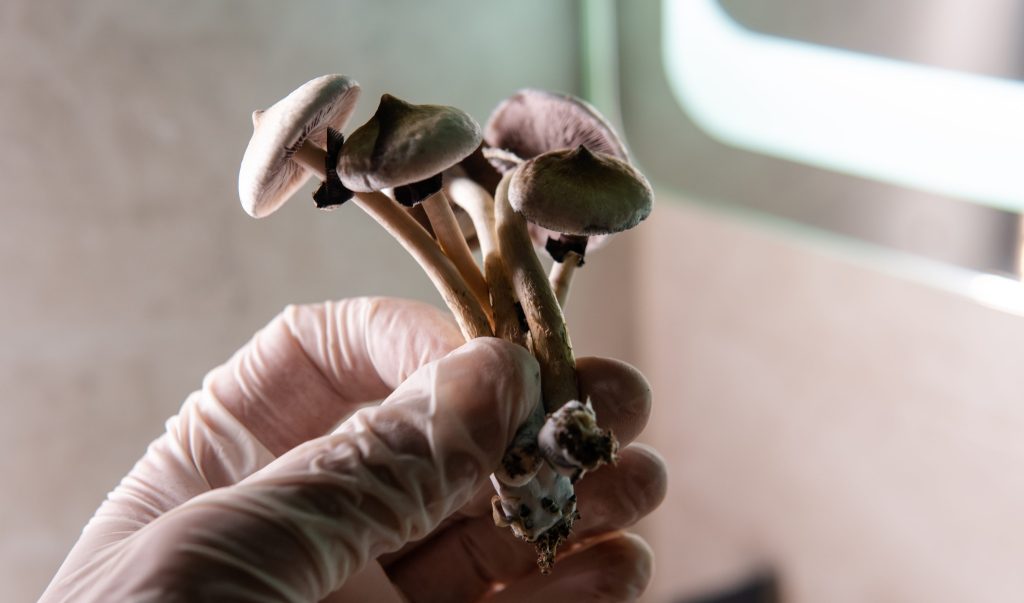
A new clinical trial from Johns Hopkins University produced results that surprised even the researchers behind it. Participants who took a single dose of psilocybin, the active compound in magic mushrooms, had more than six times greater odds of being cigarette-free at the six-month mark compared to those using nicotine patches.
“I was surprised by the sheer magnitude of the effect,” said Matthew Johnson, the study’s lead author and a professor of psychiatry at Johns Hopkins.
What the trial actually looked like
The study enrolled 82 current smokers, randomly divided into two groups. Both went through 13 weeks of cognitive behavioral therapy for smoking cessation. One group used nicotine patches; the other took a relatively high dose of pure psilocybin in a single guided session.
Participants in the psilocybin group lay in a room wearing eye shades and listening to soft music, with facilitators present to keep them comfortable. The experience itself was “self-directed,” Johnson said. At six months, 17 people in the psilocybin group had stayed off cigarettes. Only four in the nicotine patch group had done the same.
There was no placebo in this trial. Blinding participants in psychedelic research is a known challenge given the obvious mind-altering effects, so the researchers opted for a different design. That’s a real limitation, and Johnson acknowledged the findings will need to be replicated in a larger, more diverse study before drawing firm conclusions. The National Institutes of Health has already funded him for exactly that: a larger ongoing trial that includes a placebo arm.
Why this is different from every existing quit-smoking tool
Seven medications are currently approved for smoking cessation in the United States. Most work by targeting nicotine receptors directly, essentially replacing or mimicking the substance someone is trying to quit.
Psilocybin takes a completely different route. “It’s a very different treatment approach from just trying to replace or sort of mimic the drug that’s being misused,” said addiction psychiatrist Dr. Brian Barnett of the Cleveland Clinic Lerner College of Medicine, who was not involved in the study.
Even with the best available medications and counseling combined, long-term quit rates hover between 20 and 30 percent per attempt. That means 70 percent of people return to smoking. “How do we help those folks?” asked Megan Piper, director of the UW Center for Tobacco Research and Intervention.
Brain imaging data from this latest study are still being analyzed, but Johnson described what appears to be happening at a behavioral level. “When people are on a compound like psilocybin, the brain is communicating with itself in very different ways,” he said. What follows, in conversations with past participants, seems to be a genuine shift in perspective and a new sense of agency. “Rather than falling into the same stories, these same patterns, it seems that things are shaken up and they can step outside of that and try something different.”
Barnett suspects the intensive therapeutic structure around the psilocybin session was also central to the outcome. “It’s not the drug by itself here. It’s really harnessing the neuroplastic and learning effects that happen after the exposure.”
A field gaining traction at the right moment
This study builds on a smaller pilot Johnson ran more than a decade ago. Together, the two sets of results were compelling enough to secure NIH funding for the next phase. Research into psilocybin for alcohol dependence has also shown early promise, and ibogaine is drawing serious attention for opioid use disorder.
Smoking remains the leading cause of preventable death in the United States. “It’s been 20 years since we’ve had a new medication to help people quit smoking,” Piper said. “We need something novel, and this is definitely a novel approach.”
The larger NIH-funded trial, which includes a placebo arm and a more diverse participant pool, will go a long way toward answering whether these results hold at scale. Brain imaging data from this study, still under analysis, may add more texture to the mechanism. The field has real momentum, and the questions worth asking now are getting sharper.
Source study: JAMA Network Open– Psilocybin or nicotine patch for smoking cessation a pilot randomised clinical trial
Did this solution stand out? Share it with a friend or support our mission by becoming an Emissary.The post A single dose of psilocybin gave smokers six times better odds of quitting than the patch first appeared on The Optimist Daily: Making Solutions the News.








 New Posts (Home)
 ChatBox
 Popular Posts
  Game Zone
 Top PodCasts