www.dailysignal.com
American Hieroglyphics
In the year 1204, Arab scholar Abd Al-Latif Al-Baghdadi visited Egypt. Al-Baghdadi marveled at ancient monuments, including the Sphinx (then buried in sand up to the neck and nicknamed “Old Father Dread”) and of course the pyramids, which he described as “awe inspiring.”
However, Al-Baghdadi found it disturbing that none of the Egyptians of his day could read the inscriptions left to them by their ancestors: “There are inscriptions on the stones written in the ancient characters that no one understands. In the entire land of Egypt, I have never found a single person who so much as claimed to have heard of anyone who knew how to read them.”
Many centuries would pass before foreign invaders discovered the Rosetta Stone, which allowed scholars to decipher hieroglyphics. The United States also has monuments with stone inscriptions that our ancestors sought to preserve for future generations. Sadly, very few American public-school students display the knowledge and skills necessary to understand them.
While it took Egypt a long time to lose their legacy, Americans unfortunately are moving in a at a much faster pace.
The National Assessment of Educational Progress (also known as the Nation’s Report Card) released data on K-12 reading achievement in 2024. The results proved alarming and bitterly disappointing.
The recent results found record low levels of reading achievement, with students equally likely to rate “Below Basic” in reading (a polite term for functionally illiterate) as Proficient or Better, with each category taking up 33% of students. A third of American senior high school students thus would stare at inscriptions on their own monuments with a level of comprehension like that described by Al-Baghdadi.
The bad news however continues—American students attending monuments in the District of Columbia need not just literacy skills, but knowledge of American Civics and History to fully comprehend the inscriptions in proper context.
NAEP exams reveal a consistent pattern of having a higher percentage of students scoring “Below Basic” on Civics larger than the percentage scoring at “Proficient or Better” across grade levels (4th, 8th, and 12th) and years of examination. Across all NAEP Civics examinations, the average “Below Basic” equates to 30%, while the average “Proficient or Better” is only 22%.
Astoundingly, the news becomes still worse when examining NAEP United States history exams: across all exams given, 42% of public-school students scored “Below Basic,” while only 14% scored “Proficient or Better.” In other words the utterly ignorant of American history to knowledgeable stood at nearly three to one across all exams and grade levels.
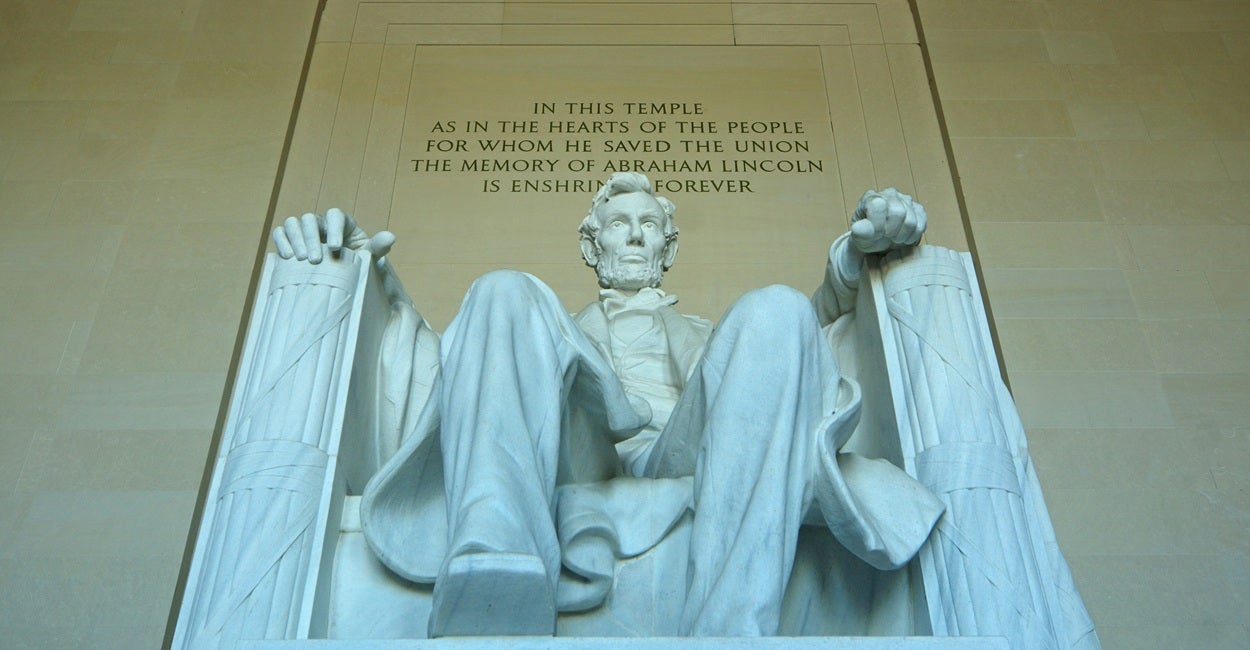
American public-school students with the literacy and background knowledge necessary to read and appreciate the meaning of inscription such as the Gettysburg Address at the Lincoln Memorial are few and far between. We are not to the Egypt of al-Baghdadi yet, but we Americans should feel more than concerned.
“A Republic, if you can keep it” Benjamin Franklin famously quipped when questioned about the product of the Constitutional Convention. Preparing students to responsibly exercise the duties of citizenship stood as one of the major justifications for the creation of the American public school system during the 1800s, but today we find our public schools much more interested in indoctrinating students than in equipping them with the academic skills and knowledge necessary to responsibly exercise the duties of citizenship.
The post American Hieroglyphics appeared first on The Daily Signal.








 New Posts (Home)
 ChatBox
 Popular Posts
  Game Zone
 Top PodCasts