www.dailywire.com
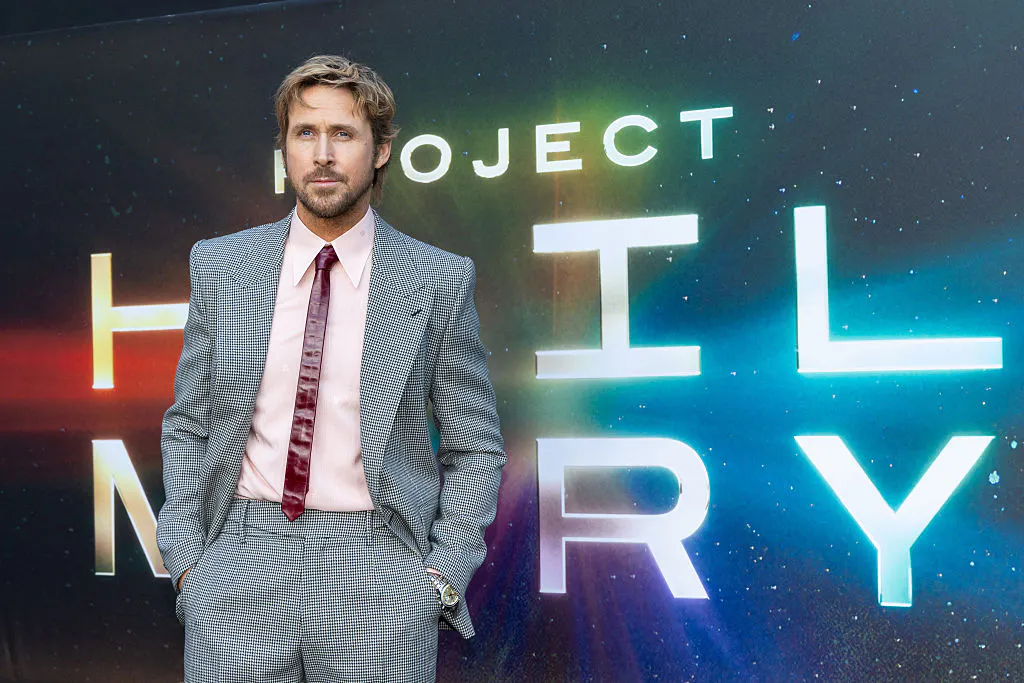
Ryan Gosling Breathes New Life Into A Tired Genre With ‘Project Hail Mary’
This article is part of Upstream, The Daily Wire’s new home for culture and lifestyle. Real human insight and human stories — from our featured writers to you.
***
From “Star Wars” to Sandra Bullock, the intergalactic rescue mission has become one of Hollywood’s most overworked templates.
So I was skeptical when I settled in for “Project Hail Mary,” a new sci-fi epic adapted from Andy Weir’s novel of the same name. The film stars Ryan Gosling as a scientist on a last-ditch effort to save the world.
The plot is, admittedly, well-worn. And at its weakest moments, the film dips into the prolonged peril and aimless drift of Alfonso Cuarón’s “Gravity.” But ultimately, “Project Hail Mary” succeeds in offering something new. It is a heartwarming story about friendship, sacrifice, and the grace of finding something worth living and risking your life for. It blends the best of Christopher Nolan’s “Interstellar” with Weir’s own “The Martian,” and may be the finest performance of Gosling’s career.
The plot revolves around a mysterious intergalactic organism discovered spreading across solar systems, draining stars of their fuel, and hastening their collapse. This poses something of a problem for humanity, which relies on the sun for energy even more so than the Strait of Hormuz.
With no military solution available, the United States joins forces with the rest of the world to spearhead Project Hail Mary — a literal last-ditch attempt to save civilization. Scientists soon discover that one distant star alone appears immune in an otherwise infected galaxy, prompting a one-way mission to investigate the source of that immunity and relay the findings back to Earth.
One of the film’s strengths is its believable hero. A high school science teacher with a PhD in molecular biology who flamed out of academia after a controversial but daring thesis sunk his reputation, Grace is a far cry from the roughnecks turned astronauts who save the world in Michael Bay’s “Armageddon.”
Upon awakening from a medically induced coma aboard the interstellar ship lightyears from home, Grace pieces together the mission through a series of flashbacks, alternating between his lonely presence in space and his memories of the events that led him there. The structure works well, gradually filling in both the mechanics of the plot and the contours of Grace’s character without sacrificing momentum.
But what gives Project Hail Mary its heart and distinguishes the film in such a saturated genre is the unlikely friendship that forms between Grace and Rocky — a bizarre extraterrestrial life-form resembling an animated boulder formation he encounters along the way. Following an extended and amusing sequence in which Grace, after mapping Rocky’s range of beeps and rhythms to English words, cycles through voice options ranging from a sprightly Irish gentleman to a seductive phone-sex operator, he settles on a charming, faintly Stephen Hawking-like rhythm redolent of Dug from Disney’s “Up.” Their relationship is the film’s emotional center and by far its most rewarding achievement.
The early moments of contact between them are suffused with genuine wonder. Grace’s first glimpse of Rocky’s alien ship — an elegant, Art Deco-like vessel the size of the Empire State Building gliding through the void — is enchanting. As are the scenes in which the two cautiously learn to communicate, discovering not only each other’s language and biology, but that their meeting is no accident. Rocky is on a parallel mission to determine why this lone star is immune and use that knowledge to save his own world. In a genre crowded with stories about intergalactic war, conquest, and sheer firepower, there is something refreshing about a science fiction film in which survival depends instead on problem-solving, ingenuity, and cooperation.
For all the film’s surface resemblance to “Interstellar” or “The Martian,” its spirit is much closer to Steven Spielberg than Nolan. Directors Phil Lord and Christopher Miller, whose backgrounds are more rooted in comedy (“21 Jump Street” and “Brooklyn Nine-Nine”) bring a buoyancy and warmth that keep the material from being bogged down by increasingly abstract and high-concept ideas which have plagued Nolan’s more indulgent works – “Interstellar” was borderline affected but “Tenet” was firmly mired by its own conceptual weight. “Project Hail Mary,” by contrast, conveys the unvarnished and unapologetic sense of amazement seen in the iconic scenes of such Spielberg classics as “Close Encounters” or “E.T.”
That said, “Project Hail Mary” is not without its own indulgences. At a sprawling two-and-a-half hours, it occasionally drifts and feels unnecessarily languid. The lethargic slow burn of the first act is understandable; the film needs time to build its world and its central relationship. By the climactic third act, you are cheering for Grace and Rocky with enthusiasm tantamount to a live sports game. But there are moments that feel unnecessary. The film could excise multiple scenes of Ryan Gosling sleeping, or an extended karaoke sequence that lingers through several verses of a Harry Styles song without losing a beat.
The tension, however, when it arrives, is palpable. One particularly gripping sequence finds Grace and Rocky descending into the atmosphere of a nearby planet to collect samples at the risk of being torn apart by its gravitational pull. Even with the understanding that the film is closer in tone to Disney than to Ridley Scott’s “Alien,” the film still manages to generate gripping suspense.
Speaking of Disney, there are also faint echoes of Marvel in the film’s tonal register, particularly in its impulse toward humor — even amid dire circumstances. But where Marvel’s house style often feels glib or emotionally evasive, the levity here is deployed far more intelligently. With such minimalist casting — this is, for the most part, a one-man Ryan Gosling show — the humor becomes a narrative tool rather than a mechanism for undercutting emotion. Gosling plays Grace as a charismatic, endearing goofball, a man with the intellectual gifts of Oppenheimer but the whimsical comic timing of Ken in “Barbie.” It is a delicate balance, and Gosling makes it look deceptively easy.
If the film has a weakness beyond its occasional pacing lethargy, it lies in its music. The jukebox choices, including The Beatles’ “Two of Us,” are serviceable enough, but they lack the transporting emotional force a great original score from a talent like John Williams might have provided.
Even so, “Project Hail Mary” triumphs because it understands that spectacle and CGI alone do not make a movie. Its heart and soul lie in the enduring relationship between Grace and Rocky, and in the notion that salvation may ultimately depend less on brute force than on intelligence, loyalty, and the willingness to trust an alien from another world — that he has the personality of a golden retriever certainly streamlines this. At its lowest points, the film drags. But at its highest, it shines. This is populist cinema in the best sense: earnest, crowd-pleasing, and suffused with enough wonder to make even a familiar cosmic premise feel newly alive.
Harry Khachatrian (@Harry1T6) is a film critic for the Washington Examiner’s Beltway Confidential blog. He is a software engineer, holds a master’s degree from the University of Toronto, and writes about wine at BetweenBottles.com.
The views expressed in this piece are those of the author and do not necessarily represent those of The Daily Wire.








 New Posts (Home)
 ChatBox
 Popular Posts
  Game Zone
 Top PodCasts