www.thegospelcoalition.org
21st Century Church, Meet the Early Church
What are the most significant moments in church history? We can probably all come up with multiple answers. Even if we limit our scope to the first millennium of Christianity’s existence, we may think of milestones such as the conversion of Constantine, the Council of Nicaea, famous accounts of martyrdom, Gregory I’s missions to Britain, and Charlemagne’s coronation. Our world wouldn’t be the same without these events, but there’s a lot more to church history.
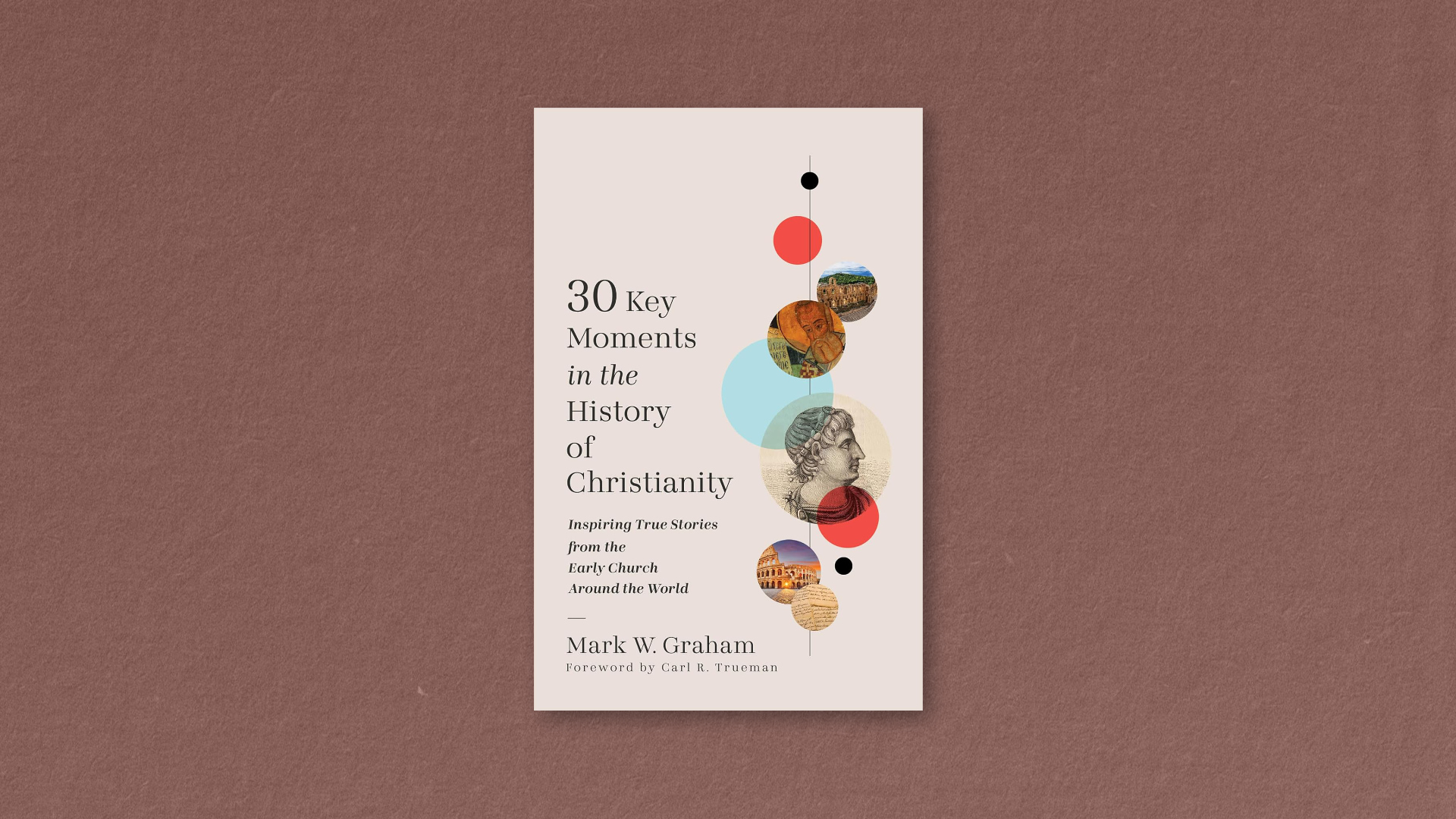
In 30 Key Moments in the History of Christianity: Inspiring True Stories from the Early Church Around the World, Mark W. Graham, professor of history at Grove City College, highlights many stories most Christians would expect to see. However, he also goes beyond our expectations—beyond the scope of the Roman Empire that dominates our Western church history books—to explore monumental events in places like Persia and China, and the marks they left on the church.
But Graham’s goal isn’t to tickle our curiosity or indulge some geeky love for obscure facts. Besides widening our view of history beyond a pervasive Eurocentric perspective, he challenges us with questions we might not otherwise consider. The result is a book that’s both instructive and thought-provoking.
Learn from History
A correct knowledge of facts is, of course, important. Cursory or selective surveys of Christian history have often led to distorted perceptions of both our past actions and our present goals. By joining his rigorous professional commitment to factual, well-researched accounts with his natural skills as a storyteller, Graham paints a clear picture of 30 key moments in our history and their essential background without sacrificing their complexity or losing our attention.
Each chapter ends with a section called the mathēma (a Greek word for “lesson”). I admit I’ve grown leery of “lessons” sections in history books—paragraphs where authors distill personal applications from factual narrative. I usually prefer to be left alone to reflect on the text, possibly prodded by thought-provoking questions that don’t suggest an answer.
However, Graham’s mathēma sections avoid the common traps of activist or hagiographic history by bringing up questions both urgent for the church and rarely asked objectively. For example, while a survey of an era of unquestioned Christendom must inevitably address the question of Christian nationalism, Graham takes us past the glaring voices of our generation. He recognizes the “unpleasant fruits” of an enforced religion that bore violence, persecution, and cultural loss, without ignoring “the power Christian nationalism has to sustain a people” (74).
Avoid Common Traps
A quest to find historical parallels is often risky, especially when we see it as the primary goal of history. Coupled with our tendency to simplify the past and exonerate our heroes, this approach often leads to misrepresentation and faulty conclusions. Graham is able not only to avoid these traps but also to address our own biases.
A quest to find historical parallels is often risky, especially when we see it as the primary goal of history.
For example, in discussing the Donatists—a fourth-century group who pined for a purer church—he goes straight to the root of the problem: “The Donatists were a nostalgic church.” And he shows us we’re not immune: “Christians sometimes reel in nostalgia. . . . Quite often, a bit of historical scrutiny reveals a fundamental myth of a golden age that never really existed” (89). Graham’s book is an excellent example of a judicious historical scrutiny that every Christian can emulate.
Graham isn’t afraid to bring down heroes. He doesn’t, for instance, tiptoe around the role the esteemed theologian Cyril of Alexandria played in the brutal murder of Hypatia, confident that “we do not depend upon the character of women or men or even famous church fathers” (127). Our foundation is still only Christ.
At the same time, he challenges us to face an uncomfortable past, not to point fingers but to examine our own hearts:
These were Christians enflamed into mob action and even driven to murder by their political commitments, which they perceived as noble and just. Their cause, they were assured, was God’s cause. Perhaps we are not so different from them. (127)
Graham calls us to wisdom and love in our judgment of others, whether in the past or the present. In his survey of the obdurate accusations against Priscillian of Avila, a fourth-century ascetic, he concludes, “Self-professed guardians of orthodoxy today can learn much from this episode. When they attack their opponents viciously, without any apparent love or desire to restore, their presumed antidote can be as dangerous as the disease” (112).
God’s Sovereignty
Graham approaches history with confidence in God’s sovereignty as he highlights both admirable and troubling stories. He writes,
Celebration of God’s sovereignty in history must not be restricted to instances where he uses our preferred means or conforms to our expectations. It can be challenging to recognize how a heavy-handed empire on the one side and Christians persecuting Christians on the other can both be a “God thing.” And yet how marvelous are his ways that these too can play a role in his grand design to bring all nations to himself. (151)
Church history is a subject we ignore at our peril. Besides being a comforting reminder of God’s loving sovereignty, it provides context and perspective to the present and helps us to recognize common trends in our hearts and lives. As Carl Trueman argues in the foreword to this book, “For Christians, the history of the church is also the history of their personal faith. . . . That means the stakes are very high indeed” (10).
Church history is a subject we ignore at our peril.
Those stakes make this highly accessible volume valuable for Christians who want to delve into deeper study of history, with a map and timeline to help readers orient themselves. Besides personal study, I can see this book used in a Sunday school class for adults that leaves sufficient room for discussion. Some parents may want to simplify the stories to raise age-appropriate questions with their children.
Above all church history must be approached with honesty, integrity, and appreciation of its complexity. We need serious historians to model this study for us and lead us into a careful and sober exploration. In 30 Key Moments in the History of Christianity, Mark Graham does just that.








 New Posts (Home)
 ChatBox
 Popular Posts
  Game Zone
 Top PodCasts