www.upworthy.com
How Romania took its national recycling rate from 12 percent to 94 percent in just two years
Every week, Dana Chitucescu grabs a bag, walks around her home in the Transylvanian village of Pianu de Jos. She’s collecting something her neighbors happily hand over: empty bottles and cans.
The 51-year-old brings them to her local shop, drops them off, and walks out with 40 brand-new Romanian leu in her pocket, about $9 USD. She uses it to feed her seven cats.
It’s a small thing, nothing, really. But it also, somehow, encapsulates the story of how an entire country is changing the way it thinks about trash.
From zero to hero: Romania used to be Europe’s worst recycler
Not long ago, Romania ranked dead last in the European Union for recycling. Three-quarters of the country’s waste—74%—went straight into landfills. The environmental impact was catastrophic: rivers became clogged with plastic. Picturesque roadsides were buried under litter.
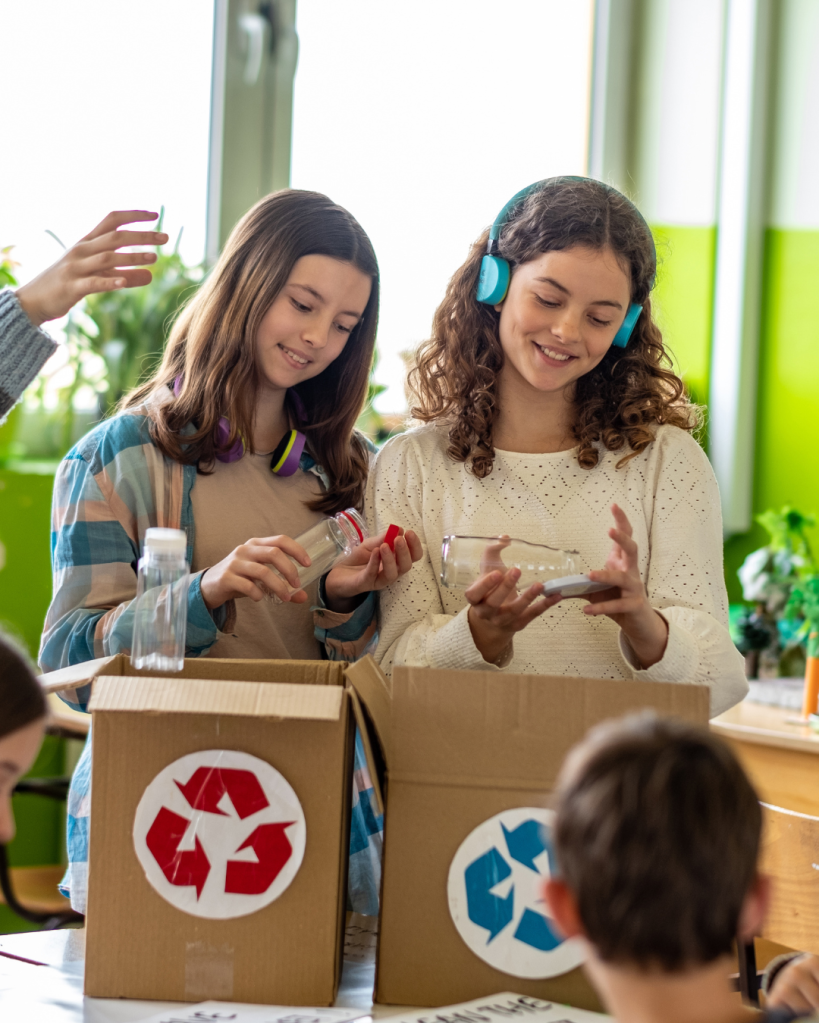
The secret to Romania’s success isn’t complicated. – Photo credit: Canva
The European Environment Agency even flagged Romania as being at serious risk of missing its recycling targets for years in a row. It looked like a problem without a solution.
Then came RetuRO.
The idea is simple
Here’s how RetuRO works: when you buy a bottled or canned drink in Romania—water, soda, beer, anything—you pay an extra deposit of .50 Romanian leu. That’s about 11 cents in US dollars. When you finish the drink and bring the empty container back to the store, you get your money back. Voila!
That’s it. That’s the whole idea.
On top of that, Romania has made it ridiculously simple for citizens to recycle. Supermarkets have automated reverse vending machines that scan the container, crush it, and then credit your deposit on the spot. Smaller shops handle returns manually. And crucially, the program accepts plastic, aluminum, and glass; the latter, which most countries’ deposit systems skip altogether because glass is heavy and expensive to transport.
RetuRO launched in November 2023 as a partnership between the Romanian government, beverage producers, and retailers, meaning everyone had skin in the game. Everyone had a reason to want to make it work.
What happened next was remarkable
Within months, something shifted in Romania. The recycling numbers, of course—those went through the roof—but also, something deeper. The way people regarded bottles and cans changed. Containers stopped feeling like garbage and became, instead, money left on the table.
In the peak summer months, 94% of beverage containers were being returned. Later, in January 2026, the return rate hit 108%. That meant Romanians were returning more containers than were even sold that month, as people dug old bottles out of storage. Nine out of ten Romanians have used the system at least once. Six in ten do it every single week.
Since launch, over 9 billion containers have been returned.
“It is a zero-to-hero story,” said Gemma Webb, RetuRO’s CEO. “You go to Romania now, you don’t see a bottle anywhere. It was the impossible made possible. Everybody’s very proud… we are the largest fully integrated deposit return system globally.”
It’s not just about bottles. It’s about people
Yes, Romania’s story is impressive. But not because of the infrastructure or the statistics alone. It’s the way RetuRO has fundamentally changed Romanian citizens’ views on recycling.
Grandparents who never recycled in their lives have found a new weekly routine (and a small but real source of income). Parents use their trips to the return machine as a chance to teach their kids that taking care of the planet doesn’t have to be a sacrifice; it can just be Tuesday. Young Romanians in their 20s now describe recycling as part of their identity.
Dana Chitucescu’s brother lives in Spain, a country without a comparable system. Apparently, he’s jealous. “He says it’s one of the few things Romania does exceptionally well,” she told The Guardian. “He’s right.”
Not to mention, the program has also added over $346 million to Romani’s GDP and created more than 2,000 new jobs: all within its first year of full operation. Romanian recyclers no longer need to import plastic raw material, because for the first time, there’s enough good-quality recycled Polyethylene Terephthalate (or PET, the clear, lightweight plastic used to make the vast majority of beverage bottles) being collected domestically to meet industry demand.
The rest of the world is paying attention
Government leaders from Poland, Turkey, Bulgaria, and beyond have traveled to Romania specifically to learn how to replicate this recycling scheme. In the European Parliament, Romania serves as the benchmark model for deposit-return programs.
The secret to Romania’s success isn’t complicated. They made the recycling incentive real and immediate, simplified participation by creating a universal system (every retailer who sells drinks must accept returns by law), and trusted its citizens to do the right thing.
What could this look like where you live?
Romania’s recycling journey is proof that a recycling revolution doesn’t require a perfect society, unlimited funding, or decades of gradual habit change. It requires the right system, one built around real human behavior, not wishful thinking.
Sometimes, all it takes is a bag, a short walk to the corner shop, and eleven cents.
Or, that’s how it starts, anyway. That’s how nine billion bottles get returned.
The post How Romania took its national recycling rate from 12 percent to 94 percent in just two years appeared first on Upworthy.








 New Posts (Home)
 ChatBox
 Popular Posts
  Game Zone
 Top PodCasts