www.theamericanconservative.com
The Man Vance Met in Islamabad
Foreign Affairs
The Man Vance Met in Islamabad
Mohammad Ghalibaf is a pragmatist and worthy negotiating partner for the U.S.
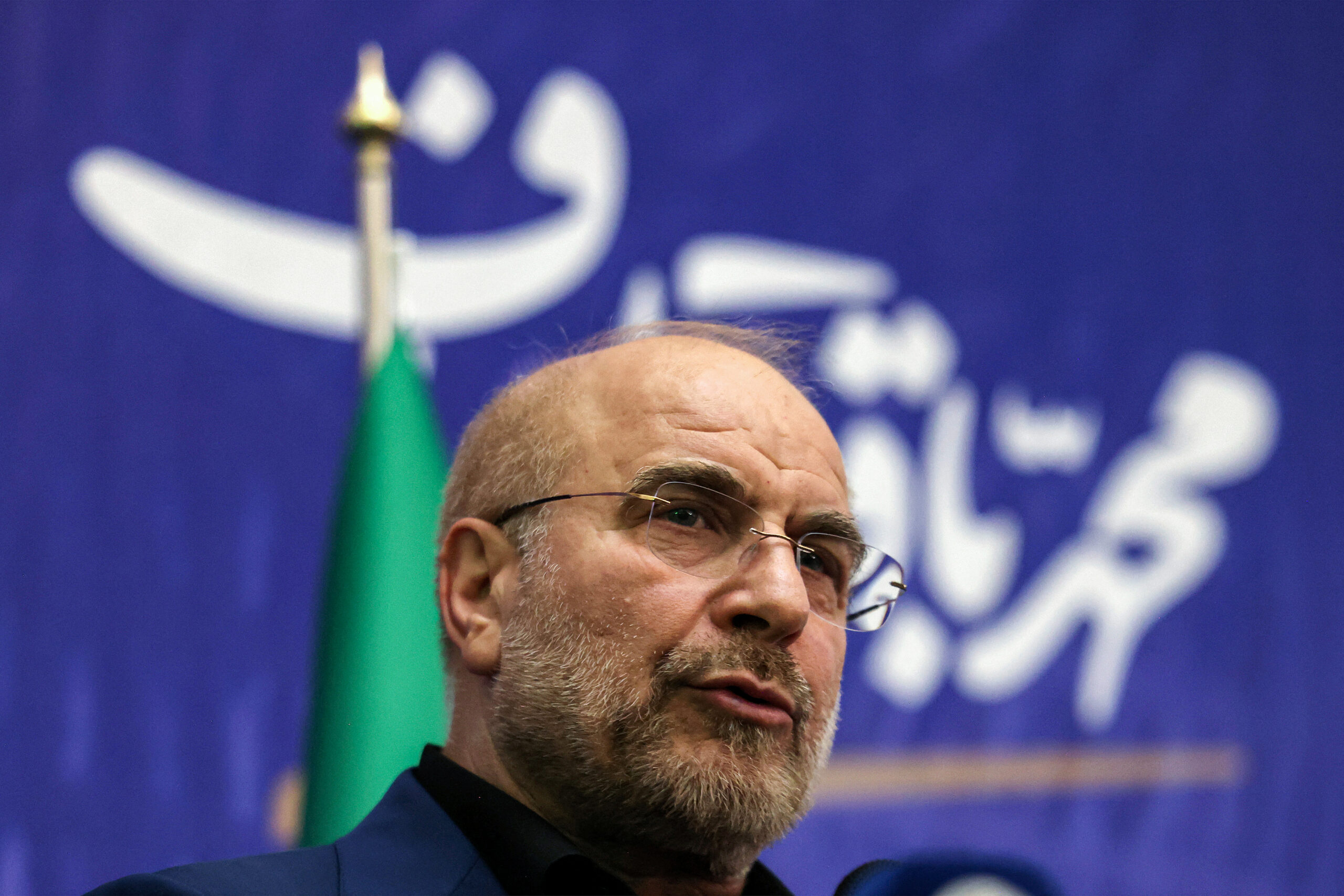
TOPSHOT – Iran’s Parliament Speaker Mohammad Bagher Ghalibaf speaks during an election campaign rally ahead of the presidential vote in Tehran on June 15, 2024. (Photo by ATTA KENARE / AFP) (Photo by ATTA KENARE/AFP via Getty Images)
Face-to-face talks over the weekend between U.S. and Iranian delegations in Islamabad ended without a peace agreement. Vice President J.D. Vance, who led the American team, said in a press conference following the marathon talks that the Iranians had not accepted the American terms, and that the failure to reach an agreement is “bad news for Iran much more than it’s bad news for the United States.”
That need not mean an inevitable return to war. The incentives to avoid it are today as powerful as they were before the talks. We are still in the first half of the two-week-long truce agreed by the U.S. and Iran. A quick deal would have been possible only if one or both of the sides had been prepared to soften their bargaining position rather than try securing desired concessions. That was clearly not the case.
Still Vance’s comments suggest the U.S. has underestimated Iran’s political will and misunderstood the moment. The remaining truce time must be used in Washington to fundamentally reassess its own approach: Instead of expecting Iran to simply comply with all the demands, the U.S. should prepare for a series of negotiation rounds, including numerous expert-level meetings—this is how real diplomacy is done and how stable agreements are hammered out. The truce can be prolonged and needn’t be subject to artificial self-imposed deadlines. Peace deserves, and requires, real effort and time.
The good news is that signals from Tehran suggest readiness to make a deal. The speaker of the parliament, Mohammad Bagher Ghalibaf is the man in charge. The delegation he brings is not only large and senior but also covers the entire Iranian political spectrum. It comprises moderates, like the foreign minister Abbas Araghchi and his deputies, reformists like the governor of the central bank Abdolnasser Hemmati, and hardliners like Ali Bagheri Kani, the chief nuclear negotiator under the late conservative president Ebrahim Raisi, and member of the parliament Mahmoud Nabavian.
Not only does this delegation appear to have full authority to make a deal with the United States, but its ideological variety ensures any deal reached would reflect the buy-in of different factions comprising the Iranian ruling system. Moreover, Ghalibaf is the man that can deliver.
I listened to him directly at the Tehran Dialogue Forum (TDF) in May 2025, weeks before the Israeli strikes on Iran that kicked off the “12-Day War.” Ghalibaf doesn’t come across as an ideologue, but he is a conservative pragmatist—calculating, ambitious, and deeply attuned to power.
His career tracks the Islamic Republic’s own evolution: from Islamic Revolutionary Guards Corps (IRGC) commander to police chief to mayor of Tehran to parliamentary speaker. He has run for president four times. He has lost every time. Yet he remains standing, and, following the assassinations by the U.S. and Israel of the supreme leader Ayatollah Ali Khamenei and Secretary of the National Security Council Ali Larijani, he’s arguably more influential than ever.
Decades ago, he called himself a “religious Reza Khan,” referring to the military commander of the early 20th century who would later become Reza Shah Pahlavi, founder of the Pahlavi dynasty. It might sound shocking that an IRGC commander would compare himself to the founder of the dynasty overthrown by the very Islamic revolution he served. But it makes perfect sense if one considers that the comparison was not ideological. It was about projecting hierarchy, order, and strength.This “Iran First” nationalism is not necessarily hostile to the West, but it is utterly indifferent to Western approval. Ghalibaf does not need Washington to like him. But he isn’t ideologically opposed to making a deal with Washington. And without the constraints imposed by the former supreme leader he is free to pursue one.On a deeper level, Ghalibaf’s and Vance’s political instincts are not that far apart. In his latest presidential run, in 2024, Ghaibaf proposed building a wall on Iran’s border with Afghanistan to stop drug smuggling and undocumented migration. This is not the policy program of a revolutionary exporting Islamic jihad. It suggests a state manager concerned with borders, security, and sovereignty—all points he emphasized strongly during his rare speech to the international audiences at the TDF.
Intriguingly, Ghalibaf’s nationalism and Vance’s America First populism arise from the same principle that liberal elites often reject or misunderstand: National interests trump abstract internationalism. Vance is not negotiating with a fire-breathing radical who dreams of destroying America, but with a normal state manager who worries about standard challenges of statecraft, such Afghanistan’s chaos spilling into Iran—just as many in Vance’s own political orbit worry about the drugs and violence spilling across the Rio Grande.
Of course, those shared political instincts do not, in themselves, provide sufficient ground to make a deal after almost half a century of bilateral enmity that has now culminated in a major war. And the already arduous task is made more difficult by President Donald Trump’s statements undermining his own negotiator.As Vance sat down with Ghalibaf in Islamabad, Trump was on Truth Social declaring that Iran’s Navy is “gone,” its Air Force “gone,” its leaders “no longer with us, praise be to Allah.” He boasts of obliterating missile factories and clearing the Strait of Hormuz—a “favor” to the world.
From an Iranian view, such bluster looks more like sabotage than strength. Vance cannot succeed if Trump keeps lighting the negotiating table on fire.And then there are neoconservative agitators like Marc Thiessen of The Washington Post, apparently one of Trump’s favorite commentators. Thiessen recently suggested—duly endorsed by Iran superhawk Mark Dubowitz from the Foundation for Defense of Democracies—that the U.S. should threaten Ghalibaf and his team with assassination if they don’t surrender to Trump’s will.The immorality and illegality aside—and they are staggering—Thiessen’s advice is also simply idiotic.
What does he think would happen if the United States assassinated Ghalibaf? Iran would not capitulate and suddenly embrace American demands. It would simply replace him, likely with someone far more intransigent and far less interested in any deal. The chances of a negotiated end to the war might vanish, which may be what Thiessen and Dubowitz are hoping for.
Beyond that, every other country in the world would draw the obvious conclusion: The United States is no longer an agreement-capable nation. Why negotiate with Washington if your lead negotiator can be murdered for failing to deliver the outcome demanded by Washington? Why risk good-faith engagement when the price of failure might be a drone strike?
Yet despite Trump’s unwise rhetorical intervention, and despite the bloodlust of America’s Iran hawks, the opportunity that was opened in Islamabad remains real. The fact that the talks did not lead to an immediate deal is not a good reason to abandon efforts to reach one. And if an agreement continues to prove elusive in this series of talks, then at least a Vance–Ghalibaf channel should be nurtured to orderly disengage without relapsing into a war that neither Washington nor Tehran needs.
The post The Man Vance Met in Islamabad appeared first on The American Conservative.








 New Posts (Home)
 ChatBox
 Popular Posts
  Game Zone
 Top PodCasts