www.thegospelcoalition.org
Don’t Let Preschool Ministry Be an Afterthought
One challenge every parent faces is how to teach their children doctrinal truth at an appropriate age. A child who can’t pronounce “justification” can still understand that Jesus died for his sins. Parents often rely on their local church to help them teach their children, especially in the early years.
And yet preschool curriculum is often an afterthought for churches. Finding volunteers to serve in the preschool rooms during Sunday school can be a continual challenge, especially for small churches.
It’s tempting for church leaders to breathe a sigh of relief when they have names on the schedule to cover the Sunday morning classes. Sometimes volunteers are left to figure out what to teach on their own.
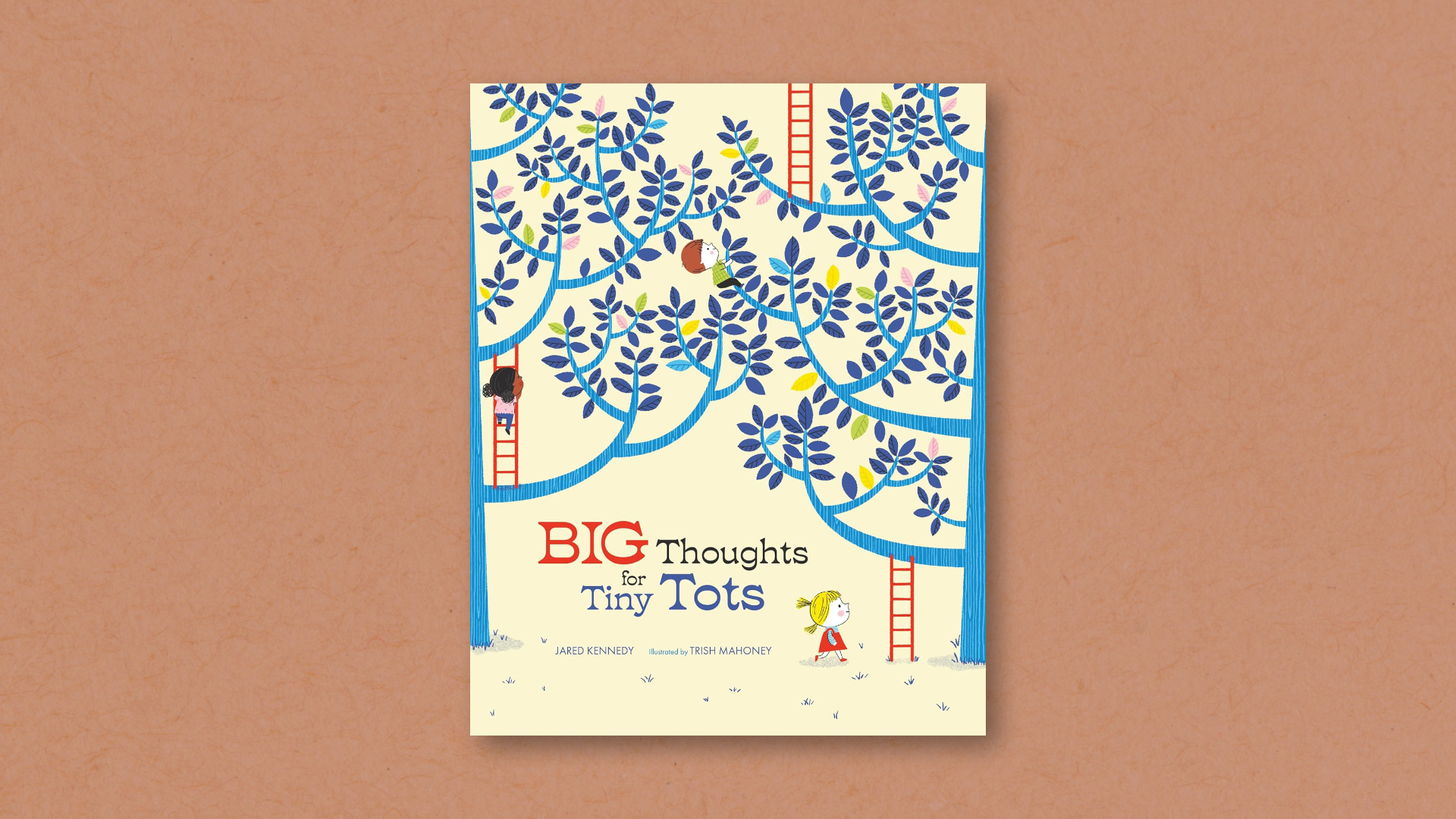
Jared Kennedy hopes to bring the ministry efforts of home and church together with a trio of books. His Big Thoughts for Tiny Tots is a concise catechism for toddlers and preschoolers. It’s useful in the home or as part of The Beginner’s Gospel Story Curriculum. The 52 fully planned Sunday school lessons, with suggestions for crafts and for songs with motions, can help volunteers who love kids but don’t have much background in child development. The lessons also connect with The Beginner’s Gospel Story Bible.
I had the opportunity to interview Jared Kennedy about why he wrote his catechism and the curriculum that goes with it.
We’ve been doing children’s ministry for years. Why do we need another curriculum? What makes The Beginner’s Gospel Story Curriculum unique?
There are a lot of great curricula out there. But when I worked as a pastor in children’s ministry, we struggled with content for the toddler and preschool area. It’s a class that I’m passionate about because I think a lot of worldview formation begins at the youngest age. As kids are learning a language for the first time, you’re giving them the building blocks for their faith.
When a 2-year-old comes into the classroom, she may have 200 words in her vocabulary. But by the time she graduates to the 4-year-old classroom, she’s going to have 1,500 words. And so, in that two-year span, kids are learning words like “prayer” and “Jesus” and “sin” for the very first time.
A lot of worldview formation begins at the youngest age.
As I’ve looked at children’s curricula as a whole, sometimes it seems like the toddler and preschool age group is an afterthought. Sometimes what’s written first is for the elementary age, and then it’s just simplified for the preschoolers. When I was writing The Beginner’s Gospel Story Curriculum, I was particularly thinking about teaching the Bible to the youngest age group.
When you train preschool volunteers, what’s the biggest misconception you have to correct?
The most common misconception is that volunteers are only doing childcare and not teaching. And that’s because a preschool classroom requires a lot of basic childcare.
In a class full of 2-year-olds, teachers are often still changing diapers. They are training kids to sit and to listen to a story for the first time. There’s still a lot of holding and rocking children in preschool.
However, I want to help teachers actually see that they have a role in building a basic worldview. They’re teaching some basic truths. Preschool teachers aren’t only doing childcare; they’re also teaching the good news to kids.
How can we help volunteers break out of the ‘survive and advance’ approach to getting through their preschool class on Sunday morning?
We have to help volunteers remember that preschool is an opportunity to teach a beautiful truth about who the church is.
Young children are learning through an emotional grid. They’re learning from the teacher’s facial expressions. They’re learning from the teacher’s loving care for them that a church community is a safe place, and that a church community is a place where they’re going to be loved and cared for.
If you just read social media, you’d think the church is very dangerous, that children aren’t being cared for well. We have an opportunity to teach kids at the youngest age that the church community is a place where you’re loved.
Maybe preschool on Sunday feels like an attempt to survive and advance some weeks. But the way teachers carry themselves can cultivate an atmosphere of nurture and calm. When that happens, we’re teaching kids a big truth about who God is.
The Beginner’s Gospel Story Curriculum builds on your new book, Big Thoughts for Tiny Tots, which is a simplified catechism. Why has there been an explosion of catechisms among evangelicals recently?
I can’t answer that question without talking about Martin Luther.
Fifteen years after posting the Ninety-five Theses on the Wittenberg door, Luther had been publishing on the priesthood of believers and justification by faith. His message was spreading across Germany, but no one had visited rural Saxony.
So, Philip Melanchthon and Luther put together teams to go and check on the churches in the region. What they found was pretty awful.
As Luther wrote in the preface to his Small Catechism, “The common people, especially in the villages have no knowledge whatever of Christian doctrine and . . . many pastors are altogether incapable and incompetent to teach.”
We have an opportunity to teach kids at the youngest age that the church community is a place where you’re loved.
Luther’s strategy to counter that problem was to put simple truths on paper that could be taught to children. He wrote it in German so that fathers could teach it to their kids at the family table. And he wrote it in Latin so it could be taught at school as well.
That story illustrates a couple of things that are important about catechism to me. There are some things that you can teach through culture and there are some things that you can only teach through rote memory and rehearsing truths again and again.
So, I created this curriculum for toddlers and preschoolers that refers to the same catechism that’s in a children’s book you can read at home to your kids. That way, the same truths can be reinforced in both environments. That’s how learning happens.
In 20 years, when you’re interviewing an associate pastor candidate who was taught from this curriculum, what do you hope he remembers from preschool?
I hope he remembers the cross. I hope he remembers that Jesus died as a substitute for his sins. I hope he remembers that all of the promises of the Old Testament, all of the pictures of the Old Testament, find their ultimate fulfillment in who Jesus is and what he’s done for us. That’s what I hope he remembers.








 New Posts (Home)
 ChatBox
 Popular Posts
  Game Zone
 Top PodCasts