www.dailysignal.com
Senate Prepares to Advance Major Budget Framework for Border
The Senate is about to try to use one of Congress’ most powerful tools—the budget reconciliation process—to fund border security and immigration enforcement over Democrats’ objections.
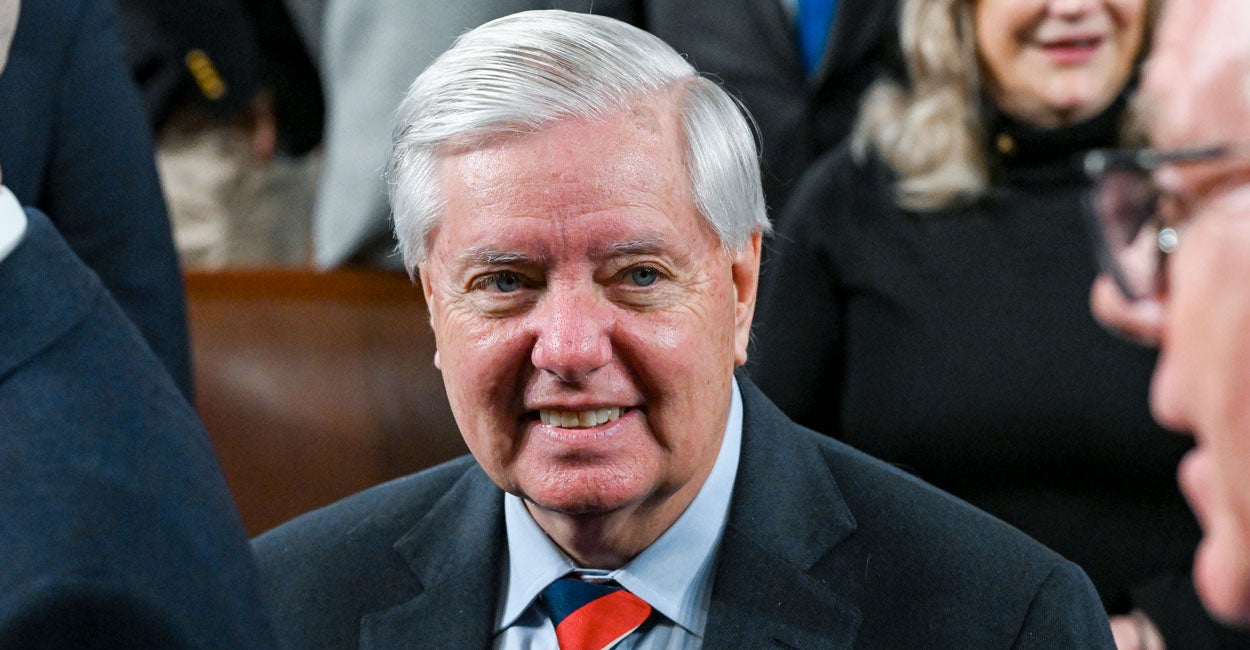
Sen. Lindsey Graham, R-S.C., is plowing ahead with plans to release a framework for a party-line budget bill that would inject funding into Immigration and Customs Enforcement (ICE), as well as Customs and Border Patrol (CBP).
The Department of Homeland Security (DHS) has gone without appropriations since Feb. 14, as Democrats have refused to pass a bill that would fully fund the agency.
President Donald Trump, Speaker of the House Mike Johnson, R-La., and Senate Majority Leader John Thune, R-S.D., have embraced a plan to fund ICE and CBP through reconciliation, while funding the rest of the agency through appropriations.
Under the budget reconciliation process, the House and Senate have to pass a budget resolution including instructions for the committees involved in crafting the bill.
This mostly non-binding document, which is not the underlying law itself, sets the budgetary targets for the relevant committees.
In the case of this reconciliation bill, Thune has repeatedly reiterated his desire for the focus to be “skinny” and focused solely to funding border and immigration enforcement, rather than pulling in other priorities.
The One Big Beautiful Bill Act Republicans passed in July was used to both extend the expiring 2017 tax cuts and enact campaign promises such as eliminating taxes on tips.
Reconciliation does not allow for provisions that are more policy-oriented than budgetary.
THUNE says GOP’s reconciliation bill will be “very, very skinny – anorexic-like skinny”Senate GOP leaders’ plan is to include ICE and CBP funding and no offsets. President Trump gave it the green light at WH meeting last week— Laura Weiss (@LauraEWeiss16) April 13, 2026
There is a camp of Republicans who want to use reconciliation to advance a host of ambitious legislative goals.
Sen. Tommy Tuberville, R-Ala., for example, has said Republicans should “put as much stuff in there as we can get,” listing defense spending and election reforms as priorities.
Proceeding to consideration of a budget resolution triggers a process known as the “vote-a-rama,” under which senators can offer amendments to the resolution.
The process also requires another vote-a-rama once the Senate votes on the bill itself.
These marathon voting sessions usually serve as a test of party discipline, as the majority party tables the minority party’s amendments
Some Republicans are eyeing this process as an opportunity to slip in additional provisions.
“I would love to do as much as we can do, and there will be several amendment opportunities to do that,” Sen. Jim Banks, R-Ind., said last week.
Funding everything at DHS except actual immigration enforcement and deportations is a total failure.Senate Republicans aren't shifting Democrats our way — they're handing a victory to the open-borders amnesty crowd. https://t.co/37wg76rinR— House Freedom Caucus (@freedomcaucus) March 24, 2026
Any Senate budget resolution would also have to be approved by the House in order for Congress to advance to reconciliation.
The House Freedom Caucus, a large faction of hardline conservatives in the House of Representatives, has already come out in opposition to funding only part of DHS through reconciliation, instead calling for funding the entire agency for the remainder of Trump’s term.
The post Senate Prepares to Advance Major Budget Framework for Border appeared first on The Daily Signal.








 New Posts (Home)
 ChatBox
 Popular Posts
  Game Zone
 Top PodCasts