www.dailywire.com
The ‘Commonsense Gun Laws’ That Didn’t Stop Trump Assassination Attempt
President Donald Trump survived yet another serious assassination attempt, this time at the White House Correspondents’ Association dinner.
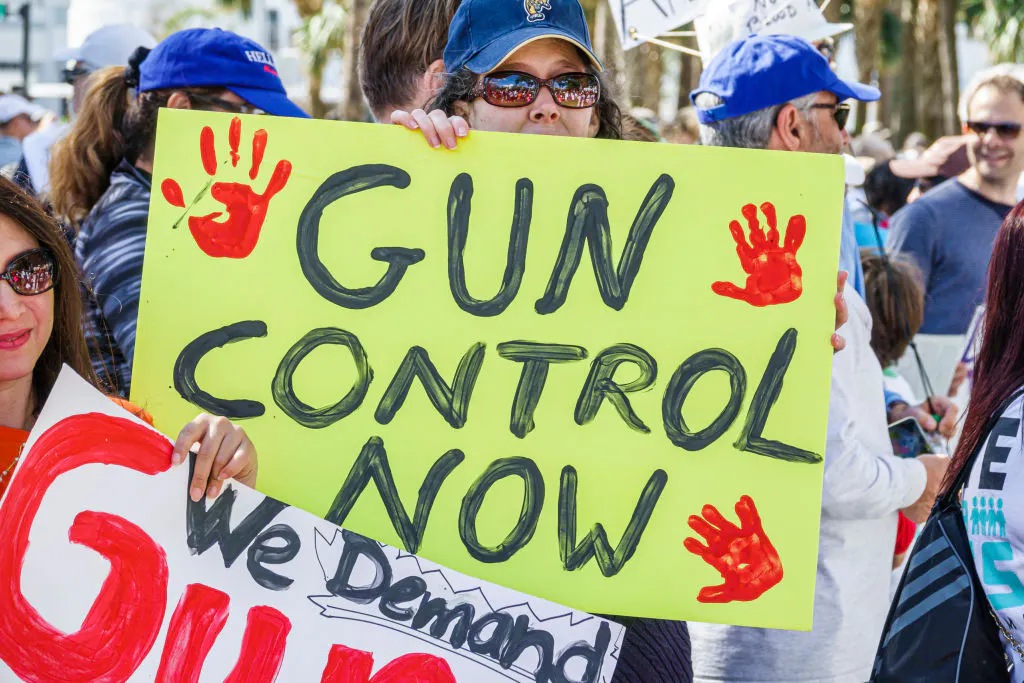
Anti-gun advocates have wasted no time framing this as a gun control issue. Again.
It’s a particularly unserious blame shift this time, given that the would-be assassin, Cole Allen, legally purchased his firearms in California and attempted to kill the president in Washington, D.C. — two places awash with the very types of “commonsense” gun laws that advocates demand be imposed on a national scale.
The problem isn’t a lack of gun laws. The problem is that those laws, as we so often see, are incapable of stopping people like Allen from simply ignoring or sidestepping them.
Federal law required Allen to declare his firearms in his checked luggage when transporting them interstate as a passenger on a common or contract carrier, such as Amtrak. California state law separately prohibited Allen from possessing his firearms in a public transit facility unless he complied with the appropriate policies for declaring them in checked baggage. He violated both laws when he failed to declare his firearms and transported them in his carry-on.
Both California and D.C. make it a crime to transport guns outside the home unless certain conditions are met, including that the guns are transported for a lawful purpose and to a place where the person can legally possess them. “Attempting to assassinate the president” is not a lawful purpose. Although Allen may have lawfully owned his guns in California, he lacked valid D.C. firearm registration certifications, which are required to legally possess firearms in the nation’s capital. Moreover, because Allen didn’t have a valid D.C. gun registration certificate, merely possessing ammunition was a crime.
It’s a felony in D.C. to carry a handgun in public without a D.C. concealed carry permit, something Allen didn’t possess. It’s another felony to carry any long gun in public in D.C. under any circumstance — and while federal prosecutors have a non-enforcement policy with respect to people carrying validly registered long guns, that wouldn’t apply to Allen. Yet, neither provision deterred him from charging through a D.C. hotel with both an unregistered shotgun and an illegally concealed handgun.
Another provision of the D.C. Code prohibits the carrying of concealed handguns within 1,000 feet (roughly 3 football fields) of a government dignitary or high-ranking official moving under the protection of law enforcement, at least when signs, law enforcement perimeters, or other means make it obvious that there’s a designated area of protection. Not only was the security perimeter at the White House Correspondents’ Dinner obvious to everyone, but Allen knew the nature of the security perimeter and attempted to breach it for the purpose of shooting high-ranking officials within it.
The number of “commonsense gun laws” that Allen simply ignored or sidestepped with ease is devastating to the narrative that such laws are necessary for public safety.
But even more devastating is the shocking number of “commonsense gun laws” with which Allen actually complied.
He didn’t just skip down to his nearest convenience store and buy a gun from a vending machine. The caricature of “easy access to firearms” exists apart from reality in any state, but particularly so in California, the Mecca of American gun control that virtually every activist group praises as the high-water mark of Second Amendment restrictions, whose policies they believe ought to be emulated nationwide.
California not only prohibits residents from owning standard capacity magazines and semiautomatic long guns arbitrarily deemed to be “assault weapons,” but limits them to a state-maintained roster of handguns that the government pre-approves as “safe.” Prospective gun buyers must first obtain a Firearms Safety Certificate by passing a 30-question written exam covering the basics of gun handling, safe storage, and state and federal gun laws, and then pass an in-person “safe handling demonstration” with the firearm in front of the dealer. They cannot leave the store with a gun unless they purchase a state-approved firearm safety device or sign an affidavit stating they already own a state-approved lock box or gun safe (and provide proof of ownership).
Californians don’t need an ID to vote, but they need one to buy a gun. Many of the state’s most populous counties require concealed carry permit applicants to provide proof of citizenship or lawful permanent residency. Handgun purchasers must also provide secondary evidence of their California residency that matches their driver’s license address.
The state has universal background check laws (including for ammunition sales). It imposes a 10-day waiting period on all gun purchases. It has virtually eliminated the right of law-abiding young adults to keep and bear arms. It punishes lawful gun sales with an 11 percent state excise tax on top of the existing 10-11 percent federal gun sales tax. It has de facto point-of-sale universal gun registration requirements.
Short of completely banning guns, California and D.C. already had in place virtually all the burdens on the right to keep and bear arms that advocates insist are necessary for public safety. None of these “commonsense” gun laws protected the president of the United States from a man bent on murdering him — that credit belongs to the well-armed members of the president’s taxpayer-funded security detail.
Perhaps it’s time that gun control advocates find another boogeyman for political violence.
***
Amy Swearer is a senior legal fellow at the Edwin Meese III Institute for the Rule of Law at Advancing American Freedom Foundation.








 New Posts (Home)
 ChatBox
 Popular Posts
  Game Zone
 Top PodCasts