www.newsbusters.org
Jonathan Capehart Hypes Xi's 'High-Class Shade' At Trump During Summit
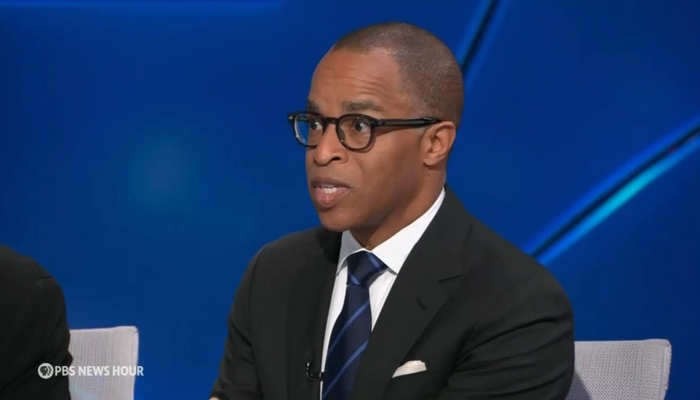
MS NOW host Jonathan Capehart joined PBS News Hour on Friday to recap President Trump’s recent trip to China and hype the idea that Chinese dictator Xi Jinping threw some “high-class shade” at Trump when he invoked the idea of the Thucydides Trap.
Capehart was responding to The Altantic staff writer David Brooks suggesting the summit was relatively successful because there was no drama to come out of it when he declared, “I was asked earlier, you know, did the summit do more harm than good or no harm at all or less harm? And it didn't do more harm, but it didn't do any good.”
He then moved on to hinting that Xi embarrassed Trump intellectually, but Capehart only ended up embarrassing himself, “I mean, I take all of your points, David. But, to me, as an American watching the American president go to Beijing, and then hearing the way the president has been talking about it, particularly this notion—I cannot pronounce the name of the Greek philosopher that the Chinese president mentioned, the what—”
Jonathan Capehart tells PBS that Xi Jinping mentioning the idea of Thucydides Trap to Trump was "that was some high-class shade of the Chinese president to—of the American president standing right there." Capehart also bumbled his own dunk by referring to Thucyidides as a… pic.twitter.com/okWyISbINQ
— Alex Christy (@alexchristy17) May 16, 2026
After Brooks and host Amna Nawaz then clarified Xi was talking about Thucydides and former Clinton Assistant Defense Secretary Graham Allison’s Thucydides Trap thesis, Capehart added, “Thucydides, yes. You know, that was a little—that was some high-class shade of the Chinese president to—of the American president standing right there.”
First of all, Thucydides was a general and a historian, not a philosopher. Second of all, while Capehart promotes Xi's "shade," Allison’s thesis has two major problems. For one, Thucydides argued the Peloponnesian War came about because Sparta feared the rise of Athenian power. Allison uses this to analogize the U.S. as Sparta and China as Athens, but today, any Sino-American war will almost certainly come about because of China’s territorial aggression.
Second, Allison’s thesis assumes that Chinese power is on an irreversibly upward trajectory, which is why Xi likes it so much. Capehart touched on this when he continued, “To your point about Xi Jinping feeling that China is ascendant, especially with an American president who has looked at the world in spheres.”
There is a compelling case to be made that the reason why China is such a threat is not because it is an ever-increasing power, but because of its aging demographic nightmare; its power either already has or soon will have reached its apex, which will eventually put Beijing in a “now or never” dilemma.
Moving on from Allison’s flawed thesis, Capehart rewrote more recent history, “Trump wants the Western Hemisphere. He seems to be perfectly fine with China exerting its influence in the Pacific, which is why, to my mind, his waffling on Taiwan is very troubling. I mean, I'm old enough to remember when there were some sacrosanct beliefs of the American president… that the United States would stand by Taiwan, rhetorically so far, never had to do it militarily. But it doesn't seem like that is the case. If the American president isn't willing to say, ‘Yeah, you know that—the $49 billion worth of arms, yes, we're down with that. We're still going to go for that.’”
If Capehart wants to argue that the bipartisan decades-long policy of strategic ambiguity has outlived its usefulness, he is, of course, free to do so, but he can’t claim Trump’s adherence to it is something new. Also, Capehart’s $49 billion figure actually refers to the total of U.S. military sales to Taiwan since 2010. Trump 2.0 already signed off on $11 billion for Taiwan last year. The current controversy is over another $14 billion that Congress approved in January.
Nawaz reined things in a little bit when she wrapped up the China portion of the segment, “I should say, despite what the president said, Senator Marco—or Secretary Marco Rubio said that the U.S. policy has not changed. So we will have to see how this all plays out in real terms.”
Here is a transcript for the May 15 show:
PBS News Hour
5/15/2026
7:37 PM ET
AMNA NAWAZ: Jonathan, how do you look at it?
JONATHAN CAPEHART: I was asked earlier, you know, did the summit do more harm than good or no harm at all or less harm? And it didn't do more harm, but it didn't do any good.
I mean, I take all of your points, David. But, to me, as an American watching the American president go to Beijing, and then hearing the way the president has been talking about it, particularly this notion—I cannot pronounce the name of the Greek philosopher that the Chinese president mentioned, the what—
DAVID BROOKS Thucydides Trap.
NAWAZ: Thucydides.
CAPEHART: Thucydides, yes. You know, that was a little—that was some high-class shade of the Chinese president to—of the American president standing right there, to your point about Xi Jinping feeling that China is ascendant, especially with an American president who has looked at the world in spheres.
Trump wants the Western Hemisphere. He seems to be perfectly fine with China exerting its influence in the Pacific, which is why, to my mind, his waffling on Taiwan is very troubling. I mean, I'm old enough to remember when there were some sacrosanct beliefs of the American president.
We were there for Europe's defense and a strong proponent of NATO. That is now not so certain, and also that the United States would stand by Taiwan, rhetorically so far, never had to do it militarily. But it doesn't seem like that is the case. If the American president isn't willing to say, “Yeah, you know that—the $49 billion worth of arms, yes, we're down with that. We're still going to go for that.”
And he did not do that. If I were the Taiwanese leader, I would be very worried.
NAWAZ: I should say, despite what the president said, Senator Marco—or Secretary Marco Rubio said that the U.S. policy has not changed. So we will have to see how this all plays out in real terms.








 New Posts (Home)
 ChatBox
 Popular Posts
  Game Zone
 Top PodCasts