www.theconservativebrief.com
IRS Targeting Scandal: Who Gets the $1.7B?
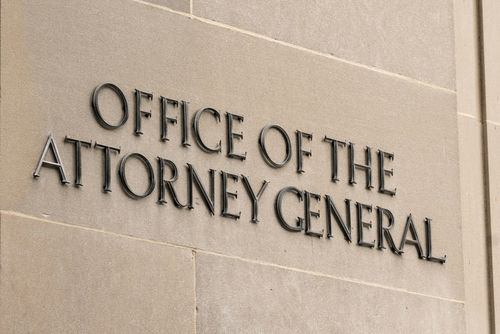
A $1.776 billion Justice Department fund to repay Americans targeted under the prior administration is moving forward, but questions over who qualifies and how decisions will be made could shape everything that follows.
Story Snapshot
The Department of Justice announced a $1.776 billion “Anti-Weaponization Fund” tied to settlement talks over President Trump’s lawsuit against the Internal Revenue Service [1].
The fund aims to compensate Americans who allege they were wrongly targeted during the Biden years, which Trump framed as long-overdue reimbursement [1][2].
Reporting indicates a commission will review claims, but publicly available criteria have not been detailed, raising oversight concerns [1].
The unusual structure—executive-branch compensation framed around “weaponization”—has ignited debate over standards, transparency, and taxpayer exposure [1].
Justice Department Creates Compensation Fund After Trump IRS Lawsuit
ABC News reported that the Department of Justice announced a $1.776 billion “Anti-Weaponization Fund” as part of a settlement arrangement linked to President Trump’s lawsuit against the Internal Revenue Service, which sought $10 billion in damages [1]. Additional reporting described the fund as designed to compensate Trump allies and others who claim political targeting under the previous administration, echoing Trump’s description that this is reimbursing people who were horribly treated [2]. The announcement marks a rare, large-scale redress initiative tied to alleged government abuse and partisanship [1].
Coverage indicates the fund will route compensation through a commission process, but available public descriptions have not provided the eligibility criteria, evidentiary thresholds, or decision rules for approving payments [1]. The absence of a fully detailed framework leaves key operational questions unresolved, including how claims will be prioritized, what constitutes proof of wrongful targeting, and how appeals would function. Those gaps invite scrutiny from taxpayers who expect guardrails to prevent abuse while still delivering justice to legitimate victims [1].
Unusual Governance Model Raises Transparency and Accountability Questions
Reports characterize the fund as an executive-branch compensation pool linked to a settlement context but not accompanied by a comprehensive, publicly docketed settlement record with full operational terms [1]. That structure is atypical for a program this large and politically sensitive. Past redress efforts often provoked controversy over standards, proof burdens, and who ultimately gets help; this fund enters that arena with the added intensity of “weaponization” framing, ensuring heightened political and media attention from the start [1].
Supporters argue the prior administration’s agencies crossed lines, and that compensation is a necessary deterrent and a moral obligation. They see the fund as a concrete step to restore trust for citizens and organizations who believe they were punished for their viewpoints [2]. Critics press for specific rules, transparent reporting, and independent oversight to ensure that money reaches verified victims rather than becoming a political football. Without clear criteria, both the integrity of payouts and the credibility of the broader accountability effort are at risk [1].
What Conservatives Should Watch: Eligibility, Proof Standards, And Fiscal Stewardship
Conservative readers should watch three operational levers that determine whether this initiative delivers justice or drifts: clear eligibility definitions, rigorous proof standards, and routine public reporting. Reporting so far does not reveal those details, which makes the next Justice Department disclosures pivotal [1]. Transparent criteria would help protect taxpayers while ensuring that people genuinely targeted for their beliefs receive prompt, fair compensation, echoing the Trump administration’s stated aim of reimbursing those who were unfairly treated [2].
DOJ rolls out nearly $1.8B ‘anti-weaponization fund’ as part of Trump’s IRS settlement https://t.co/NNoWaw5oTB via @politico
— Thomas Manning (@ThomasMann51451) May 19, 2026
Congressional oversight and inspector general review can reinforce accountability once criteria are published. Regular summaries of approved claims, anonymized where needed, would help the public see whether the fund is correcting documented abuse rather than rewarding political connections. A disciplined process that pays verified victims, rejects weak submissions, and publishes aggregate metrics will undercut critics and honor the constitutional principle that government must never punish citizens for their viewpoints. Until then, unresolved gaps will invite tougher questions about governance and fiscal responsibility [1].
Sources:
[1] Web – DOJ announces $1.7B ‘Anti-Weaponization Fund’ as part of Trump …
[2] Web – Justice Department announces $1.776B fund to compensate Trump …








 New Posts (Home)
 ChatBox
 Popular Posts
  Game Zone
 Top PodCasts