www.thecollector.com
Why Did South Africa Relinquish Its Nuclear Weapons?
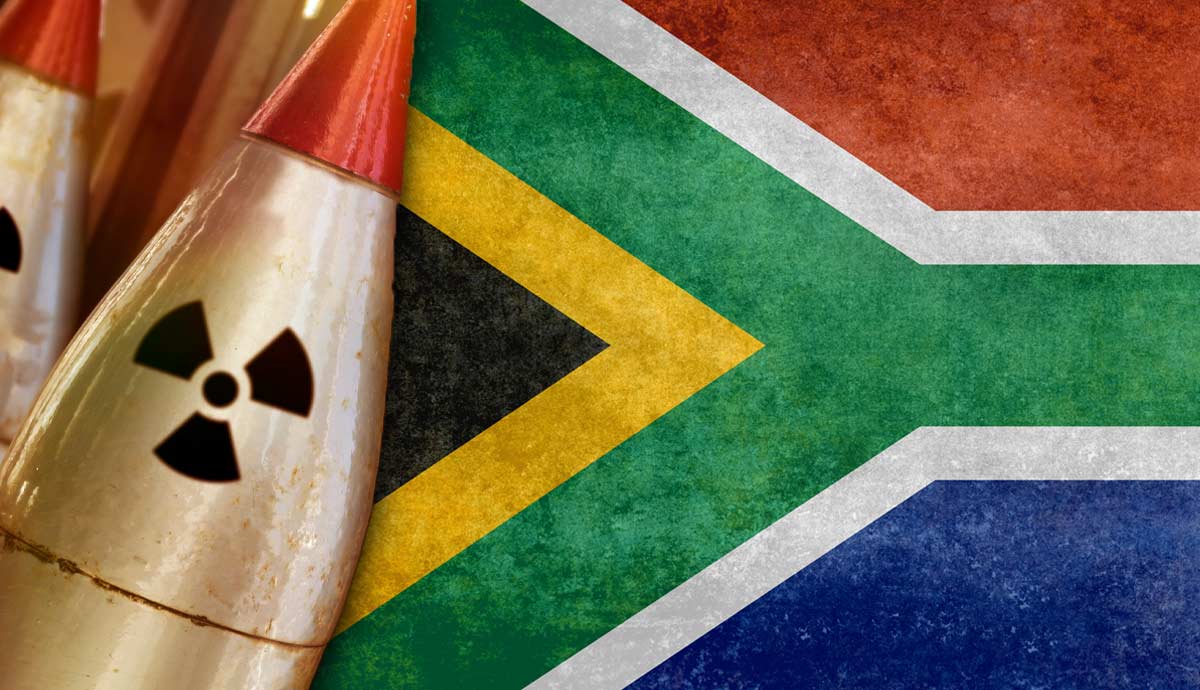
Throughout the Apartheid years, South Africa’s leaders believed that their system of white rule was under imminent threat from both internal and external enemies. Having seen the effectiveness of nuclear weapons in WWII, officials in Pretoria decided that a robust nuclear program was an effective deterrent. When it relinquished them in the 1990s, South Africa set a precedent for self-disarmament that gave people hope that the nuclear age could finally come to an end.
South Africa in the Cold War
South African Prime Minister D.F. Malan and his cabinet. Source: Wikimedia Commons
From 1948 to 1994, South Africa was ruled by the National Party, an autocratic party devoted to the maintenance of White Rule in South Africa. It authorized the total segregation of society between White people and anyone else of Black, Asian, or mixed-race background. It also promoted a strongly anti-communist ideology, arguing that racial equality was a communist plot to destroy the country. As a result, the security services brutally crushed resistance against the system, often accusing its critics of being Soviet stooges.
Initially, its policies were seen as a reflection of common practice in the African continent. When the National Party came into power and enshrined existing racist practices into law, it followed the practices of European colonies throughout the continent. However, the Cold War changed power dynamics in Africa. South Africa’s racial and security policies were seen as anachronistic and outrageous. Many revolutionary leftist factions, based inside and outside of the country, vowed to overthrow the National Party’s rule.
As South Africa began facing an increase in hostile threats, its leaders vowed to turn the state into a veritable fortress. South African prime ministers, from D.F. Malan to P.W. Botha, all sought to increase South Africa’s conventional and unconventional weapons capacity. The development of a nuclear arsenal was a part of South Africa’s deterrence efforts and one of the country’s closest-kept secrets. In doing so, South Africa became the only country in Africa to have created and allegedly tested a nuclear weapon.
The Creation of SAFARI-1
Image of the SAFARI-1 nuclear reactor near Pelindaba, c. 1968. Source: NTP Radioisotopes
Prime Minister D.F. Malan, elected in 1948, had the twin objectives of modernizing South Africa while preserving White rule. South Africa is known for its rich mineral resources, including uranium. In 1948, his government and the Volksraad (the Apartheid-era parliament) passed the Atomic Energy Act to regulate the uranium industry in the country. The Atomic Energy Board was responsible for the country’s efforts to extract uranium and establish a civil nuclear program. It gained a boost when South Africa signed onto the American-led Atoms for Peace program.
Atoms for Peace was not meant to be a weapons program. Instead, it was meant to be an international information-sharing forum on nuclear research for civil purposes. Therefore, when South Africa signed the agreement, it did not arouse suspicions that the country aimed to develop nuclear weapons. It had already allowed the US and UK to buy a lot of its own uranium and its nuclear scientists had close ties to counterparts in the West. By joining Atoms for Peace, South Africa could gain American technology to create its own nuclear reactor.
In the late 1950s, South Africa joined the IAEA. In 1959, PM Verwoerd, a major supporter of South Africa’s nuclear program, approved the creation of a reactor at Pelindaba. A.J.A. Roux, a senior official in the Council for Scientific and Industrial Research, was in charge of the program. American engineers helped create the reactor, known as SAFARI-1. By 1965, South Africa had its first nuclear reactor, a pivotal step in the creation of an atomic weapons program.
From Civil Nuclear Power to Nuclear Weapons
Satellite image of the Kalahari Nuclear Test Site in South Africa, 1977. Source: National Security Archive, George Washington University
In addition to South Africa receiving American backing in building SAFARI-1, the United States also sent nearly 100 kilograms of weapons-grade uranium fuel. Before the country began to become isolated, South African officials believed that they had a lot of support from the West and could afford to build a plutonium reactor called SAFARI-2. Scientists hoped to enrich plutonium and heavy water to generate nuclear power but the project was abandoned after a few years.
By the 1970s, South Africa was facing the attention of major Communist powers that supported revolutionary factions such as the African National Congress and the South West Africa People’s Organisation (SWAPO) in Namibia. Western countries were also starting to distance themselves from Pretoria. The country’s security deteriorated as a result of the Angolan Civil War and the Soweto Uprising. According to F.W. de Klerk, the RSA began to develop weapons based on a gun-type ignition in 1973. They tested explosives for the bomb at Somerset West near Cape Town. To carry a uranium warhead, South Africa is alleged to have asked Israel in 1975 for Jericho missiles. While Israel did not provide missiles, it did assist South Africa in preparing for a test and offered nuclear expertise for research and development purposes.
While the RSA did have ample uranium enrichment capability, it lacked the ability to carry a warhead. The South African Air Force began testing some of its Buccaneer bombers to carry and drop nuclear weapons in a war. Armscor, the main South African weapons manufacturer, also created missiles based on Jericho’s design called the RSA missile. Therefore, bomber aircraft became the main delivery method.
Uncovering the Kalahari Test Site and the Vela Incident
US President Jimmy Carter and Soviet General Secretary Leonid Brezhnev at the signing of the SALT II treaty in Vienna, 1979. Source: National Security Archive, George Washington University
South Africa needed to test its nuclear capabilities without attracting too much international scrutiny. The gun-type ignition tests at Somerset West had attracted some attention, but it was unclear if Pretoria wanted to test a full nuclear weapon. Near Pelindaba, engineers constructed an underground test site to make sure the weapon would work. Despite efforts at maintaining secrecy, the USSR found out about the site thanks to one of their spies, Commander Dieter Gerhardt of the South African Navy.
In 1977, Soviet leader Leonid Brezhnev wrote to US President Jimmy Carter and warned him that the Soviets had detected a South African nuclear test site. The CIA confirmed the claims and Washington officials became very paranoid that South Africa wanted to become a major nuclear power. President Carter began to coordinate a group of Western countries to demand Pretoria cease any nuclear weapons production and testing. Part of the reason America backed the UNSC arms embargo on South Africa was to forestall its nuclear program.
In 1979, additional developments also concerned the United States. A satellite called VELA 6911 detected an explosion over the Indian Ocean near the South African coast. Officials panicked and assumed that someone was blowing up a low-yield bomb in violation of the Limited Test Ban Treaty. Over time, members of Carter’s administration suspected it was an Israeli test. However, they also believed that South Africa and Israel coordinated together to test a new bomb. To this day, it is unknown exactly what VELA caught, but it is believed to have been a joint Israeli-RSA test.
South Africa’s Nuclear Weapons Policy
Prime Minister and later State President P.W. Botha giving a speech, 1980. Source: David Turnley/Corbis/VCG via Getty Images via South China Morning Post
While South African leaders feared an invasion by communist forces from Angola or an internal revolt that would lead to the country’s collapse, there was very little evidence that the country was ever under an existential threat. Neither the Soviets, Cubans, or MPLA (the People’s Movement for the Liberation of Angola) ever intended to invade the country. Any revolts in the townships were purely an internal matter. Therefore, the question about why exactly South Africa wanted nukes puzzled observers who were aware of Pretoria’s nuclear program.
Based on what is known from some declassified documents and statements by South African officials, South Africa decided to create a small arsenal of six bombs purely for the purposes of diplomatic leverage. Unlike other major nuclear-armed states, South Africa was not engaged in a nuclear arms race. However, it wanted to ensure that the West and USSR knew that if the country felt threatened, it had a nuclear option. This policy of brinksmanship was particularly apparent during the Angola War, when South Africa wanted to show that it would not back down from controlling Namibia and backing the UNITA (National Union for the Total Independence of Angola) faction.
Similar to Israel, South Africa did not announce that it had a nuclear arsenal for most of the Cold War. Maintaining opacity was considered necessary to deter South Africa’s enemies and it did not want more international scrutiny. As the Apartheid years wound down, officials in Pretoria began to ask themselves what was the purpose of maintaining this arsenal and what its future was.
Dismantling South Africa’s Nukes
F.W. de Klerk and his successor Nelson Mandela sharing a stage in the United States. Photograph by Carol Highsmith, 1993. Source: Library of Congress
As part of his effort to reduce South Africa’s pariah status on the international stage, President F.W. de Klerk ordered South Africa to halt any enrichment of uranium for nuclear purposes. He also ordered the six available bombs to be dismantled. Up to this point, as much as $240 million had been spent on South Africa’s nuclear weapons program. The international sanctions regime was making it very difficult to get the necessary parts for weapons components and any expansions to the SAFARI-1 reactor. The writing was clearly on the wall regarding the nuclear weapons program.
President de Klerk recognized that the threat from Cuban and MPLA forces in Angola was receding. He also knew that South Africa could only be welcomed back into the rest of the world if it was transparent about its security measures. In 1991, the Republic of South Africa signed the Non-Proliferation Treaty (NPT). On March 24, 1993, de Klerk gave a speech before Parliament stating that South Africa had developed a nuclear weapons program and that it was dismantling them. He invited international observers to inspect the nuclear facilities. In the years following Nelson Mandela’s election, South Africa signed onto most nuclear nonproliferation statements and agreements.
South Africa’s nuclear weapons program was one of the most infamous aspects of the Apartheid system. Pretoria showed how far it was willing to go to preserve the system of segregation and White power. The RSA made major investments into WMDs when it was not faced with an existential threat. However, by being one of the few countries willing to voluntarily dismantle its nuclear weapons program, South Africa set a positive standard in the field of nuclear disarmament. It became a case study of how a country could shed its nuclear arsenal in the quest for peace and prosperity.








 New Posts (Home)
 ChatBox
 Popular Posts
  Game Zone
 Top PodCasts