reclaimthenet.org
Westminster Recycles Tobacco-Style Panic Campaign For Internet Crackdown
If you're tired of censorship and dystopian threats against civil liberties, subscribe to Reclaim The Net.
The British government ran a public consultation on whether to ban social media for under-16s. The consultation opened in March. It closed today. In April, while the public was still filling in the forms and expressing their outrage, ministers announced they would impose “age or functionality restrictions” regardless of what the consultation found.
The Children’s Wellbeing and Schools Act 2026 already requires restrictions for under-16s. The consultation was the democratic version of asking someone where they’d like to eat dinner after you’ve already ordered the food.
Today, on closing day, a coordinated media blitz dropped with the subtlety of a carpet bombing.
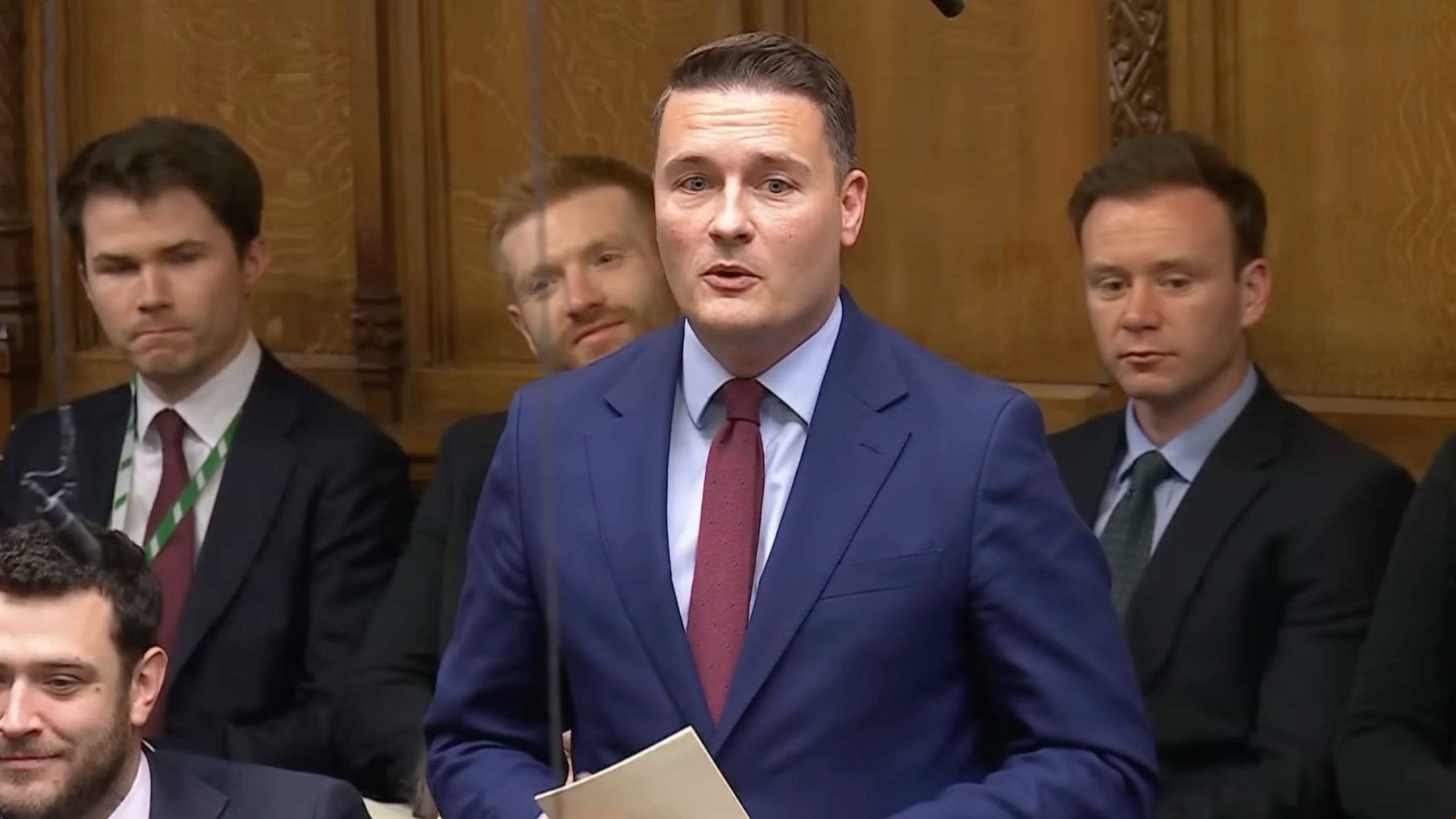
Wes Streeting, the former Health Secretary who quit earlier this month and is now clearly auditioning for the Labour leadership, used the usual trope and compared social media to tobacco.
Prime Minister Keir Starmer was photographed meeting bereaved families. Leader of the Opposition Kemi Badenoch wasn’t doing much opposing and accused Labour of dithering on the decision.
Every minister involved found their mark and hit it on cue. The cross-party consensus is total and the permitted range of debate runs from “ban it now” to “ban it yesterday.”
Streeting said: “Social media should be treated like tobacco – it’s extremely addictive, bad for our health, and Big Tech is borrowing the Big Tobacco playbook to avoid regulation.”
He added: “We’ve got to give our children their childhood back.”
And: “We have given the pen to tech moguls to write our future for us […] it’s time to take the pen back.”
The Academy of Medical Royal Colleges, which represents 23 medical royal colleges and faculties, submitted a report claiming the issue “ranks alongside smoking and wearing seatbelts in cars as a unifying force for the medical profession.”
Of 454 doctors surveyed, half said they treated at least one child a week whose mental distress or physical injury was linked to online content. The report described a “wave of radicalized children” from exposure to “hateful, manipulative, addictive and grossly distressing” content.
Nobody is disputing that kids can get hurt online. But proposed fix is an expensive, privacy-destroying placebo that happens to be very convenient for people who’ve wanted to end online anonymity for years.
The Tobacco Trick
The cigarette comparison is clever in the way that a card trick is clever. It works if you don’t look too closely.
Cigarettes are a product. You buy them, you smoke them, and they damage your lungs. The regulatory model writes itself. Restrict the product, regulate the manufacturer, ban the advertising, slap warnings on the package – though even this is controversial.
Social media is the infrastructure through which people now access news, organize politically, contact their MP, find communities, and speak in public. When Britain decided cigarettes were dangerous, it didn’t require ID to read about smoking or ban people from discussing tobacco in the town square.
But the tobacco framing does something more useful for politicians. It shrinks the debate to two sides: you’re either with the children, or you’re shilling for Mark Zuckerberg. (They obviously don’t want the pubic to know that Zuckerberg’s company Meta is the biggest company actually lobbying for these digital ID age verification checks.)
If you raise concerns about civil liberties, you’re clearly in the pocket of Big Tech. If you mention privacy, you must not care about dead teenagers. There is no room in this framing for the person who is worried about children and also worried about handing the government a database of who everyone is online and what they’re saying. That person, in Streeting’s version of the argument, doesn’t exist.
What a “Children’s Safety” Ban Actually Requires
Here’s the part that tends to get buried under the photographs of grieving parents. A ban on under-16s using social media is technically impossible unless you verify everyone’s age. You cannot check whether someone is 15 without also checking whether someone is 35. The ICO has explicitly said self-declaration is “ineffective” and platforms must use facial age estimation, digital ID, or one-time photo matching.
Follow that to its conclusion. Every adult in Britain who wants to post on social media, comment under a news article, or participate in any online forum must submit biometric data or government ID to a private company. Your face or your passport, uploaded to a server run by a company you’ve never heard of, to prove you’re old enough to look at the internet.
The proposals under consultation extend beyond social media to video games, VPNs, and websites. If a website is “likely to be accessed by children,” which describes approximately everything on the internet, the ID check applies.
None of this made it into Streeting’s tobacco speech.
The Discord Precedent
If you want to know what happens when age verification data gets collected at scale, you don’t need to speculate. There’s already a case study, and it’s exactly as bad as you’d expect.
In October 2025, hackers compromised a third-party vendor called 5CA that handled Discord’s customer support. They stole approximately 70,000 government-issued ID photos collected for age verification. Passports, driving licenses, the works. Discord sat on this for nearly two weeks before telling anyone.
The cybercrime group claiming credit said it took 1.5 terabytes of data from 5.5 million users. Discord disputed those numbers. What Discord did not dispute is that its age verification system created exactly the kind of centralized identity honeypot that privacy advocates had been warning about, and that it got raided almost immediately.
Discord’s response to this disaster was to expand age verification globally in March 2026, now requiring face scans or government ID for full platform access. The house caught fire, so they added more flammable material.
The UK government is proposing to build this same architecture across every platform used by British citizens, and nobody in the coordinated media operation today mentioned what happens when (not if) that data gets breached. Seventy thousand stolen passports from a gaming chat app apparently didn’t rate a mention alongside the tobacco comparisons.
Australia: The Test Case Nobody Wants to Discuss
Australia enacted the world’s first under-16 social media ban in December 2025. It was supposed to be the proof of concept, the model for the world. The early data is in, and it reads like a comedy.
A survey of 835 Australian teenagers, conducted four months after the ban, found that only about one in four 14-to-15-year-olds actually comply. Three in four just carried on as before.
Australia’s own eSafety regulator flagged “a number of poor practices” and “compliance concerns,” including platforms allowing minors to retry age assurance methods until they passed. Kids were essentially given unlimited attempts at a test with no penalty for failure. The regulator raised “significant concerns” about five major platforms and launched formal investigations.
Complaints about cyberbullying and image-based abuse were unchanged. The ban changed nothing about the harms it was supposed to address.
The Henry VIII Gambit
Ministers are using the Children’s Wellbeing and Schools Bill to grant themselves “Henry VIII” powers, which allow them to implement a social media ban via secondary legislation. Secondary legislation gets almost no parliamentary debate and is voted on as a take-it-or-leave-it package. No statutory instrument has been rejected by the House of Commons since 1979.
The government is essentially giving itself the power to redesign Britain’s relationship with the internet by ministerial decree, with all the democratic oversight of a planning application for a backyard shed.
The House of Lords voted against this approach four times. They eventually backed down after ministers offered a vague commitment to “some form” of restrictions, which was the commitment ministers had already made in April, which was before the public consultation closed, which brings us back to the fundamental absurdity of the whole exercise.
The consultation is closed. Forty-two child safety charities said this was the wrong approach. Australia’s own data says it doesn’t work. The decision was announced before the public finished responding. And Wes Streeting would like you to know that social media is basically cigarettes.
If you're tired of censorship and dystopian threats against civil liberties, subscribe to Reclaim The Net.
The post Westminster Recycles Tobacco-Style Panic Campaign For Internet Crackdown appeared first on Reclaim The Net.








 New Posts (Home)
 ChatBox
 Popular Posts
  Game Zone
 Top PodCasts