www.dailywire.com
Hollywood’s Foot-In-Mouth Disease Is Making Fans Sick
There’s a reason celebrities visit Jimmy Kimmel’s couch or spend hours with Vanity Fair scribes. It’s not for lack of companionship or boredom.
They’re hawking their newest film/TV show/album/streaming gig.
It’s P.R. 101, and some stars are turning the process on its head. The result? Call it anti-marketing at best. Or, in some cases, a career detour no one wants.
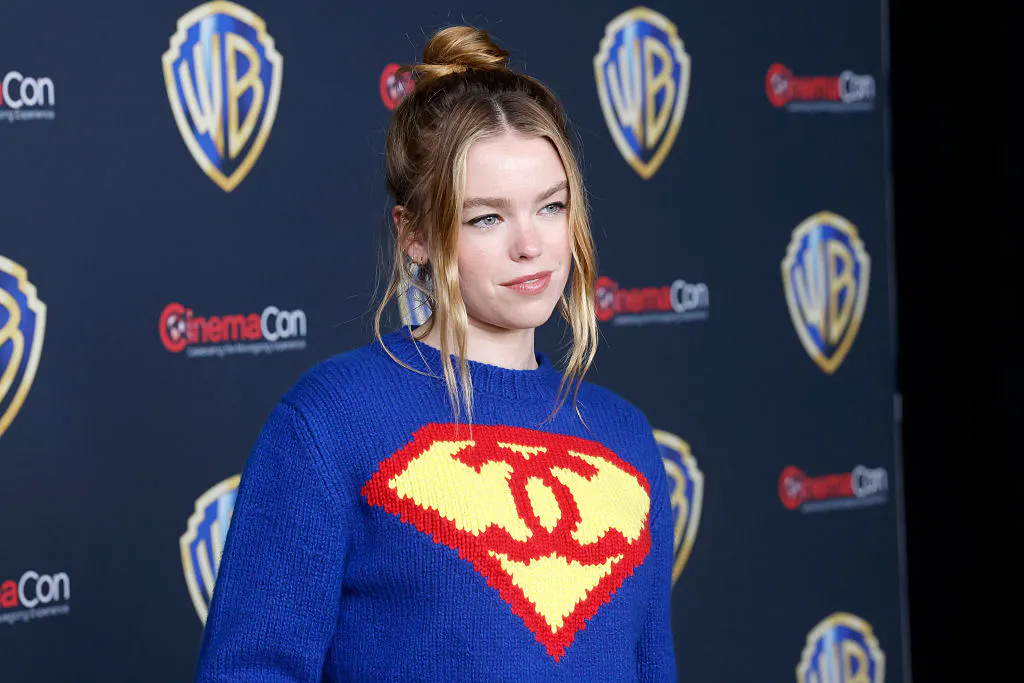
The latest example comes all the way from Planet Krypton. Relatively unknown Milly Alcock landed the title role in “Supergirl,” one of this summer’s wannabe blockbusters. The film hits theaters nationwide on June 26.
Yes, HBO Max subscribers got to know Alcock via “House of the Dragon,” the “Game of Thrones” prequel series. The “Supergirl” role will be her breakout moment, assuming the film draws a crowd and pleases the Comic-Con faithful.
Yet Alcock seems hell-bent on making that more difficult. Earlier this year, Alcock gave a bizarre interview to Vanity Fair in which she described her “Dragon” experience in less than flattering terms.
It definitely made me aware that simply existing as a woman in that space is something that people comment on … We have become very comfortable having this weird ownership of women’s bodies. I can’t really stop them. I can only be myself.
Odd. Ungrateful. Tone deaf, perhaps?
Online communities seized on the comments, smelling another Rachel Zegler-style meltdown. Zegler helped crush any buzz behind her 2025 dud “Snow White” with a series of off-putting interviews that trashed the source material and, later, a huge swath of the country.
Zegler hoped that MAGA voters would “never know peace.” She later apologized. By then, it was too late. The live-action “Snow White” lost millions for Disney — $115 million to be exact.
The Zegler debacle should have been a warning to other young stars on the cusp of fame: Don’t follow the “Snow White” star’s path.
Alcock ignored that lesson. More recently, she doubled down on her Vanity Fair comments. In the process, she singled out a large community by name: Christians.
“I didn’t even say ‘men’— I said ‘people!’” Alcock says. “And they got so angry. I was like, ‘You’re proving my point. You’re proving my point!’ … And [the backlash] is from a lot of people whose profiles have no photo, who are burner accounts. Or someone’s name and then ‘Dad of four, Christian,’ which is hilarious to me. But I mean, whose opinion do you really care about? If you’re pissing the right kind of people off, you’re doing OK.”
Enraging potential moviegoers isn’t remotely okay. It’s bad for business. Besides, had Alcock targeted any other community — Muslims, blacks, or illegal immigrants, for example — the backlash would have started in the Legacy Media and exploded from there. Every day, social media users and new media content creators took aim at the interview.
Now, “Supergirl” looks unlikely to turn a profit. Coincidence? Perhaps. It sure didn’t help matters.
Kathleen Kennedy caught colossal heat for overseeing the demise of the “Star Wars” brand. It wasn’t just her creative decisions along the way or her “The Force Is Female” shtick. She attacked fans for not agreeing with her social engineering of the beloved brand, telling the New York Times:
Operating within these giant franchises now, with social media and the level of expectation — it’s terrifying … I think Leslye [Headland, The Acolyte’s showrunner] has struggled a little bit with it. I think a lot of the women who step into Star Wars struggle with this a bit more. Because of the fan base being so male dominated, they sometimes get attacked in ways that can be quite personal.
But please pay good money to see “The Mandalorian and Grogu,” right? That’s the film that plummeted more than 70% in its second weekend of release.
Sometimes a star will target their audience and face few repercussions. Take Jason Bateman, one of the most versatile talents in Hollywood. He’s hilarious on projects like “Arrested Development,” but he later expanded his canvas with sly directorial efforts (“Bad Words”) and binge-worthy dramas (“Ozark,” “Black Rabbit”).
So when he teed off on Trump voters, the general public absorbed the blow and kept watching his work. Or, at the very least, Hollywood kept calling his agent for more gigs.
[Trump] didn’t do a 180 and duped everybody when he got to the White House. It’s the people that have put him there and then put him there again that really deserve a great deal of responsibility and a talking to, I’m sorry.
Other stars don’t need to draw a crowd. They have decades of professional experience, and investors aren’t expecting them to secure a project’s financial viability.
That explains why Broadway will always find a place for Patti LuPone — her cruel comments aimed at Christians haven’t hurt her job prospects. LuPone once compared the Christian Right to al-Qaida. She later wished the Trump-Kennedy Center would get “blown up.”
Other stars got what they wished for, in a way. In 2017, Jimmy Kimmel was asked about potentially losing a large swath of the country due to his hard-Left political pivot and insults to roughly half the country.
“Not good riddance, but riddance,” he said of his former GOP-friendly viewers.
One actor took on his fans directly, but he did it with his tongue pressed hard against his cheek. William Shatner’s legendary “Star Trek” skit on “Saturday Night Live,” circa 1986, finds the actor mocking those who hang on every nugget of the saga.
“Get a life,” he cried to a packed “Star Trek” convention crowd. “It’s just a TV show!”
It was all shtick, and the sketch only magnified his fame. But Alcock & Co. aren’t joking.
Is it any wonder that an indie horror movie like “Obsession,” which defied all box office laws to continually outearn its preceding weekend haul, did so without a single recognizable star?
***
Christian Toto is an award-winning journalist, movie critic, and editor of HollywoodInToto.com. He previously served as associate editor with Breitbart News’ Big Hollywood. He’s also the host of The Hollywood in Toto Podcast. Follow him at @HollywoodInToto.








 New Posts (Home)
 ChatBox
 Popular Posts
  Game Zone
 Top PodCasts