www.theamericanconservative.com
The Big Problem With Britain’s ‘Anti-Racist’ Policing
UK Special Coverage
The Big Problem With Britain’s ‘Anti-Racist’ Policing
Left-wing academic phraseology has corrupted the UK’s justice system.
UK Special Coverage
If police in the UK are told they must believe any racial minority who claims to have been racially abused, what are they supposed to do when they come across an incident where claims of racism are made? Obviously they will be inclined to see the person claiming racial abuse as the “victim,” and the accused as the “criminal.” How can they do otherwise?
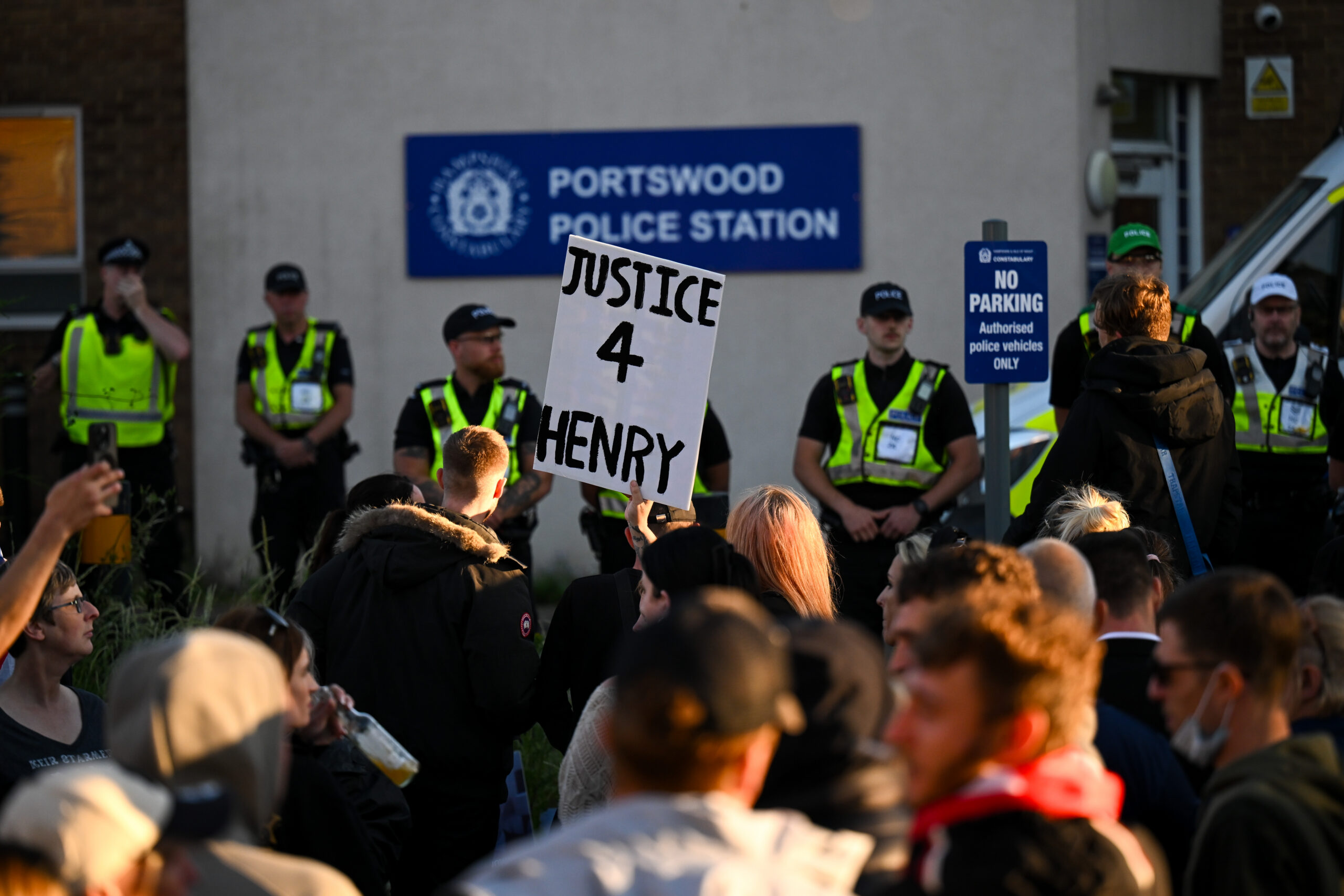
This is what happened when the police arrived on the scene of the stabbing murder of the white student Henry Nowak by Vickrum Singh Digwa, a 23-year-old British Sikh in Southampton in December 2025. Digwa had accused Nowak—falsely—of having racially assaulted him. The police believed him. Henry died in handcuffs under arrest despite repeatedly pleading that he had been stabbed.
This episode has become a cause célèbre, a cross-racial version of George Floyd. Nowak even said, repeatedly, “I can’t breathe.” It is becoming very clear that something has gone very wrong with the way the UK police regard race. Certain tendentious and wrong-headed “anti-racist” doctrines and dogmas have been introduced into the theory and practice of law enforcement.
Now, it is quite possible to agree, as I do, that there is or has been racism against minorities in British policing, and also to believe that at the point of engagement the police should not be prejudiced against (or in favor of) certain skin colours. Yet the push for “anti-racism” has long since transformed into a form of anti-white racism, as police constables are told that they must believe every claim of racism, regardless of evidence, and record it as a hate incident. This is how the Metropolitan Police define this category of racial “non-crime”:
A non-crime hate incident is any incident which the victim, or anyone else, thinks is based on someone’s prejudice towards them because of their race, religion, sexual orientation, disability or because they are transgender. Evidence of the hate element is not a requirement.
Just consider that for a moment. Why would the police record someone for perpetrating a non-criminal act? And why should the person claiming to be the “victim” be believed on grounds of perception alone and with no supporting evidence? This surely violates the foundation of an impartial justice system.
Thousands of these hate incidents have been recorded by police every year and, contrary to some reports, the police still record the name of the person involved in the “non-crime” incident if they “suspect” a crime might happen in future. This is dystopian pre-crime in practice. The UK police really is “institutionally racist,” but not as left-wingers understand that phrase.
Where did this racialization of policing come from? Largely from the legacy of the Macpherson Report into the murder of Stephen Lawrence nearly 30 years ago. That was the first major outing for the claim that British policing was racist at its core.
Cowed by this accusation, chief constables have enlisted activist consultants and “community leaders” to fill in the gaps and to reframe operational policing as non-racist or anti-racist. These predominantly left-wing activists and human rights lawyers often represent no one but themselves and have highly prejudiced attitudes. Yet they are invited to lay down the law on anti-racism, as though police constables need outside agitators to tell them what to do.
Take the Independent Scrutiny and Oversight Board, which oversees the National Police Race Action Plan. This is led by Abimbola Johnson, a barrister who has not only said she has a “hatred” for the Conservative Party (OK, so do many people) but more significantly has supported the policy of defunding the police. As she put it in a lecture last year:
Defunding or perhaps more precisely re-imagining can simply mean investing in what actually makes communities safe. It means moving money from punishment towards prevention.
The very person who is telling them how to do their job on race actually thinks the police should have their finances cut and the resources moved to “community resources” such as mental health, housing, social work, and early legal advice.
The vast majority of British voters want the government to spend more on policing, not less. They want more police on the streets, not more social workers and community activists. That this highly political and partisan lawyer could have been given this role is the most obvious sign that the leadership of the British police has simply lost the plot.
It would be naïve and dishonest to ignore racial data in policing. It is true that black and some other ethnic minorities are more often stopped and searched than white people, and this is regarded as the key metric of institutional racism. But this needn’t be a consequence of individual police officers’ prejudices against minorities. It could equally be because more of them carry knives—as we have seen in the Nowak case.
Members of ethnic minorities are more likely to be prosecuted for crimes than white people and it is claimed they receive harsher sentences. This may be evidence of racism in the prosecution service, but then again it may not. After 30 years of being accused of institutional racism, prosecutors and judges now bend over backwards not to show prejudice in prosecution or sentencing.
If black people commit more crimes, then they will show up more often in court. Their arrest rate is currently 20 per 1,000 in the UK against 9 per 1,000 for non-black residents, according to government figures. There may be social factors that create fertile ground for crime, but that doesn’t excuse it.
Again, police racism may not be the determining factor when it comes to differential rates of arrest. Members of ethnic minorities also tend to live in higher-crime neighborhoods—communities marked by poverty, deprivation and family instability which many academics believe predispose some people to breaking the law irrespective of color.
The police, moreover, tend to concentrate activities in these neighborhoods and are more likely to conduct arrests there. That is not about racism but allocation of resources. The idea that police shouldn’t concentrate their work in areas of high crime would of course be ludicrous—yet that is precisely what the “defunders” like the head of the National Police Race Action Plan actually propose.
This problem arises when academic phraseology related to structural inequalities is taken literally and applied to practical policing on the street.
There is unfairness in society; that is undoubtedly true. But disadvantage is not an excuse in the eyes of the law. A crime is a crime, irrespective of social background. The whole point about justice is that it has to be blind to command broad public respect. Even if we accept that in a certain sense “the system is to blame,” the solution to institutional racism cannot be to treat criminals differently because of their skin color. That way madness lies.
The post The Big Problem With Britain’s ‘Anti-Racist’ Policing appeared first on The American Conservative.








 New Posts (Home)
 ChatBox
 Popular Posts
  Game Zone
 Top PodCasts